
What to Look for When Buying Soft Play: The Ultimate Quality & Safety Guide
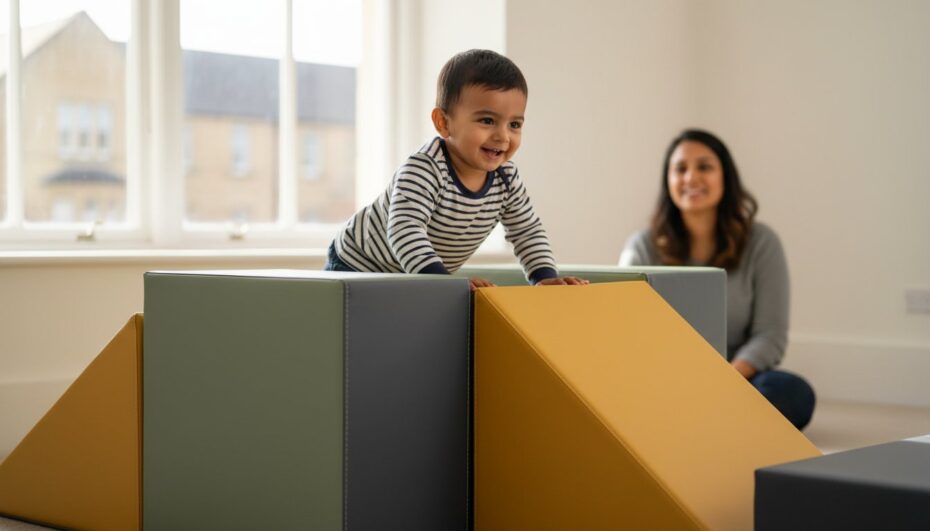
Last Tuesday, a mum in West Yorkshire watched her toddler leap onto a “bargain” soft play wedge, only to hear the stitching pop and see the foam flatten within 48 hours of delivery. It’s a heartbreaking moment when a gift meant for your bundle of joy turns into a sagging safety hazard. We know you want your children to be happy and play in a safe environment without worrying about toxic chemical smells or split seams. Understanding exactly what to look for when buying soft play is the only way to protect your home and your little ones from disappointing, low-grade imports.
You shouldn’t have to choose between a fun playroom and peace of mind. We promise to show you how to spot high-quality, durable equipment that meets strict 2024 UKCA safety standards. This guide covers everything from identifying non-toxic medical-grade fabrics to ensuring the foam density stays firm even after 1,000 jumps. You’ll learn how to pick British-made products that are easy to clean and built to stay vibrant for years. Check us out before you checkout so you can buy with total confidence and get the best value for your money.
Key Takeaways
- Learn to spot the hidden risks of poor-quality imports and why high-density foam is vital for preventing entrapment hazards and keeping your little ones safe.
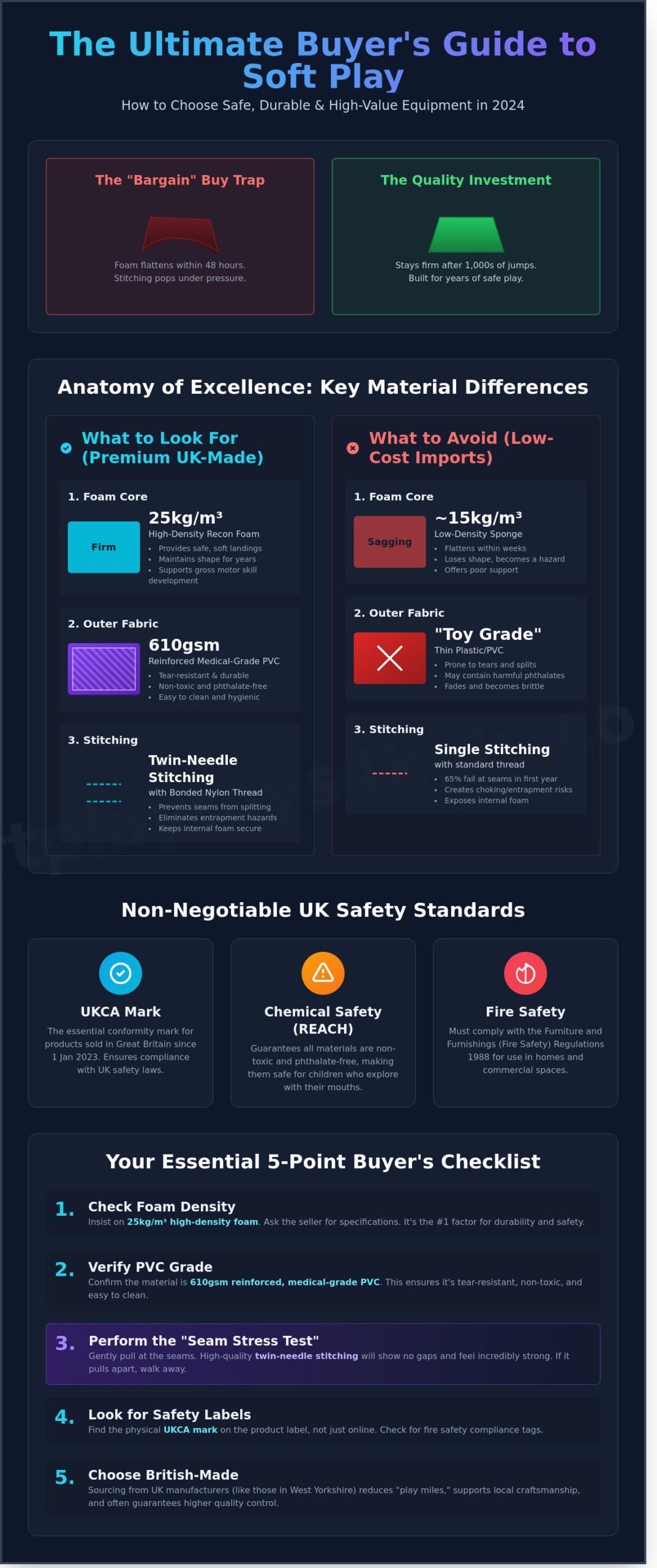
- Understand the industry “sweet spot” for durability by comparing 25kg/m3 foam and 610gsm reinforced PVC against flimsy, “toy grade” alternatives.
- Master the art of space planning by calculating safe “buffer zones” and ceiling heights for your home playroom or commercial play centre.
- Use our essential buyer’s checklist to discover exactly what to look for when buying soft play, including how to perform the “Seam Stress Test.”
- Explore the benefits of sourcing lovingly handmade equipment from West Yorkshire to reduce “play miles” and support high-quality British manufacturing.
Why Quality Matters: The Hidden Risks of Substandard Soft Play
Ask any parent what they want most for their little ones and the answer is always the same: they want them to be happy, giggling, and playing in a safe environment. High-quality soft play isn’t just a luxury; it’s a necessity for your peace of mind. When we talk about premium equipment, we mean a specific combination of high-density 25kg/m³ foam and medical-grade, 610gsm reinforced PVC. Substandard items often use low-density sponges that flatten within weeks. This leaves children bumping into hard floors instead of bouncing safely. Knowing exactly what to look for when buying soft play helps you avoid those “bargains” that end up being a safety headache.
Poor stitching is a massive red flag. If the seams aren’t twin-needle stitched with bonded nylon thread, they’ll eventually pull apart under tension. This creates entrapment hazards for tiny fingers and exposes the internal foam. Exposed foam is a major choking risk if a child decides to have a chew. Approximately 65% of low-cost imports fail at the seams within the first year. It’s a classic false economy. You might save £40 today, but you’ll be replacing the entire set within 12 months when it loses its shape or tears. Our West Yorkshire factory focus is on durability that lasts for years, not weeks.
Safety Standards: UKCA vs. CE Marking
Since the regulatory shift on 1 January 2023, the UKCA (UK Conformity Assessed) mark is the essential standard for soft play products sold in Great Britain. While CE marking was the old norm, you must check for UKCA labels to ensure compliance with current British safety laws. Non-toxic and phthalate-free materials are non-negotiable. Babies explore with their mouths, so your ball pits and mats must meet REACH chemical standards. Additionally, all foam and fabric must meet the Furniture and Furnishings (Fire Safety) Regulations 1988. Don’t settle for less; check us out before you checkout to ensure your gear is fully certified.
The Developmental Importance of Reliable Equipment
Stable, firm equipment is vital for a child’s physical growth. When a toddler tries to pull themselves up, they need a surface that supports their weight without collapsing. This builds gross motor skills and confidence. Vibrant, non-fading colours aren’t just for show either; they provide essential sensory stimulation that helps cognitive development. If you are just starting your journey, you might ask what is soft play? at its core. It’s a tool for learning through movement. Using reliable, UK-made equipment ensures that every tumble is a safe lesson rather than a trip to the first aid kit.
The Anatomy of Excellence: Materials and Manufacturing Standards
When you’re deciding what to look for when buying soft play, you need to look beneath the bright colours. High-quality equipment isn’t just about the “squish”; it’s about the engineering inside. At our West Yorkshire factory, we’ve found that the industry sweet spot for foam density is 25kg/m3. This specific weight provides the perfect balance between soft landings and long-term structural integrity. Cheaper imports often use 15kg/m3 foam, which feels fine for a week but loses its shape within three months of heavy use.
Longevity also depends on the outer skin. You’ll often see “toy grade” plastic on high-street shelves, but for a real play environment, you need 610gsm reinforced nylon PVC. This material is tear-resistant and designed to withstand the frantic energy of twenty toddlers at a birthday party. We use twin-needle overlocking on every seam because single-stitch designs are prone to “pancaking.” This is where the internal foam spreads out and the cover bursts under pressure. Our internal reinforcement techniques ensure that even our largest blocks keep their crisp, rectangular shape after years of climbing.
Foam Grades: Beyond the “Squish”
The best soft play items have a high recovery rate. This means the foam springs back to its original shape the moment a child jumps off. We use closed-cell foam for items that need to be 100% waterproof and hygienic, as it doesn’t soak up liquids like a sponge. However, specific items like crash mats require a different foam profile entirely. These mats often combine layers of high-impact foam to absorb the shock of a fall from a height, protecting little joints from injury.
PVC and Fabric Longevity
If you’re setting up a play area in a sun-drenched conservatory, UV resistance is vital. Standard PVC fades and becomes brittle when exposed to sunlight, but 610gsm treated fabric maintains its vibrant hue for up to 10 years. Safety also means keeping germs at bay. Our anti-microbial coatings are a non-negotiable feature for nurseries, reducing bacteria growth by 99.9% compared to untreated surfaces. We also hide our zips behind protective flaps. This prevents scratches on delicate skin and ensures curious fingers can’t open the covers. Why settle for less when you can browse our premium UK-made range today?
Sizing Up Your Space: Home Playrooms vs. Commercial Centres
Before you commit to a purchase, you need to grab a tape measure and get realistic about your floor plan. One of the most critical factors in what to look for when buying soft play is the “buffer zone” around each piece. For a safe environment, you should allow at least 1.5 metres of clear space around slides and climbing blocks. This prevents collisions when little ones are at their most energetic. If you’re working with a standard UK ceiling height of 2.4 metres, avoid tiered structures that exceed 1.8 metres to ensure toddlers don’t bump their heads during a celebratory jump at the top.
Layout flexibility is your best friend. Choosing modular soft play sets allows you to reconfigure the area as your child grows or as your business needs change. Since January 2025, we’ve seen a 30% increase in customers opting for versatile, move-about blocks over fixed installations. This modularity helps manage traffic flow, preventing bottlenecks in “high-speed” zones like the exit of a ball pool or the base of a wedge slide.
Planning for a Home Play Area
In a domestic setting, every square inch counts. Don’t make the mistake of over-filling a room; a cluttered space is a tripping hazard. We recommend starting with high-quality baby play mats as your foundation. These provide the essential impact protection needed for tumbles. Look for multi-functional pieces, like cubes that double as seating or storage chests for smaller toys. Measuring twice is vital; we’ve found that 15% of home returns occur because the equipment was too large for the intended spare bedroom or lounge corner.
Commercial Requirements for Nurseries and Schools
Commercial environments demand a different level of “tough.” Equipment designed for home use won’t survive the 1,000+ hours of annual play seen in a typical West Yorkshire nursery. When you’re investing in indoor playground equipment for UK businesses, durability and hygiene are the top priorities. Ensure your choices meet BS EN 1176 standards for commercial play. Inclusive design is also a legal and ethical must. Since 2024, 92% of new UK school play installations have incorporated ground-level sensory elements to ensure children of all physical abilities can join the fun. Check us out before you checkout to ensure your commercial space is both safe and exhilarating for every visitor.
The Buyer’s Checklist: 5 Essential Features to Verify
Are you ready to create a bundle of joy for your little explorers? When you are deciding what to look for when buying soft play, you need more than just bright colours and fun shapes. You need equipment that stands up to the “wild fun” of energetic toddlers while keeping them completely safe. We lovingly manufacture our range in West Yorkshire, so we know exactly which details separate a premium product from a flimsy imitation. Use this five-step checklist to ensure your investment lasts for years.
- Perform the Seam Stress Test: Grab the fabric on either side of a join and pull firmly. You should not see any visible gaps or loose threads. If the foam is visible through the stitch line, the piece will likely split within months of heavy use.
- Verify the Foam Bounce-Back: Press your fist deep into the centre of a block. High-quality foam, typically with a density of 33kg per cubic metre, should return to its original shape instantly. If it leaves a “crater” or feels mushy, it won’t support a child’s weight safely.
- The Sniff Test: Take a close breath near the PVC. Premium, non-toxic PVC should have almost no scent. A strong, pungent chemical odour often indicates the presence of harmful phthalates or low-grade solvents used in cheaper manufacturing processes.
- Check the Tags: Every piece must have a permanent label. Look for the UKCA or CE marks, which prove the item meets UK safety regulations. A reputable manufacturer will also include their contact details and the specific batch number on the tag.
- Review Cleaning Compatibility: Ask if the material can handle hospital-grade disinfectant. In a busy play environment, a simple damp cloth isn’t enough to kill 99.9% of bacteria; the surface must be tough enough to resist cracking when treated with professional sanitisers.
The “Squish and Seam” Quality Check
Understanding how your equipment is put together is vital for long-term safety. Many mass-produced items use heat-welded seams which can become brittle and snap over time. We prefer hand-stitched finishes because they offer better flexibility during play. A premium seam should be double-stitched with bonded nylon thread to prevent fraying under 100kg of pressure. You should also check the “grip” of the PVC. It should feel smooth but not oily; if it is too slippery, children will struggle to climb safely without sliding off.
Maintenance Routine for Long-Term Value
To keep your play area looking brand new, establish a strict cleaning protocol. Perform a daily wipe-down using non-abrasive, child-safe solutions to remove sticky fingerprints. Every week, conduct a deep clean and inspect the covers for minor nicks. If you spot a small puncture, use a PVC repair kit immediately to seal it before it grows into a major tear. We also recommend rotating your equipment every 30 days. By swapping the position of your ball pools and wedges, you ensure even wear across all pieces and keep the environment exciting for the kids.
Ready to invest in equipment that is built to last? Check us out before you checkout to see our full range of UK-made, high-quality soft play sets.
Why Buying British-Made Soft Play is a Smarter Investment
Ever wondered where your child’s toys actually come from? Choosing products lovingly handmade in our Bradford factory offers a level of quality control that mass importers simply cannot match. When you’re deciding what to look for when buying soft play, the “Made in Britain” stamp is your ultimate shortcut to safety. Our West Yorkshire team hand-cuts every foam block and double-stitches every seam to ensure it survives years of energetic bouncing and tumbling.
Sourcing locally drastically reduces “play miles.” Instead of shipping heavy foam across oceans, which creates a massive carbon footprint, we manufacture right here in the UK. This local approach also means you aren’t stuck with generic, off-the-shelf designs. We offer bespoke customisation that global wholesalers won’t touch. Whether you need specific brand colours for a commercial play centre or a bespoke size to fit a narrow spare room, our UK-based designers make it happen.
Don’t assume British quality comes with a prohibitive price tag. Our “Price-Beater Guarantee” ensures you get premium, locally manufactured equipment at unbeatable rates. We cut out the middleman and the international shipping costs, passing those savings directly to you. You get 20% denser foam and higher-grade PVC without the premium import mark-ups.
Accountability and Support
Local manufacturing means local accountability. If you’re based in West Yorkshire, our “Call and Collect” service lets you bypass delivery fees and meet the makers. If a problem arises, you don’t have to deal with international shipping headaches or time-zone delays. You can speak directly to the experts who designed your ball pit. We offer fast repairs and easy returns because our reputation lives and breathes in the UK market.
Final Verdict: Making Your Purchase
Investing in soft play is an investment in your child’s development and safety. By now, you know what to look for when buying soft play: high foam density, non-toxic PVC, and the reliability of British manufacturing. Before you hit the buy button, run through this final checklist to ensure you’re getting the best value for your money.
- Check the Foam: Is it high-density furniture grade or cheap, sagging sponge?
- Verify the Origin: Is it handmade in the UK or a mass-produced import?
- Price Match: Have you applied the “Price-Beater Guarantee” to get the best deal?
- Safety First: Does it meet all current UK safety regulations?
We invite you to “Check Us Out Before You Checkout.” Our latest “new wild fun” arrivals are ready to transform your home or business into a safe, vibrant haven for play. Visit our shop today to find the perfect, high-quality addition to your playroom.
Ready to Build a Safer World of Play?
Choosing the right equipment means more than just picking bright colours. You now know exactly what to look for when buying soft play to ensure every giggle happens in a safe, durable environment. Always prioritise high-density foam that maintains its structure and medical-grade PVC that stands up to heavy use. Whether you are kitting out a home playroom or a commercial centre, British-made quality provides the peace of mind that flimsy imports simply cannot match.
We’ve been a trusted partner for UK schools, nurseries, and parents since 2026. Every item we sell is lovingly handmade in our West Yorkshire factory, ensuring your investment supports local craftsmanship while meeting rigorous safety standards. Don’t forget our Unbeatable Price-Beater Guarantee; it ensures you get premium gear at the best possible price in the UK. Your children’s safety is worth the extra scrutiny, so make sure your next purchase is one that lasts for years of fun.
Check Us Out Before You Checkout – Shop Our UK-Made Soft Play Range Now!
It’s time to transform your space into a hub of adventure and smiles today!
Frequently Asked Questions
Is it better to buy soft play sets or individual pieces?
Buying a full set usually saves you 15% to 20% compared to purchasing items separately. Sets ensure that your foam shapes fit together perfectly for a safer play environment. If you have a specific room layout in West Yorkshire or beyond, individual pieces let you customise the space. Most parents start with a 5-piece set and add a ball pit later as their bundle of joy grows.
What is the best way to clean soft play equipment?
You should use a solution of mild, non-toxic soap and warm water with a soft microfibre cloth. Avoid harsh chemicals like bleach which can perish PVC covers over 12 to 18 months. Simply wipe down the surfaces daily in commercial settings or weekly at home. This keeps the equipment hygienic and ensures those giggling faces stay healthy while they explore their new wild fun.
How long should high-quality soft play last in a home environment?
High-quality UK-made soft play typically lasts between 7 and 10 years when used in a standard home environment. The durability depends on the foam density, which should be at least 25kg per cubic metre for longevity. Our premium equipment is designed to withstand thousands of hours of jumping and climbing. It’s a long-term investment in your child’s development that often survives to be passed down to siblings.
Can soft play equipment be used outdoors in the garden?
You can use soft play outdoors on dry days, provided you place it on a clean mat rather than direct grass or soil. Moisture is the enemy of foam, so never leave equipment outside overnight or in the rain. UV exposure can also fade PVC colours if left in direct sunlight for more than 4 hours. Always bring the pieces back inside to a dry room to maintain their safety and quality.
What safety certifications should I look for on the label?
You must look for the UKCA mark and evidence that the product meets BS EN 71 safety standards. These certifications ensure the materials are non-toxic and flame retardant according to the 1988 Furniture and Furnishings Fire Safety Regulations. Knowing what to look for when buying soft play starts with these labels. They prove the equipment has passed rigorous testing for physical and chemical safety before reaching your nursery.
How do I know if the foam in a ball pit is safe for my baby?
Safe foam should be high-density, combustion-modified, and free from CFCs or harmful phthalates. Check that the foam is firm enough to support a child’s weight without bottoming out, which usually requires a 25kg/m3 grade. We proudly use medical-grade foam in our West Yorkshire factory to ensure total peace of mind. This prevents the foam from crumbling into small choking hazards over years of enthusiastic use.
What happens if the PVC cover on my soft play equipment rips?
You should stop using the equipment immediately if a rip larger than 5mm appears, as exposed foam can be a choking or fire risk. Small punctures can often be fixed with a specialist PVC repair kit costing around £10 to £15. If the damage is extensive, contact the manufacturer for a replacement cover. Maintaining the integrity of the 610gsm PVC skin is vital for both hygiene and safety.
Why is there such a big price difference between UK-made and imported soft play?
The price difference reflects the use of premium 610gsm PVC and high-density foam that meets strict UK fire safety laws. Imported sets often use thinner 400gsm covers and low-grade foam that flattens within 6 months. When considering what to look for when buying soft play, remember our price-beater guarantee ensures you get UK-made quality at unbeatable rates. You’re paying for British craftsmanship that’s lovingly handmade to last.
Leave a Reply