
Safe Play Equipment for Toddlers: The Ultimate UK Parent’s Guide
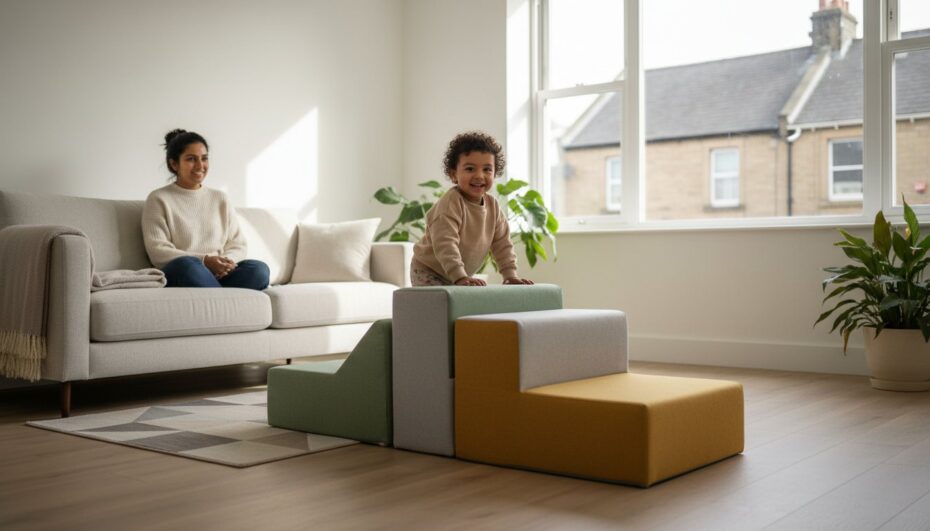
What if you could turn your living room into a high-energy adventure zone without checking the first aid kit every five minutes? Finding safe play equipment for toddlers shouldn’t feel like a gamble with your child’s health. We know you want your little ones to have wild fun, but the fear of sharp edges or toxic chemicals in cheap imports keeps many UK parents awake at night. You deserve to feel confident that your home is a sanctuary for giggling and growth, not a source of worry.
This guide shows you how to select high-quality gear that meets strict British safety standards like BS EN 1176 while supporting vital motor skill development. We proudly believe that “lovingly handmade” beats mass-produced every time. You’ll discover how to identify non-toxic, easy-to-clean materials and why choosing UK-manufactured foam ensures your playroom stays injury-proof for years. We’ll walk through the essentials of durability, from reinforced seams to price-beater guarantees, so you can build a play area that lasts well beyond the first few months of toddler chaos.
Key Takeaways
- Learn how to identify high-quality safe play equipment for toddlers by prioritising impact-absorbing materials and designs that boost gross motor development.
- Discover why soft foam cores are the superior choice for early years, eliminating sharp-edge risks common with traditional timber or plastic frames.
- Master the essential safety checks, including how to spot reinforced stitching and non-slip bases that ensure your toddler’s “wild fun” remains secure.
- Get a step-by-step guide to setting up a zero-hazard zone at home, from measuring fall clearances to choosing the right protective floor mats.
- Understand the safety benefits of choosing equipment lovingly handmade in West Yorkshire, providing factory-direct quality that mass imports simply can’t match.
What Defines Safe Play Equipment for Toddlers?
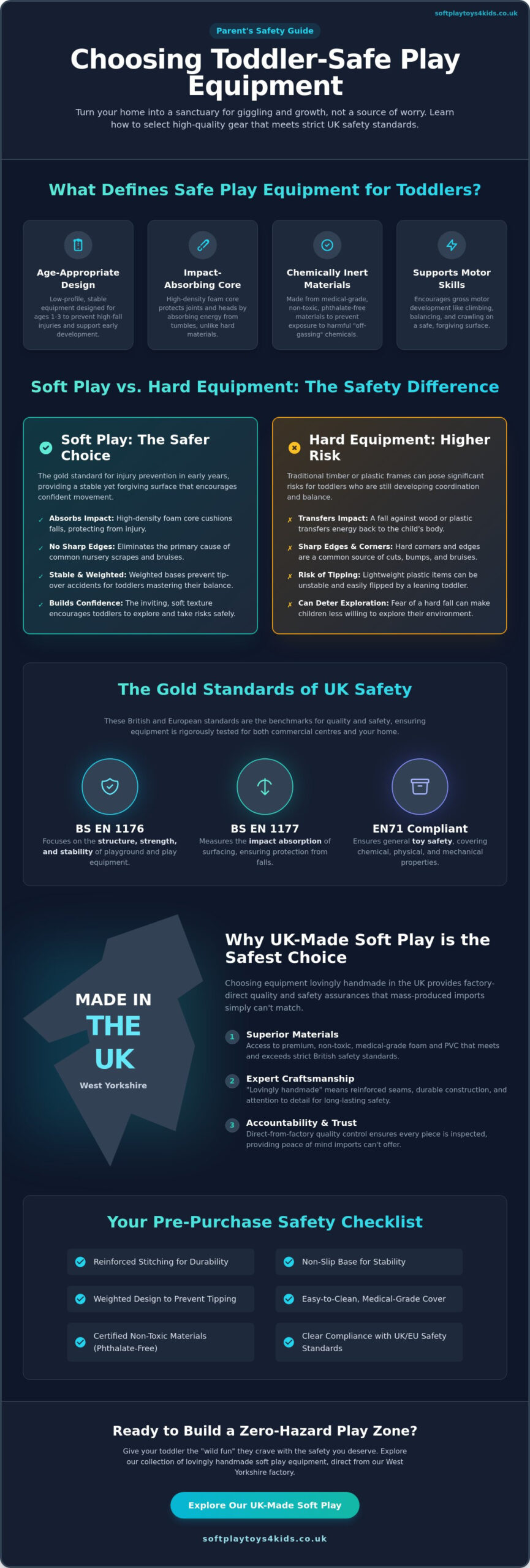
Are you looking for the best way to keep your little one active and happy? Every parent wants their child to have “new wild fun” while staying completely protected. Choosing safe play equipment for toddlers isn’t just about picking something soft; it’s about finding gear that matches their unique developmental stage. For a child aged between one and three, safety means equipment is age-appropriate, impact-absorbing, and chemically inert. At this age, toddlers are busy developing gross motor skills like climbing, balancing, and crawling. They need apparatus that challenges them without posing a risk of high-fall injuries.
Toddler-safe gear differs significantly from equipment built for older children. Older kids need height and complex puzzles to stay engaged, but toddlers require low-profile designs and stable surfaces. A fall from a height of just 60cm can be serious for a two-year-old, whereas an older child might shrug it off. This is why we focus on high-density foam and medical-grade coverings. We proudly offer high-quality products that meet strict EN71 requirements, ensuring every giggle is backed by British safety engineering. Check Us Out Before You Checkout to see why our West Yorkshire factory is the leading choice for parents who refuse to compromise.
The Gold Standards: BS EN 1176 and 1177 Explained
Do you know what makes a playground actually safe? It’s all in the testing. These UK standards are the benchmarks for quality in both your living room and commercial soft play centres. BS EN 1176 is the specific British and European standard for playground equipment. While 1176 focuses on the structure and strength of the toy, BS EN 1177 measures how well the floor or padding absorbs an impact. Following these Playground safety standards ensures that if a tumble happens, the equipment does the hard work of protecting your child’s joints and head. We apply these rigorous checks to everything we make, from home ball pits to massive commercial setups.
Non-Toxic Materials: Beyond the “BPA-Free” Label
Safety is more than just physical stability; it’s about what’s inside the foam. Many cheap, imported products use industrial-grade plastics that release harmful chemicals. This process, known as “off-gassing,” can fill a playroom with invisible toxins. For toddlers who explore the world with their mouths, medical-grade PVC and phthalate-free foam are non-negotiable. We don’t just follow the rules; we set them. SoftplayToys4kids sources premium, non-toxic materials for every item lovingly handmade in the UK. This commitment ensures that our safe play equipment for toddlers is free from heavy metals and harsh fire retardants. You get peace of mind knowing your “bundle of joy” is playing on surfaces that are as clean as they are durable.
Soft Play vs. Hard Equipment: Which is Safer for Early Years?
Are you worried about those first wobbly steps? Choosing the right safe play equipment for toddlers is the biggest decision you’ll make for their nursery or playroom. Soft play equipment uses high-density foam cores that absorb the impact from a tumble. Compare that to a timber frame or a plastic slide. If a toddler falls against wood, the energy transfers back to their body. Soft play yields. It’s a literal safety net for their developing coordination. Our UK-made equipment prioritizes this “no-sharp-edge” rule. By removing hard corners, we eliminate the vast majority of common nursery scrapes and bruises.
According to RoSPA play safety guidelines, impact attenuation is vital in preventing serious head injuries during early childhood development. Soft textures aren’t just safe; they’re inviting. Toddlers explore more when they don’t fear the floor. We use weighted bases in our larger pieces to prevent “tip-over” accidents. A 10kg foam block stays put, whereas a lightweight plastic chair might flip if a child leans on it. This stability is essential for children who are still mastering their center of gravity.
Indoor Soft Play: The Ultimate Injury Prevention
Indoor environments need specific solutions that provide 24/7 peace of mind. Soft play is the gold standard for UK homes because it supports the transition from crawling to walking. It provides a stable yet forgiving surface that encourages confident movement. For example, foam ball pits allow kids to practice “risk-taking” by jumping and diving without any danger of hitting a hard base. This builds physical confidence that carries over into all other areas of their life.
The Limitations of Hard Plastic and Wood
Wooden climbing frames are beautiful, but they require a different level of age-readiness. Most experts suggest waiting until a child is at least 36 months old before introducing height-based timber equipment. Hard plastic equipment often suffers from sun-bleaching or cracks after just one season of UK weather. These cracks quickly become “finger traps” or sharp hazards. Soft play remains the reliable baseline for any toddler zone because it doesn’t splinter, shatter, or degrade like outdoor materials. It’s a long-term investment in your child’s safety.
Ready to create a secure zone for your little one? Check out our handmade soft play range to see how we prioritize your child’s safety with every stitch.
Essential Safety Features to Check Before You Buy
Are you worried about your little one’s safety during playtime? You aren’t alone. Every parent wants that peace of mind while their toddler is off on a new wild fun adventure. Choosing safe play equipment for toddlers isn’t just about bright colours; it’s about the engineering behind the fun. Before you add anything to your basket, you need to know exactly what makes a product durable enough for a busy UK nursery or a lively living room.
In the UK, safety isn’t optional. All foam used in UK-made soft play must meet the Furniture and Furnishings (Fire Safety) Regulations 1988. This ensures that the materials are fire retardant and won’t ignite easily. We proudly manufacture everything in our West Yorkshire factory to these exact standards, ensuring every bundle of joy stays protected. Check Us Out Before You Checkout to see how we lead the market in safety compliance.
Beyond fire safety, look for hidden zips and non-slip bases. Curious fingers love to poke and pull at anything they can find. Hidden closures prevent nasty skin pinches and stop kids from reaching the foam core. Similarly, a non-slip base is vital. If a block or mat slides when a toddler jumps, it’s a recipe for a tumble. Our equipment uses high-grip materials to ensure everything stays exactly where you put it, even during the most active sessions.
Stitching and Seam Strength
In a high-traffic nursery, durability is everything. We use twin-needle stitching as the industry standard because it provides a vital backup if one thread fails. You should check seams regularly for any signs of fraying or gaps. Weak seams lead to foam exposure, which is a significant risk. Exposed foam pieces are a major choking hazard for toddlers who explore the world with their mouths. Our lovingly handmade products are designed to withstand years of giggling and jumping without splitting.
PVC Quality and Wipe-Clean Surfaces
Hygiene is a top safety priority in any play area. High-quality PVC allows you to wipe away nursery germs in seconds with standard sanitiser. You need high-density PVC, typically around 610 GSM, to ensure it won’t tear under toddler teeth or heavy play. When you are looking for baby play mats, a specific GSM rating ensures the surface is thick enough to cushion falls while remaining tough enough for daily use. This premium material is what separates professional-grade safe play equipment for toddlers from cheap imitations that wear out in months.
Setting Up a Zero-Hazard Play Zone at Home
Creating a dedicated space for your little ones is a proud moment for any parent. You want them to giggle and explore without a worry in the world. To ensure your safe play equipment for toddlers remains a source of joy rather than injury, follow these four essential setup steps.
Start by measuring the “fall zone” for every item. In the UK, safety standards suggest maintaining a clear radius of at least 1.5 metres around any climbing or sliding equipment. This prevents your toddler from hitting furniture, radiators, or sharp corners if they take a tumble. Once you’ve cleared the space, it’s time to look at the ground. Choosing high-quality soft play mats is the most effective way to protect little knees and heads from hard laminate or tiled floors.
Avoid grouping all your gear in one corner. Instead, create “activity islands” by spacing out the ball pit, the foam wedges, and the tunnels. This layout prevents children from colliding with each other when they transition between activities. Finally, perform a weekly “squeeze test” on all foam pieces. Press your thumb firmly into the equipment; the foam should spring back to its original shape immediately. If it feels mushy or stays indented, the internal support has broken down and it no longer provides adequate cushioning.
The Importance of Safety Flooring
Hard floors are the enemy of safe play. Even if your toys are soft, a fall onto a hard surface can still cause a significant impact. High-density foam mats are essential because they dissipate the energy of a fall. For general floor play, 20mm interlocking mats are usually sufficient. However, if your toddler is using equipment where their feet leave the ground, you should upgrade to 40mm or 50mm thick crash mats. This extra thickness is designed to handle falls from heights of up to 1.5 metres, providing the premium protection your “bundle of joy” deserves.
Maintenance: Keeping Equipment Safe for Years
Our West Yorkshire handmade equipment is built to last, but regular checks are vital. Use this quick weekly checklist to keep things in top shape:
- Check all seams for loose threads or small tears that could catch tiny fingers.
- Inspect PVC covers for cracks or “thinning” spots.
- Ensure hook-and-loop fasteners (Velcro) are still gripping tightly.
When cleaning, stick to mild, pH-neutral soaps and warm water. Avoid bleach or abrasive cleaners, as these can dry out the PVC, making it brittle and prone to cracking. If you notice the foam has permanently softened or the outer skin has split beyond repair, it is time to replace the piece to maintain a 100% safe environment.
Check Us Out Before You Checkout for the best UK-made soft play gear.
Why UK-Made Soft Play is the Safest Choice for Toddlers
When you are searching for safe play equipment for toddlers, the origin of the product matters more than most parents realise. We always tell our customers: Check Us Out Before You Checkout. This isn’t just a catchy slogan; it’s a direct challenge to compare our UK-made standards against cheap, mass-produced imports that often flood the market. While overseas products might look similar in a photo, they frequently lack the rigorous safety certifications required by UK law. By choosing factory-direct equipment, you are cutting out the middleman and ensuring your child’s play area meets the highest possible safety benchmarks.
Safety shouldn’t be a luxury reserved for those with massive budgets. We’ve built our reputation on a Price-Beater Guarantee because we believe every child deserves a secure environment to explore. Our equipment is designed to withstand the energetic play of toddlers while providing the soft landings they need as they develop their motor skills. When you buy from us, you’re investing in durability that lasts for years, not just weeks.
The West Yorkshire Manufacturing Heritage
Our factory in West Yorkshire is the heart of everything we do. Manufacturing locally allows us to maintain strict quality control that overseas shipping simply cannot match. When products spend months in shipping containers, they can be exposed to dampness or structural stress. By buying direct from a UK soft play manufacturer, you ensure that the product arriving at your door is exactly what was promised. You are also supporting local British jobs and contributing to a heritage of craftsmanship that prioritises your child’s well-being over high-volume profit margins.
The SoftplayToys4kids Commitment
Every single piece of our safe play equipment for toddlers is lovingly handmade. Our process is hands-on from start to finish:
- Precision foam cutting to ensure perfect density and bounce-back.
- High-grade vinyl selection that is non-toxic and easy to sanitise.
- Reinforced stitching designed to handle the “wild fun” of daily toddler use.
This level of detail is why our soft play equipment is trusted by hundreds of schools, nurseries, and parents across the country. We don’t just sell off-the-shelf items; we offer custom design services to help you tailor a play area to your specific space and your child’s developmental needs. If you’re ready to create a world of giggles and safe exploration, get in touch with our West Yorkshire team today to discuss your custom safe play area design.
Give Your Toddler the Gift of Safe, Giggling Fun
Choosing the right gear for your little one shouldn’t be a guessing game. You’ve learned that prioritizing British manufacturing ensures your kit meets strict UK safety standards. Soft play offers a cushioned environment that reduces injury risks compared to hard plastic alternatives. By selecting commercial-grade materials for your home, you’re investing in durability that survives every tumble and jump. We proudly manufacture all our products right here in our West Yorkshire factory. This hands-on approach means we oversee every stitch and seam to provide the ultimate safe play equipment for toddlers.
We’re so confident in our quality and value that we offer a Price-Beater Guarantee on every item in our shop. Don’t settle for less when it comes to your child’s happiness and security. Check us out before you checkout to see why we’re the UK’s fastest growing retailer for early years fun. Our team is ready to help you create a secure environment where your bundle of joy can explore without limits.
Browse our range of safe, UK-handmade soft play equipment today!
It’s time to turn your home into a world of new wild fun and watch your little ones play with total confidence.
Frequently Asked Questions
Is soft play equipment safe for babies under 12 months?
Yes, soft play equipment is safe for babies under 12 months as long as it’s designed for their specific developmental stage. Look for low-profile items that support tummy time and crawling without any sharp edges or small detachable parts. Our UK-made sets use non-toxic materials that meet 2024 safety regulations. This ensures your bundle of joy stays happy while exploring new textures. You must ensure constant supervision to prevent any accidental tumbles during their early giggling adventures.
How do I know if my play equipment meets UK safety standards?
You can verify your safe play equipment for toddlers by looking for the UKCA or CE marks on the product label. These symbols confirm the item complies with the Toys (Safety) Regulations 2011. Specifically, check for BS EN 71 certification, which covers mechanical and physical properties. We proudly manufacture our range in West Yorkshire to exceed these rigorous British standards. This gives you total peace of mind before you checkout.
Can I use indoor soft play equipment outside in the garden?
No, you shouldn’t use standard indoor soft play equipment outside because the PVC covers and foam aren’t UV-stabilised. Direct sunlight can degrade the material within 90 days, and moisture leads to mould growth inside the foam. If you want garden fun, only use products explicitly rated for outdoor use. Keeping your premium indoor toys inside ensures they maintain their durability and stay safe for your little ones to enjoy daily.
What is the best way to clean toddler soft play toys safely?
The best way to clean your toddler’s soft play toys is using a solution of warm water and mild, non-biological detergent. Don’t use harsh bleach or abrasive cleaners, as these can damage the 600gsm PVC fabric and irritate a toddler’s sensitive skin. Simply wipe down the surfaces with a soft cloth and dry them immediately. Regular cleaning prevents the buildup of bacteria, ensuring a hygienic environment for every new wild fun session.
How often should I inspect my toddlers play equipment for damage?
You should perform a visual inspection of your toddler’s play equipment at least once a week for home use. Check for split seams, exposed foam, or failing zips that could become a choking hazard. In a commercial setting, the Health and Safety Executive (HSE) recommends daily checks before children enter the area. Catching small tears early allows for quick repairs. It maintains the high-quality safety standards your family deserves.
Why is high-density foam important for toddler safety?
High-density foam is vital because it provides superior impact absorption and prevents the equipment from bottoming out when a child lands on it. This type of foam, often rated at 25kg to 30kg per cubic metre, retains its shape even after years of heavy use. It ensures that safe play equipment for toddlers remains supportive and firm. Cheaper, low-density alternatives collapse easily, which increases the risk of injury during active, enthusiastic play.
Are ball pits safe for toddlers to use unsupervised?
No, toddlers should never use ball pits without adult supervision. While they are a bundle of joy, a child can quickly become submerged under the balls, leading to distress or breathing difficulties. Safety guidelines from the Royal Society for the Prevention of Accidents (RoSPA) emphasise that a watchful eye is essential. Ensure the ball depth is appropriate for your child’s height. Always stay within arm’s reach during their playtime.
What should I look for in a play mat for a toddler who is learning to walk?
Look for a play mat with a non-slip base and a thickness of at least 40mm to 50mm to cushion frequent falls. The surface should be firm enough to provide stability for wobbly legs, rather than being overly squishy. Check that the mat is made from phthalate-free materials and has reinforced seams. Our West Yorkshire factory produces these lovingly handmade mats to provide the perfect foundation for those first successful steps.
Leave a Reply