
Best Nursery Floor Padding for Safe Play
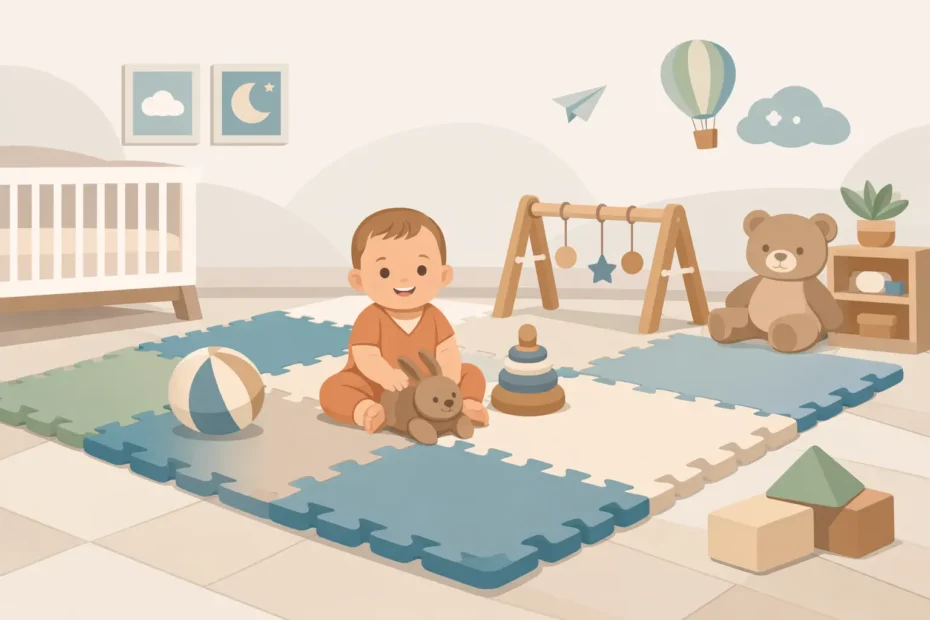
The best nursery floor padding does two jobs at once – it protects little ones during everyday play, and it gives parents real peace of mind. If you have ever watched a baby topple sideways during tummy time or a toddler misjudge a step, you already know the floor matters more than most nursery furniture. Padding is not just a finishing touch. It is part of the safety setup.
For UK parents, nurseries and playgroups, the right choice comes down to more than softness. You need something supportive, hygienic, durable and easy to live with. A mat that looks good for a week but curls at the edges, marks easily or shifts underfoot is not a bargain. Good nursery floor padding should feel safe from day one and still hold up after months of crawling, rolling, spills and toy drops.
What makes the best nursery floor padding?
A lot of products look similar online, but the performance can be very different once they are actually used. The best nursery floor padding balances impact absorption with firmness. Too thin, and it barely softens bumps. Too soft, and babies can sink awkwardly when learning to roll, sit or crawl.
This is where foam padding tends to stand out. Properly made foam mats and soft play pads offer a supportive landing surface without feeling unstable. That matters at home, but it matters just as much in early years settings where multiple children are moving around the space all day. Commercial buyers usually need a tougher finish and better long-term wear, while parents may focus more on comfort, size and how easily a mat fits into a nursery or playroom.
The cover material also matters. Wipe-clean vinyl finishes are popular for a reason. They are practical, fast to maintain and much better suited to everyday nursery use than fabrics that trap dust or absorb spills. If you are dealing with snacks, dribbles, paint or the usual nursery mess, easy-clean surfaces save time and frustration.
Foam mats, soft play pads or puzzle tiles?
There is no single answer for every room. It depends on who is using the space, how often it is used and what sort of activity happens there.
Foam mats for everyday home use
Foam mats are one of the strongest all-round options for domestic nurseries. They give a softer surface for babies, help reduce the shock of tumbles and create a more comfortable area for floor-based play. For parents who want a dedicated safe play zone, a single-piece or folding foam mat often feels tidier and more secure than smaller interlocking alternatives.
They are especially useful if your nursery has laminate, tile or another hard floor underneath. On carpet, they can still add useful protection, though the difference is less dramatic than on a solid surface.
Soft play padding for active toddlers
Once children become more mobile, basic baby mats may stop being enough. Toddlers climb, bounce, jump and launch themselves with far more confidence than accuracy. This is where thicker soft play padding comes into its own. It is built for more energetic use and generally offers better shock absorption than ultra-thin nursery mats.
If you want a play area that grows with your child, this is often the smarter buy. It can move from tummy time to active play without needing replacing too quickly.
Puzzle tiles for flexible spaces
Interlocking tiles can work well if you need to cover an awkward shape or want a floor that is easy to expand. They are often chosen for spare rooms, childminder settings and temporary play areas. The trade-off is that lower-quality tiles can separate, lift at the edges or show wear faster in busy environments.
For light use, they can be practical. For heavy daily use, thicker and more durable padded units usually offer better value over time.
Best nursery floor padding for safety
Safety is the reason most people start looking, so it pays to be selective. The best nursery floor padding should sit flat, stay in place and provide dependable cushioning where children are most likely to fall. In real terms, that means padding needs enough depth to soften tumbles but not so much that it becomes unstable for standing toddlers.
You should also think about where the mat is placed. Under climbing toys, near cot-side play areas and in front of shelves or activity stations, a stronger level of padding makes sense. In a quiet reading corner, comfort may matter more than impact resistance.
For nurseries, preschools and soft play operators, durability becomes part of safety too. Padding that compresses quickly or splits at the seams is not doing the job properly. Commercial environments need products designed for repeated use, easy cleaning and dependable structure. Paying less upfront for weak padding often leads to faster replacement and more hassle.
Comfort, cleaning and durability
Parents usually notice comfort first, but day-to-day use quickly brings cleaning and durability into focus. A nursery floor pad can look perfect in the product photo, then become a nuisance if it attracts marks, holds odours or needs constant adjustment.
Wipe-clean padded mats are usually the strongest option because they are built for real life. You can clean them quickly after spills, craft time or messy play, and that makes a difference whether you are managing one child or twenty. Smooth, sealed surfaces are generally easier to maintain than textured fabric styles.
Durability is where better manufacturing shows. Good padding should keep its shape, resist splitting and hold up under repeated pressure. If the foam breaks down too quickly, the protective benefit drops off. That is why quality construction matters far more than novelty prints or cheap bundle deals.
For buyers comparing options, this is the key question: will it still be performing properly six months from now? If the answer looks doubtful, it is not the best value, no matter how low the price appears.
Choosing the right size and thickness
The right nursery floor padding is not always the thickest or the largest. It needs to suit the room and the child.
For a newborn or young baby, a compact padded area may be enough for supervised floor play. For older babies who roll across the room, larger coverage is more useful. Toddlers usually benefit from a bigger defined play zone, especially if the mat is being used with soft play shapes, step-and-slide units or activity toys.
Thickness should match the activity level. Lower-profile mats can be suitable for gentle floor play and sitting. Thicker safety padding is a stronger choice for crawling, climbing and toddler movement. In commercial settings, bespoke sizing often makes more sense than trying to force standard mats into a room that was never designed around off-the-shelf dimensions.
That is one reason custom-made options have real value. They help you use the space properly, reduce awkward gaps and create a neater, safer finish.
What UK parents and nurseries should avoid
A cheap mat is not always a bad buy, but obvious shortcuts usually show up quickly. Very thin padding, weak seams, poor surface grip and covers that mark or tear easily are common problems. So are mats that slide too much on hard flooring.
It is also worth being cautious with products that focus on appearance over function. Stylish designs are fine, but nursery flooring is first and foremost a safety product. If the padding is not supportive, durable and easy to clean, the look will not make up for it.
Commercial buyers should be especially wary of domestic-grade mats being used in busy group settings. What works in a spare-room nursery may not cope with a preschool play area. There is no value in replacing underperforming products again and again.
Why better value is not the same as the lowest price
Price matters. Every parent has a budget, and every nursery has to keep an eye on costs. But the best nursery floor padding is about value, not just a low ticket price. If a better-made pad lasts longer, cleans faster and gives stronger protection, it often works out cheaper in practice.
This is where UK-made padded products can stand out. More control over materials, build quality and sizing tends to produce a better result than mass-produced imports built to hit the lowest possible price point. For customers who want reliable support, custom options and direct service, that difference is worth paying attention to.
At Softplay Toys4Kids, that is exactly where the focus sits – safe, practical padding that works for homes, nurseries and commercial soft play spaces without inflating the price.
The best nursery floor padding depends on how you use it
If you want simple comfort for a baby play corner, a quality foam mat can be ideal. If you need stronger protection for active toddlers, thicker soft play padding is usually the better call. If you are fitting out a nursery, preschool or childminding setting, durable wipe-clean safety pads with the right size and finish will give you a better long-term result.
The smartest buy is the one that matches your space, your child and your level of daily use. Get that right, and your nursery floor stops being something you worry about and starts becoming part of a safer, more useful play environment. That is money well spent, and it makes every crawl, wobble and tumble a little less stressful.
Leave a Reply