
What Is a Calming Corner? How to Create One for Your Child
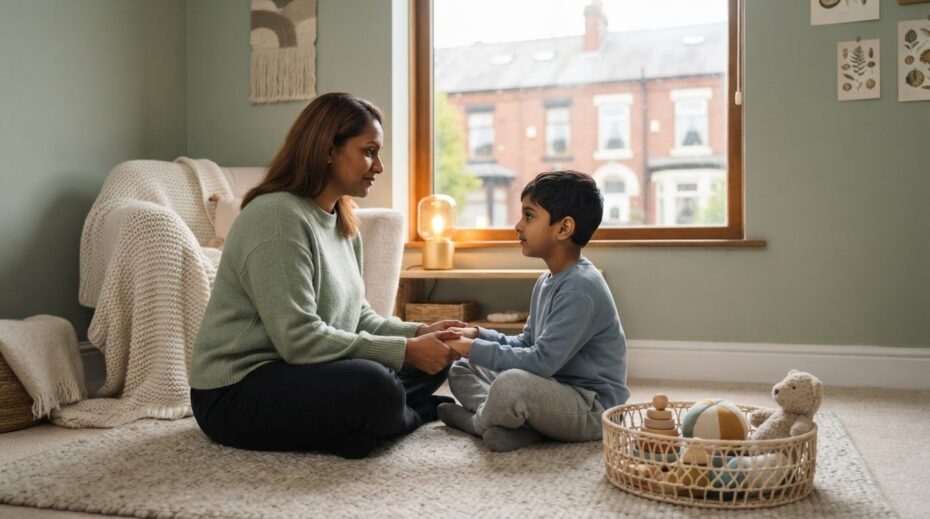
What if a calming corner helped your child feel supported, rather than sent away? If you’re wondering what is a calming corner and how to create one, start by making it a welcoming place to practise calming down, not a spot used as punishment when behaviour gets difficult.
It’s understandable to be unsure what belongs there or whether your child will want to use it. The space doesn’t need to be elaborate: a comfortable place to pause, a few child-chosen options and your reassuring presence are a practical starting point. A calming corner can support emotional regulation, but it isn’t a quick fix or a substitute for adult support.
In this guide, you’ll learn how to choose a suitable spot at home or in an early-years setting, select materials around your child’s age and preferences, and introduce the space during a calm moment. We’ll also cover simple strategies to practise together. A soft-play mat can provide a comfortable surface, while sensory toys are optional additions if your child enjoys them. The aim is a simple, safe-feeling space your child can learn to use with your support.
Key Takeaways
- Learn what is a calming corner and how to create one with a straightforward approach for home or an early-years setting.
- Choose a small number of materials based on what your child finds comfortable, familiar or engaging.
- Introduce the space with a simple routine and practise calming strategies together when things are settled.
- Adapt the corner’s location, access and routines to suit your child and the adults supporting them.
- Consider a soft-play mat or sensory toy as an optional addition, not something every calming corner needs.
What Is a Calming Corner? A Supportive Space for Big Feelings
A calming corner can be simple. It doesn’t need its own room, specialist resources or a picture-perfect setup. A quiet spot with somewhere comfortable to sit and a few familiar choices may be enough to begin. If you’re wondering what is a calming corner and how to create one, think of it as an inviting place where a child can pause, notice how they’re feeling and try a strategy that may help them feel steadier.
The word “corner” doesn’t mean a child should be shut away. Make the space accessible and welcoming, with an adult nearby when support is needed. A child might choose to sit there for a quiet moment, look at a picture prompt or hold a familiar object. They might also prefer to stay where they are. The purpose is to offer an option, not to insist that every difficult feeling must be handled in one particular place.
This distinction matters most during an emotional moment. Introduce the space when everyone is calm, so your child understands its purpose before they’re upset. Model how to use it and make clear that feelings are allowed, even when a child needs help deciding what to do next. It’s a place for support and practice, not a consequence or a way to remove a child from adult care.
Keep the idea flexible. A calming corner may give a child the chance to:
- Take a quieter pause while remaining connected to a trusted adult.
- Notice or name a feeling, with help if needed.
- Try a calming strategy without pressure to feel better straight away.
What is the purpose of a calming corner?
The space gives a child a predictable option when noise, frustration or strong feelings make it harder to know what to do. Emotional regulation, or managing and responding to feelings, is a skill children practise over time with supportive adults. A corner can provide a setting for that practice. It won’t prevent every upset or make difficult feelings disappear, and it works best as one part of caring adult support.
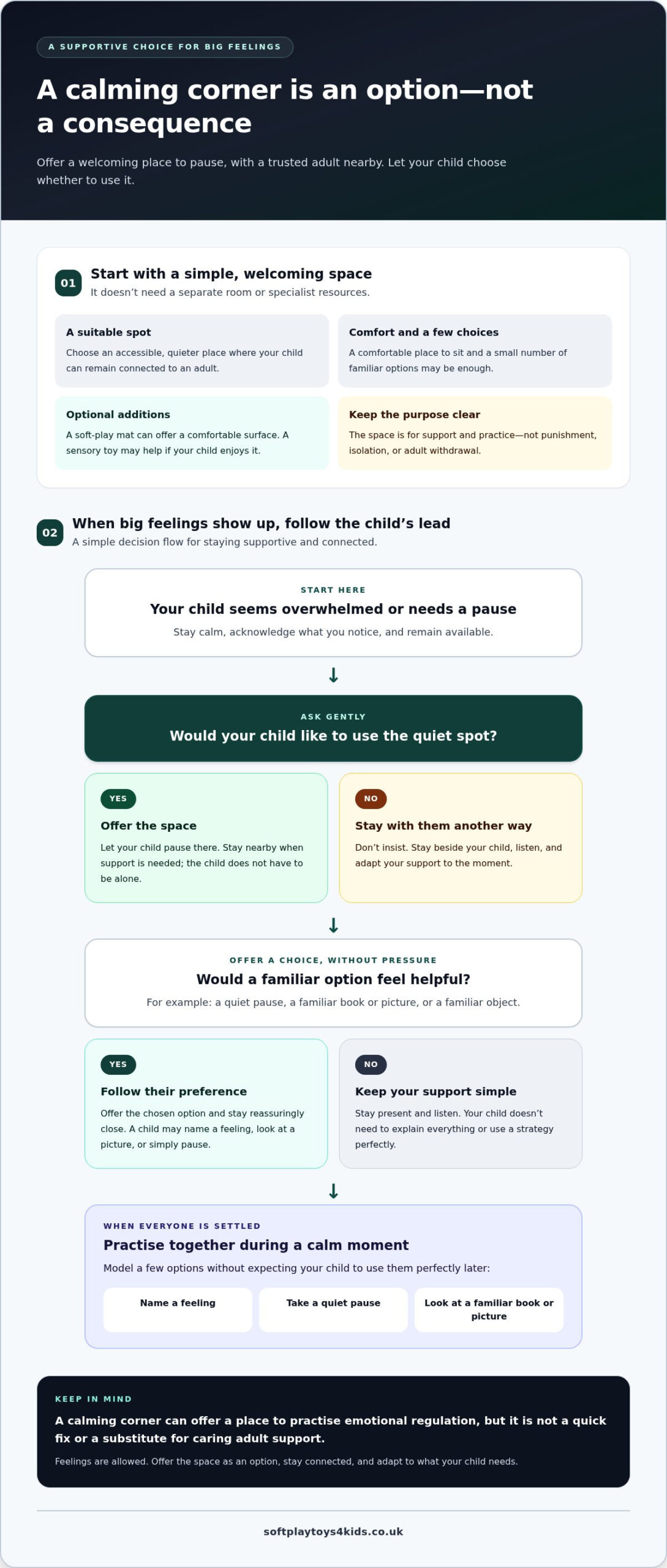
Adults can help by staying calm, acknowledging what they notice and offering a choice. For example: “You seem frustrated. Would you like a quiet moment here, or would you rather sit with me?” The child doesn’t need to explain everything or use a strategy perfectly. A gentle invitation can help the space feel familiar and safe to approach.
How is a calming corner different from time-out?
Families and settings use different approaches, and a calming corner isn’t a judgement on caregivers who use time-out. The key difference is how the space is framed: introduce it calmly before a difficult moment and offer it as support rather than impose it as a punishment. Choice, adult availability and connection remain central. The child isn’t sent away or required to be alone.
You might say, “I’m here with you. Would you like to use the quiet spot, or stay beside me?” This gives the child a choice without demanding immediate compliance. If they don’t want to go, stay present and help them through the moment another way. The broader idea of emotional self-regulation is about learning to respond to feelings, not suppressing them. A calming corner is one possible place to practise that, alongside a caring adult.
How Calm Spaces Support Children’s Emotional Regulation
Strong feelings can be hard for a child to recognise, describe and respond to, especially in the moment. A calm space gives them one place to practise those steps, but it isn’t a treatment or a promise that every upset will pass quickly. The question “what is a calming corner and how to create one?” is also about how the adults around a child help them learn to manage feelings over time.
Co-regulation is when an adult offers calm, responsive support to help a child feel understood and practise managing their emotions. You might sit nearby, listen without rushing to solve the problem and gently suggest a familiar strategy. A child can receive comfort before they’re ready to use the space or try something independently.
In its guidance on benefits of calming spaces in schools, WestEd discusses how these spaces can support emotional regulation in educational settings. At home or in a nursery, the same broad principle applies: the corner is one possible place to practise, while the relationship with a supportive adult remains central.
What can children practise in a calming corner?
Explore a few simple options together when your child is settled. Model each one without expecting them to use it perfectly later. They might try:
- Naming a feeling, such as “I feel cross” or “I’m worried”.
- Pausing for a quiet moment, with an adult close by.
- Looking at a familiar book or picture that feels reassuring.
Preferences vary. One child may like quiet, while another may find a familiar sensory toy comforting. Notice what your child chooses and what they avoid. A soft-play mat can provide a comfortable surface, and sensory toys can be optional materials. Neither is essential for practising a strategy.
Why does adult support matter?
A child who is overwhelmed may not be ready to explain what’s wrong or follow a set routine. Stay available. Listen, reflect what you notice and offer a simple choice: “Would you like me to sit with you, or shall we look at your book together?” If the child doesn’t want to use the corner, adapt your support to the moment rather than insisting.
Practising while everyone is calm helps you and your child become familiar with possible strategies before they’re needed. Later, offer a gentle reminder, not a demand. A quiet presence, a pause or a familiar activity may be more helpful than asking a child to calm down alone before they receive connection or comfort.
If you’re choosing a comfortable surface or a child-led sensory option, explore soft-play mats and sensory toys as possible additions, not requirements.
How to Choose Calming Corner Materials Without Overwhelming the Space
The right materials are the ones your child feels comfortable choosing, not the ones that make the corner look fullest. Start with a few familiar options, then notice what your child reaches for, ignores or seems distracted by. This is a practical way to answer “what is a calming corner and how to create one?” without assuming every child finds the same sights, textures or activities soothing.
Use this comparison as a starting point, not a shopping list. Each option is optional, and familiar household items may be enough.
| Option | Possible use | May suit a child who… |
|---|---|---|
| Soft surface | Offers a defined place to sit, lie down or pause. | Likes a comfortable floor area, mat or cushion. |
| Familiar object | Provides something recognisable to hold or keep nearby. | Finds comfort in a favourite soft item or well-loved belonging. |
| Visual prompt | Reminds the child of a feeling word or a simple strategy. | Enjoys pictures or benefits from seeing an idea rather than hearing it repeated. |
| Quiet activity | Offers a gentle focus, such as looking through a familiar book. | Prefers a calm activity during a pause. |
Which items might make the space feel comfortable?
Consider what your child already likes. A mat or cushion may make a floor space more inviting. A favourite book or simple picture prompt may be more useful to a child who enjoys looking and reading. Some children may prefer a familiar soft item close by. You don’t need to include every option, and a child’s preferences can change with their age, mood or the situation.
If you’re exploring possible additions, the baby play mat guide offers related ideas about choosing a mat, while the sensory toys guide can help you think about sensory play. Treat these as options to consider, not a checklist for building a calming corner.
How can you keep sensory choices manageable?
Too many toys, bright prompts or sounds at once can make the space feel busy rather than restful. Begin with just a few choices. Think about whether your child tends to seek quiet, movement, touch or visual simplicity, and let their responses guide what stays. A sensory toy might appeal to one child, while another would rather have fewer objects and a familiar book.
Watch how your child uses the area over time. If they seem distracted, remove an item or rotate options so only a small selection is available at once. If something is consistently ignored, it doesn’t have to stay. Keep the space flexible and involve your child in choosing. Their preferences are more useful than a perfectly matched set of materials.
How to Create and Introduce a Calming Corner Step by Step
If you’ve been asking “what is a calming corner and how to create one?”, start with a simple plan that includes your child. Choose a spot and a few options, then introduce the space during a settled moment. The aim isn’t to create a perfect setup. It’s to make a welcoming place your child can choose to use while staying connected to a trusted adult.
- Choose an accessible spot. Look for a quieter area your child can reach easily and where an adult can remain nearby. It might be a small space in a bedroom, living room or nursery, rather than a separate room.
- Make room to pause comfortably. Keep the area clear enough for your child to sit or take a quiet moment. A soft-play mat or cushion could be one option, but choose a surface that suits the space and your child.
- Invite your child to help shape it. Offer a simple choice, such as which familiar book or object to include, or what to call the space. Involvement can help it feel like somewhere that belongs to them, not somewhere they’re sent.
- Keep the setup manageable. Begin with a few selected materials and one simple visual cue if it’s useful. Arrange them so your child can access them and you can still supervise and adjust the area.
- Practise together when things are calm. Show your child how they might use the space, perhaps by sitting together and looking at a book. Let them know they can ask for company and don’t have to use the corner.
Choose an accessible spot, add a few child-friendly options, and practise using them together before a difficult moment arises.
How do you set up the space?
Keep the arrangement easy to change. Ask your child to choose between a couple of suitable options rather than handing over too many decisions at once. A picture prompt might show a simple idea, such as pausing or asking an adult to sit nearby. Check that the spot fits naturally into your room or setting and doesn’t leave the child feeling cut off from the people around them.
How do you practise using it together?
Explain that the corner is available when your child wants a quieter moment, then try one or two possible activities together. Keep the practice relaxed, not a routine they must follow exactly. Later, during an upset, you might say, “Would you like to sit in your quiet spot, or stay here with me?” If they decline, stay calm and offer support where they are. A child’s choice may change from one moment to the next.
For a comfortable surface or optional sensory materials, explore soft-play mats and sensory toys as possible additions to your child’s space.
How to Adapt a Calming Corner for Home, Nursery, and Your Child
A calming corner doesn’t need to be a permanent room feature. It can be a small, clearly defined area that fits the space and the child, from a spot beside a bookcase at home to a quiet area within a nursery room. Knowing what is a calming corner and how to create one is only the starting point. Adapting it to daily routines and available adult support helps make the space practical in real life.
Use this comparison to think through what may need to change between settings:
| Consideration | At home | In a nursery |
|---|---|---|
| Space | Use a small area that fits naturally into the family’s rooms. | Define a quiet spot within the shared room, without needing a separate space. |
| Access | Keep familiar items within the child’s reach where suitable. | Make it clear when and how children can use the area, with adult supervision. |
| Routines | Connect the space with moments in the child’s usual day, such as after nursery. | Use a simple, familiar approach across the room’s daily routine. |
| Adult support | A parent or caregiver can offer company and adapt support to the moment. | Practitioners can help children access the area and remain available nearby. |
What changes between a home and nursery calming corner?
At home, consider where your child naturally goes for a quiet moment and which familiar objects they may want close by. A small area near a parent or caregiver may feel more inviting than a tucked-away spot. In a nursery, children share the space, so adults can make the area recognisable, explain how it’s used and supervise access as part of the room’s routine.
Where practical, parents and nursery staff can use similar, simple language, such as “quiet space” or “pause spot”. Consistent wording can help a child understand the purpose, while still allowing adults to respond to the needs of the moment. For broader context on play environments, explore this beginner’s guide to soft play.
When should you review or adjust the space?
Notice what your child does over time. Do they approach the area, leave it untouched or seem distracted by a particular item? Their response can help you decide whether the location, materials or routine needs a change. Ask an age-appropriate question, such as “Would you like this book here?” For a child who doesn’t use words to share a preference, observe what they reach for or move away from.
Change one feature at a time, then give your child a chance to get used to the adjustment. A soft-play mat may suit a child who likes a comfortable floor area, while sensory toys may appeal to a child who enjoys exploring particular objects. Both are optional. SoftplayToys4kids makes mats and sensory toys by hand in Bradford, West Yorkshire, and offers custom size and colour options on order. Choose materials around the child and the setting, not because a calming corner needs particular products.
Take One Small Step Towards a Space That Feels Right
Your first version doesn’t have to be perfect. Think of it as a starting point you and your child can shape together as you learn what feels comfortable. If you’re still asking “what is a calming corner and how to create one?”, focus on the relationship behind the space: it’s an invitation to pause, with a caring adult close by, not a solution that has to work the same way every time.
Begin with what you already have, then notice what your child chooses and adjust gently. A familiar object or a comfortable place to sit may be all you need. Let your child’s changing interests guide any additions, and give the space time to become part of everyday life without pressure.
If a soft surface or sensory option would suit your child, explore handmade soft-play mats and sensory toys. SoftplayToys4kids makes its products in Bradford, West Yorkshire, with custom size and colour options available on order.
Small, thoughtful steps can make room for connection. Start with one choice, stay alongside your child, and let the space grow with them.
Frequently Asked Questions
What age can a child start using a calming corner?
There’s no single starting age; introduce the idea in simple language your child can understand. If you’re asking what is a calming corner and how to create one for a baby or toddler, think first about a calm, supervised place where you can stay close, rather than expecting them to manage feelings independently. Practise together and adapt the space as your child grows. Age alone doesn’t determine readiness.
How long should a child stay in a calming corner?
There’s no universal duration, and the space shouldn’t become a timed consequence. Let your child’s needs and safety guide the pause, while you stay available to offer reassurance. They may feel ready to return to play, or need comfort with you somewhere else. A timer isn’t a requirement, and comfort shouldn’t depend on staying in the corner for a set period or calming down first.
What if my child refuses to use the calming corner?
Refusing the space doesn’t mean it has failed, so don’t force your child to enter. At a calm time, ask whether they’d prefer a different name, location or object, and make one change to try. If they’re upset, offer another option, such as sitting together or taking a quiet pause elsewhere. Preferences can shift, so keep observing and let your child’s response guide adjustments.
Can you create a calming corner in a nursery or classroom?
Yes. A small, clearly defined area can fit into an existing room without needing a separate room. Keep it accessible and within adult supervision, and agree how children can use it within the setting’s everyday routines. Practitioners can explain the space in child-friendly language and model its use. It should complement adult guidance, not replace connection, attentive supervision or support tailored to the child.
Does a calming corner need special equipment?
No, special equipment or a large budget isn’t necessary. Begin with a comfortable spot and a few familiar items already available at home or in the setting. A book, mat or sensory object might suit your child, but these are optional choices, not essentials. Pay attention to what they actually use. If an item distracts them or goes untouched, remove it and keep the setup simple.
What happens if a child becomes more upset in the calming corner?
Stay calm, remain available and respond to what your child needs rather than insisting they stay there. The space may not suit that moment; your child might need you beside them, a different quiet spot or another kind of reassurance. Keep the child’s immediate safety in mind and adjust your approach. If you have ongoing concerns about their wellbeing, seek appropriate professional advice for guidance suited to your circumstances.
Leave a Reply