Phthalate-Free Play Mats: The Parent’s Ultimate Safety Guide for 2026
Could that “non-toxic” sticker on your nursery floor be hiding a cocktail of unregulated chemicals? It’s a question that keeps many parents up at night, especially when you realize that not all safety labels are created equal under the latest 2026 UK REACH standards. We know you want more than just a soft surface for those first tumbles; you want absolute certainty that the air your baby breathes is clean. You’re tired of confusing foam acronyms and that lingering plastic smell that feels anything but healthy. Choosing high-quality phthalate-free play mats shouldn’t feel like a chemistry experiment.
This guide cuts through the marketing noise to show you exactly why certified phthalate-free play mats are a non-negotiable for your home. You’ll discover how to find a durable, easy-to-clean solution that survives heavy daily use without compromising on safety. We’re diving into the latest 2026 safety regulations, comparing foam types like EVA and XPE, and explaining why our West Yorkshire manufacturing process sets the gold standard for your peace of mind. Get ready to transform your playroom into a truly safe sanctuary for your little ones.
Key Takeaways
- Learn why phthalates are classified as endocrine disruptors and how they can migrate from standard plastics into your child’s developing system.
- Compare EVA, XPE, and Polyurethane foam to determine which phthalate-free play mats provide the ultimate balance of cushioning and chemical safety.
- Identify the critical durability and fire retardancy standards, such as BS 5852, required for professional nursery environments and busy home playrooms.
- Master a daily cleaning routine that effectively sanitises surfaces without relying on abrasive chemicals that could compromise your mat’s integrity.
- Discover the benefits of sourcing handmade, factory-direct products from West Yorkshire to ensure full manufacturing transparency and premium British quality.
Understanding Phthalates: Why Your Choice of Play Mat Matters
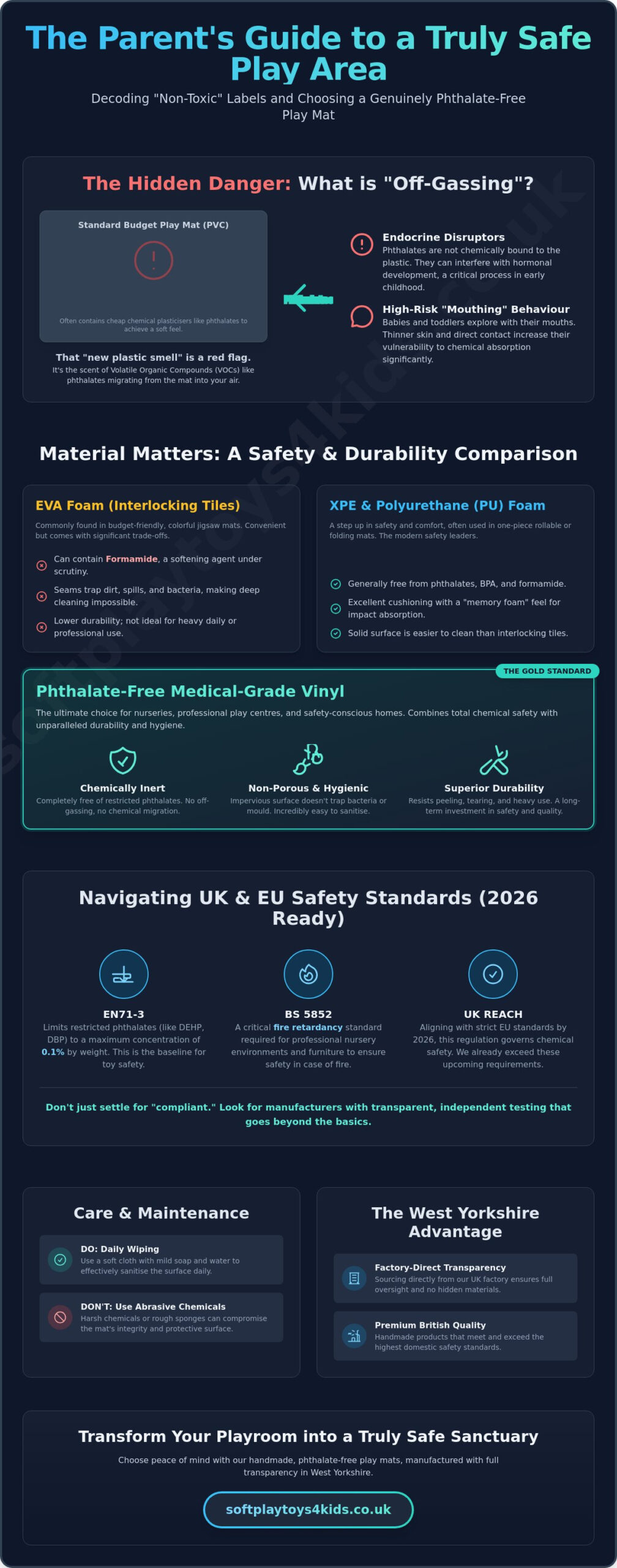
Ever wondered about that sharp, chemical odour coming from a brand-new play mat? That’s the smell of off-gassing, and it’s a major red flag for parents. Many manufacturers use Phthalates, which are chemical plasticisers added to PVC to make it soft and flexible. Here is the problem: these chemicals aren’t actually bound to the plastic. They can migrate out over time, especially when subjected to the heat of a sunny nursery or the constant friction of a crawling toddler. Choosing phthalate-free play mats isn’t just a trend; it’s a vital step in protecting your child’s indoor air quality.
Why do these chemicals persist in so many products? It’s simple: they are cheap. Mass-produced, imported mats often rely on these additives to achieve a “squishy” feel at a rock-bottom price. While those budget options might look identical to premium phthalate-free play mats, the hidden cost is the chemical exposure your family faces every single day. We believe your peace of mind is worth more than a few pounds saved on production. Compare us to the competition, and you’ll see why our commitment to non-toxic materials stands alone.
The Science of Endocrine Disruptors in Early Childhood
UK and EU Safety Standards for Play Equipment
Understanding safety labels in 2026 requires a sharp eye. The primary benchmark is the EN71-3 standard, which limits restricted phthalates like DEHP and DBP to a maximum concentration of 0.1% by weight. However, there’s a massive difference between a product that is merely “compliant” and one that is independently tested. While UK REACH regulations are aligning more closely with strict EU standards, we go further. Our West Yorkshire facility maintains rigorous oversight to ensure every mat exceeds basic requirements. Don’t settle for “good enough” regarding your child’s safety; look for the transparency that only a local manufacturer can provide.
Material Deep Dive: Comparing Foam and Fabric Safety
Choosing the right material for your nursery floor is about more than just finding a cute pattern. It’s about understanding the molecular makeup of where your child spends their most formative hours. While many parents assume all foam is created equal, the reality is a complex mix of chemical stability and physical durability. When you’re hunting for phthalate-free play mats, you’re likely choosing between three main contenders: EVA, XPE, and Polyurethane. Each offers a different level of “crash” protection and chemical peace of mind.
Can PVC ever be truly safe? It’s the question we hear most often. While traditional PVC is often loaded with additives, modern medical-grade vinyl has changed the game. By removing the harmful plasticisers restricted by CPSC phthalate regulations, manufacturers can create surfaces that are both non-toxic and incredibly easy to sanitise. This is why high-end nurseries and professional play centres prefer medical-grade vinyl over porous foams. It doesn’t trap bacteria, it doesn’t peel, and it provides superior impact absorption for those inevitable tumbles.
EVA Foam: The Pros and Cons of Interlocking Tiles
EVA (Ethylene-Vinyl Acetate) is the go-to for many budget-conscious families. Those colourful interlocking tiles are convenient and easy to store, but they come with trade-offs. Cheaply produced EVA can sometimes contain formamide, a chemical used to make the foam soft that has faced increasing scrutiny in recent years. Cleaning is another hurdle. Spills find their way into the seams, creating a breeding ground for mould and bacteria that you just can’t see from the surface. If you’re looking for a long-term, heavy-duty solution, solid-surface phthalate-free play mats often outperform these jigsaw alternatives.
Polyurethane (PU) and TPU: The Modern Safety Leaders
If you want that “memory foam” feel, Polyurethane (PU) is your best bet. It provides exceptional support for tummy time and protects delicate joints during early crawling attempts. For the eco-conscious parent, TPU (Thermoplastic Polyurethane) is a rising star. It’s non-toxic, biodegradable, and offers a durable finish without the need for harmful off-gassing chemicals. Want to see how these materials stack up in a real-world home? Check out our ultimate guide to choosing the perfect baby play mat for a deeper look at what fits your lifestyle. For those who demand the highest standards of British craftsmanship, our range of play mats offers the perfect blend of safety and style.
Choosing the Right Phthalate-Free Play Mats for Your Needs
Selecting the perfect surface for your little one involves more than just picking a colour that matches your curtains. You need a solution that adapts to your specific environment, whether that’s a quiet corner of a London flat or a bustling nursery in Leeds. The demands of a home playroom are vastly different from a high-traffic commercial setting. While aesthetics and comfort might lead your decision at home, professional environments require a “heavy-duty” mindset. Choosing phthalate-free play mats ensures you aren’t compromising on health, but you must also consider physical performance and safety certifications like BS 5852 fire retardancy.
For sensory and SEN (Special Educational Needs) environments, the choice becomes even more nuanced. Texture and colour play a massive role in supporting neurodivergent play. Some children thrive on high-contrast, tactile surfaces, while others need calming, neutral tones to avoid overstimulation. Regardless of the setting, the “wipe-clean” factor is a non-negotiable feature. Non-porous surfaces prevent the build-up of bacteria and allergens, keeping the play area hygienic with minimal effort. When you consider the scientific evidence on phthalate dangers, it’s clear that a clean, chemical-free environment is the foundation of healthy development.
Home Use: Tummy Time to Toddler Trials
Commercial Use: Durability for Schools and Play Centres
Commercial-grade mats are a different breed entirely. In a school or play centre, a mat might withstand hundreds of “steps” every single day. Cheaper alternatives will compress and lose their impact-absorbing properties within weeks, leaving children at risk. Our professional range features reinforced stitching and anti-slip bases to ensure the mats stay exactly where you put them. If you are setting up a new facility, check out our indoor playground equipment buyer’s guide for expert advice on high-traffic layouts. Don’t settle for flimsy imports when you can invest in British-made quality that’s built to last.
How to Maintain and Clean Your Non-Toxic Play Area
You’ve spent time researching and investing in phthalate-free play mats to keep your children safe from hidden chemicals. It would be a shame to undo all that hard work by dousing those surfaces in harsh, industrial cleaners. Many parents and nursery managers reach for bleach or heavy alcohol-based wipes, thinking they’re doing the right thing. In reality, these aggressive substances can strip the protective coatings of your mats, leading to premature cracking or fading. For high-traffic areas like SEN schools or busy nurseries, maintaining hygiene without damaging the material is a daily balancing act that requires a gentler touch.
Cleaning your non-toxic play area doesn’t require a lab full of chemicals. A simple, consistent routine will keep your surfaces pristine and your children healthy. This is especially critical in commercial settings where the turnover of children is high and sanitisation happens multiple times a day. If you want to ensure your equipment lasts for years rather than months, you need to follow a specific care protocol that respects the craftsmanship of the product. We take pride in our West Yorkshire manufacturing standards, and we want your investment to stay in peak condition for as long as possible.
Safe Cleaning Agents for Phthalate-Free Surfaces
Most of the time, a soft cloth paired with mild soap and warm water is all you need to handle spills and sticky fingerprints. This gentle approach preserves the integrity of the medical-grade vinyl or TPU surface. For a deeper, natural disinfection, a solution of diluted white vinegar works wonders without leaving behind toxic residues that could irritate sensitive skin. It’s vital to dry your mats thoroughly after cleaning to prevent mould growth from developing under the base or within the seams. Never leave a mat damp, as moisture trapped against the floor can lead to long-term hygiene issues that are difficult to resolve.
Routine Safety Checks for Playroom Flooring
Safety isn’t just about what’s in the mat; it’s about the physical condition of the equipment. We recommend a weekly inspection of all seams and zips to ensure they remain tightly closed and intact. This prevents curious little fingers from accessing the inner foam, which isn’t designed for direct contact or mouthing. You should also watch out for “bottoming out,” a condition where the internal foam has lost its bounce and no longer provides adequate impact protection during tumbles. For a more comprehensive look at keeping your gear in top shape, read our maintenance guide for soft play toys. Ready to upgrade your facility with British-made quality? Explore our full range of soft play mats today and experience the difference that local manufacturing makes.
Why SoftplayToys4kids Leads the UK in Phthalate-Free Manufacturing
Are you tired of “UK-based” brands that are actually just middleman retailers shipping mass-produced goods from overseas? We do things differently. Every single one of our phthalate-free play mats is handmade right here in West Yorkshire. This isn’t just about local pride; it’s about absolute control. Because we own the factory floor in Bradford, we oversee every stitch, every seam, and every square inch of material. You aren’t just buying a product; you’re investing in British craftsmanship that prioritises your child’s safety above all else. Compare our hands-on approach to the “drop-shippers” on the market, and the difference in quality is immediate.
One of the biggest hurdles for parents is the high cost of non-toxic equipment. By choosing a manufacturer-direct partner, you cut out the retail markup entirely. Why pay extra for a middleman’s profit when you can get premium, medical-grade safety at factory-direct prices? This lean business model allows us to reinvest in the highest quality materials without passing on unnecessary costs to you. Whether you need a standard set for a nursery or bespoke phthalate-free play mats for a uniquely shaped sensory room, our team has the technical expertise to deliver exactly what you need.
Our Manufacturing Process: From Factory to Playroom
How do we guarantee the safety of our products? It starts with the raw materials. We only source certified, medical-grade vinyl and high-density foams that meet the most stringent UK safety standards. Our mats are built to last a decade, not just a single season of play. We use reinforced twin-needle stitching and industrial-strength zips that withstand the rigours of daily use in busy schools. Want to see the process for yourself? We invite you to see how our soft play toys are made and meet the team behind your child’s favourite play equipment.
Supporting the UK Economy with Every Purchase
When you buy from us, you’re doing more than just protecting your child; you’re supporting local jobs and reducing your environmental footprint. Shipping a mat from Bradford to Birmingham uses significantly less carbon than importing it from across the globe. We’ve become a trusted partner for UK nurseries, schools, and parents who refuse to compromise on quality or ethics. Our team is always accessible, ready to help you design the perfect play space that meets your specific needs. Don’t settle for generic imports when you can have custom British quality. Browse our range of phthalate-free play mats and ball pits today!
Create a Safe Foundation for Every Milestone
Choosing the right surface for your child’s early development is one of the most impactful decisions you’ll make for your home or nursery. You now understand that true safety goes beyond a simple label; it’s about the transparency of the manufacturing process and the medical-grade quality of the materials used. By prioritising phthalate-free play mats, you’re actively protecting your little ones from endocrine disruptors during their most sensitive developmental years. Whether you’re setting up a quiet sensory corner or a high-traffic play centre, the right material makes all the difference in health and durability.
We take immense pride in our craftsmanship. Every mat we produce is handmade in West Yorkshire and is already trusted by over 500 UK nurseries for its premium standards. Our products are certified phthalate-free and non-toxic, giving you total peace of mind while your children explore, tumble, and grow. Ready to invest in a safer play environment? Shop our range of UK-made, phthalate-free play mats here and discover the difference that factory-direct quality brings to your home. Let’s make every play session a safe, joyful adventure!
Frequently Asked Questions
Are all foam play mats phthalate-free by law in the UK?
No, not all mats are entirely free, but they must meet specific legal limits. Under the Toys (Safety) Regulations 2011, restricted phthalates are limited to a maximum concentration of 0.1% by weight. While this is the legal standard, some budget imports might not meet these requirements or might use unregulated plasticisers. Choosing phthalate-free play mats from a trusted UK manufacturer ensures you aren’t just meeting the minimum legal threshold but exceeding it for total peace of mind.
How can I tell if my current play mat contains harmful chemicals?
Check for a strong, lingering “plastic” smell and look for specific safety certifications on the packaging. A pungent odour that doesn’t dissipate after 48 hours is often a sign of off-gassing from volatile organic compounds or unregulated plasticisers. You should also look for the CE or UKCA mark alongside EN71-3 compliance. If the manufacturer cannot provide independent test results for their materials, it’s safer to assume they haven’t undergone rigorous chemical screening.
Do phthalate-free play mats have a chemical smell when new?
High-quality non-toxic mats should have little to no odour when they arrive. Because we use medical-grade materials that don’t rely on volatile plasticisers for flexibility, you won’t experience that aggressive chemical scent typical of cheaper alternatives. A very faint “new material” smell is normal but should vanish almost instantly. If a mat smells like a swimming pool liner or strong solvent, it’s a major red flag for chemical safety.
Is EVA foam safe for babies who are still teething and mouthing toys?
EVA foam is generally considered safe if it is certified formamide-free and meets EN71 standards. However, because babies often bite or “mouth” their play surfaces, many parents prefer the reinforced covers of our professional phthalate-free play mats. These provide a more durable barrier that prevents little ones from picking off or swallowing small bits of foam. If you use EVA tiles, ensure they are high-density and regularly check for any signs of crumbling or bite marks.
What is the best way to clean a non-toxic play mat without damaging it?
Use a soft cloth with warm, soapy water for daily maintenance to preserve the material’s integrity. Avoid abrasive sponges or harsh bleach-based cleaners that can degrade the non-toxic surface over time. For a natural deep clean, a mix of one part white vinegar to four parts water works perfectly. Always dry the mat thoroughly before placing it back on the floor to prevent moisture from becoming trapped underneath.
Are your play mats suitable for commercial use in nurseries?
Yes, our mats are specifically engineered to withstand the high-intensity environment of UK nurseries and play centres. Unlike domestic-grade foam tiles that compress under constant footfall, our professional range uses high-density foam and reinforced stitching. They meet BS 5852 fire retardancy standards and are built for longevity. This makes them a cost-effective choice for any commercial setting that demands both safety and heavy-duty performance.
Why is medical-grade vinyl better than standard PVC for children’s mats?
Medical-grade vinyl is manufactured without the harmful phthalates found in standard PVC used for industrial products. It offers a non-porous, wipe-clean surface that is significantly more hygienic than open-cell foams. This material is designed to be skin-safe and durable enough for hospital environments, meaning it won’t crack or peel under heavy use. It provides the perfect balance of a soft touch and a robust, chemical-free barrier for your child.
Can I use these mats outdoors as well as indoors?
These mats are primarily designed for indoor use to maintain their safety certifications and material lifespan. While they are waterproof and can handle a quick session on a flat patio, prolonged exposure to UV rays and rough outdoor surfaces can cause the material to fade or tear. To keep your mats in peak condition for years, we recommend using them inside or on a covered, smooth surface away from direct sunlight and sharp debris.
Leave a Reply