
Playground Flooring Ideas: Creating a Safe & Fun Home Play Area
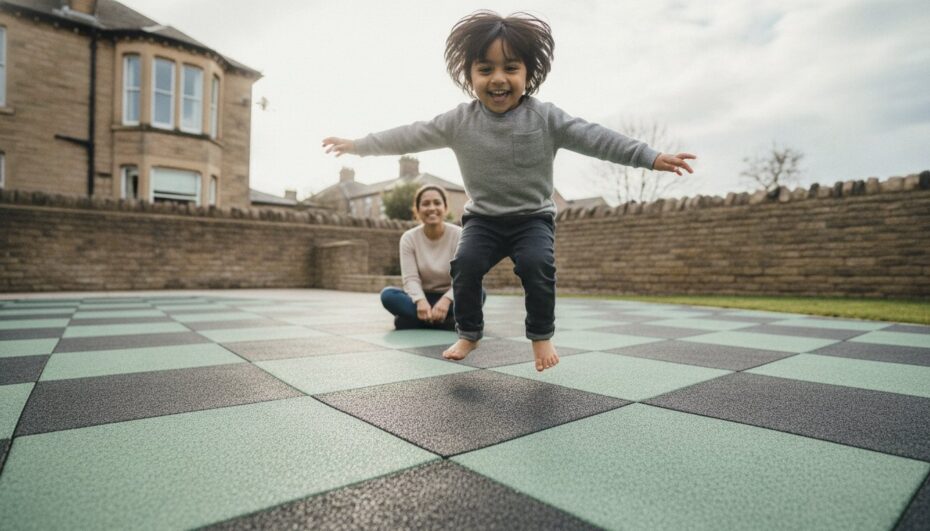
What if the very floor your child plays on is the biggest obstacle to their safety? It’s a question every parent asks after that first heart-stopping stumble on a hard kitchen tile or a cold patio. You want your home to be a sanctuary of joy, but the fear of injuries from falls can often overshadow the fun. Whether you’re looking at interlocking foam play mats for a spare room or durable padding for a garden setup, getting the foundation right is the only way to play with total peace of mind.
We know you’re looking for a setup that looks great and lasts for years without the confusion of complex safety jargon. You’ll discover the best playground flooring options for your home, from understanding BS EN 1177 standards to practical DIY installation tips that keep your little ones protected. We’ll show you how to create a certified safe play area that’s easy to clean and built to handle every jump, skip, and hop. Let’s transform your space into a professional-grade fun zone using the same craftsmanship we put into our handmade West Yorkshire designs.
Key Takeaways
- Master the BS EN 1177 standards and learn how Critical Fall Height determines the exact thickness your flooring needs for maximum protection.
- Compare the best flooring materials for every zone, from heavy-duty rubber to versatile interlocking foam play mats that are perfect for indoor playrooms.
- Discover how to accurately measure your “fall zone” to ensure a safety buffer of at least 1.5m to 2m around all play equipment.
- Get professional DIY tips for ground preparation, ensuring a level and durable foundation whether you are starting on turf, soil, or concrete.
- Learn why handmade, UK-manufactured safety padding offers superior quality and stricter adherence to domestic safety regulations than mass-produced imports.
What is Playground Flooring and Why Does Your Home Need It?
What exactly is playground flooring? Simply put, it’s a specialised, impact-absorbing surface designed to cushion falls and prevent injuries. For years, these systems were only found in public parks; today, UK families are bringing that same level of protection into their own gardens and playrooms. Creating a “safe zone” at home isn’t just about luxury. It’s about giving your children the freedom to test their physical limits without the constant risk of a trip to A&E. Our Bradford-made solutions are built on this exact principle: safety shouldn’t be a compromise.
Common playground surfacing materials include:
- Rubber tiles: Tough and weather-resistant for outdoor climbing frames and high-impact areas.
- Interlocking foam play mats: The gold standard for indoor versatility, comfort, and easy cleaning.
- Artificial grass: A natural look that often hides a shock-pad layer for added safety.
Beyond physical safety, there’s a huge psychological win for parents. When you know the floor is designed to absorb a tumble, you stop saying “be careful” every five seconds. This creates a stress-free environment where kids feel confident to climb, jump, and explore their boundaries. You can finally relax on the sofa while they burn off energy in a space designed for their needs.
Indoor vs. Outdoor Playground Flooring
Are you planning a garden play area or a dedicated indoor room? The environment dictates the material. Outdoor surfaces must be UV-resistant and porous to handle the British rain. Indoor spaces, however, thrive on high-density foam. While heavy rubber is great for a swing set, interlocking foam play mats offer a warmer, softer finish for bare feet and knees. For hybrid spaces like conservatories, look for high-density foam that can handle temperature swings without warping. If you’re planning a full playroom, our bespoke design service can help you map out the perfect layout for your space.
The Role of Flooring in Early Development
Soft surfaces do more than just stop bruises; they build confidence. A toddler is much more likely to attempt crawling, tumbling, or a forward roll when the floor feels like a giant, supportive cushion. These “yes spaces” allow for unrestricted movement that is vital for motor skill development. In busy UK households, these mats also serve a practical purpose by muffling the “thud” of jumping feet and reducing impact noise between floors. It’s about creating a dedicated area where the only limit is their imagination, not the hardness of the floor. By removing the fear of the fall, you’re actually helping them grow faster.
Critical Safety: Understanding Fall Heights & EN1177 Standards
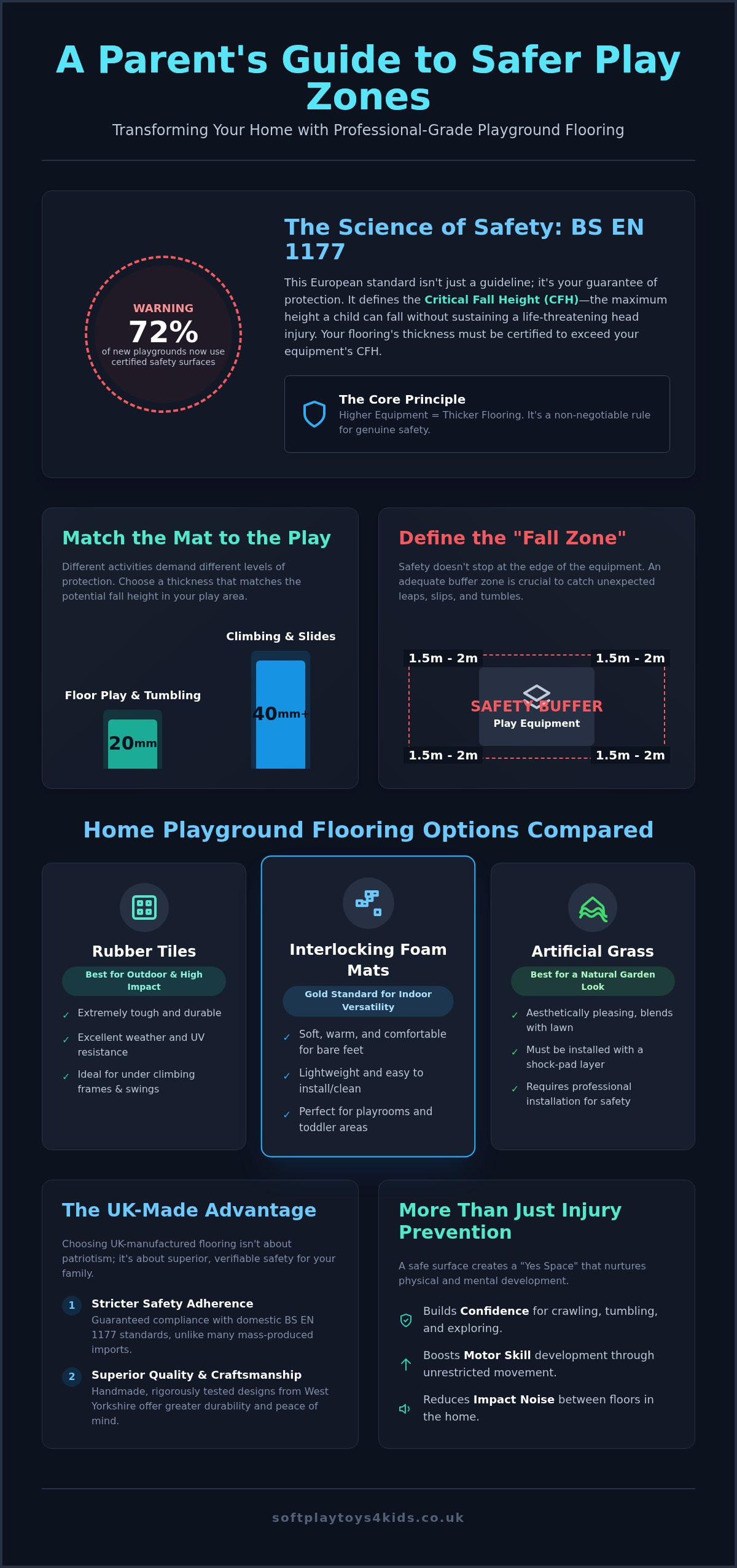
When it’s your child’s safety on the line, “good enough” is never an option. You want the highest standards of protection without needing a degree in structural engineering to understand them. That’s where BS EN 1177:2018 comes in. This British and European standard is the gold benchmark for impact-attenuating playground surfacing. It ensures that the flooring you choose actually does its job when a tumble happens. Recent data shows that over 72% of new playground projects now prioritise these certified materials to guarantee a total safety net for little adventurers.
Critical Fall Height is the maximum height from which a child can fall onto a surface without sustaining a life-threatening head injury. This specific metric dictates exactly how thick your flooring needs to be to remain effective. To find your equipment’s fall height, measure from the highest platform or foot support down to the ground. If you’re tempted by “cheap” non-certified mats from international marketplaces, remember they’re often a false economy. They rarely offer the density required to absorb high-impact energy, which is why we take such pride in our handmade, rigorously tested designs from our West Yorkshire factory.
Matching Thickness to Equipment Height
Your choice of thickness must reflect how your children actually play. A solid rule for indoor setups is using 20mm mats for low-level floor play, while anything involving climbing frames or slides requires 40mm or more. We always recommend “over-speccing” your thickness; it is a tiny extra cost for massive peace of mind. Safety also doesn’t stop directly under the ladder. You must account for the “impact area,” which the CPSC Public Playground Safety Handbook suggests should extend at least 1.5m to 2m around the equipment to catch those unexpected leaps.
Safety Beyond the Surface
True safety is about more than just the landing. In our unpredictable British weather, slip resistance is vital for any outdoor or hybrid setup. You must also ensure your interlocking foam play mats are made from non-toxic, EN71-compliant materials. This ensures they’re free from harmful chemicals and allergens that could irritate young skin. Our interlocking foam play mats are crafted with these premium standards at the forefront, creating a healthy environment for every crawl and tumble. If you’re ready to upgrade your play zone, you can view our safety-certified play mats to see how we combine professional protection with home comfort.
The Top 3 Playground Flooring Options Honestly Compared
Choosing the right surface for your home play area shouldn’t feel like a guessing game. While commercial parks often use expensive wet pour or loose mulch, these are usually overkill for a domestic setting. Wet pour requires professional installation and can cost thousands, while mulch is a magnet for local cats and requires constant raking. For a British home, you need something practical, durable, and easy to maintain. We believe in providing solutions that balance professional safety with the realities of family life. Whether you are building an indoor sanctuary or a garden adventure zone, these three options lead the pack.
Rubber Safety Tiles: Pros and Cons
Rubber tiles are the heavy-duty champions of the garden. They are designed to withstand the British elements and provide a stable, all-weather surface for climbing frames and swings. Unlike loose bark, they don’t wash away in a storm or hide sharp objects. However, they do require a solid, level sub-base like concrete or well-compacted stone to prevent tripping hazards. You can find them in classic black, vibrant green, or deep red to match your garden’s aesthetic. Before you buy, check the Public Playground Safety Checklist to ensure your layout allows for enough clearance around high-impact zones.
Foam Play Mats: The Indoor Specialist
If you are transforming a spare room or conservatory, interlocking foam play mats are the undisputed winners. Our soft play mats provide a high-density cushion that protects little knees and bare feet far better than a standard rug. Many high-street versions are thin and easily damaged; our mats are manufactured with a focus on durability and safety. They are incredibly easy to clean and can be packed away in minutes if you need the room back for guests. For toddlers and babies, the warmth and softness of interlocking foam play mats create a welcoming environment that encourages physical milestones like crawling and rolling.
Grass Protection Mats: The Hidden Safety Layer
Do you want to keep your garden looking like a garden? Grass protection mats are the “secret” choice for many UK parents. These rubber mesh mats allow natural grass to grow through the holes while providing a certified safety layer beneath. They are ideal for low-level equipment like small slides or swings. Once the grass grows through, the mats become almost invisible. Maintenance is simple; you can mow right over them on a high setting. It is the perfect way to satisfy your child’s need for adventure without sacrificing your beautiful lawn.
At SoftplayToys4kids, we don’t just sell flooring; we manufacture peace of mind in our West Yorkshire factory. We invite you to compare our handmade quality with mass-produced alternatives. You’ll find that our focus on premium materials and direct-to-consumer pricing offers a level of value that middleman retailers simply can’t match.
How to Plan and Install Your Home Playground Floor
Ready to get your hands dirty? Planning a home playground is an exciting project, but it requires precision to ensure that safety net we discussed earlier is truly effective. The first step is measuring your “fall zone.” This is the area around your equipment where a child is most likely to land if they take a tumble. Industry standards suggest a buffer of at least 1.5m to 2m in every direction. Don’t skimp on this measurement; it’s always better to have too much padding than too little when it comes to your child’s wellbeing.
For outdoor setups, ground preparation is everything. If you’re laying over turf, you’ll need to remove the grass and level the soil first. We always recommend a heavy-duty weed membrane beneath your tiles to prevent unwanted growth from pushing through the joints and creating trip hazards. If you’re using an existing concrete patio, you’re halfway there, but ensure the surface is scrubbed clean and free of loose debris before you start laying your foundation.
Step-by-Step DIY Installation for Rubber Tiles
You don’t need a professional team to get a high-end finish. Grab a rubber mallet, a sharp Stanley knife, and some outdoor-grade adhesive for the perimeter. Lay your tiles in a “brick bond” pattern; this staggered layout provides much better stability than a standard grid. When you reach the edges, use your Stanley knife to trim the tiles for a flush, professional look. It takes a little patience, but the result is a durable, safe surface that looks like it was installed by experts.
Creating a Safe Indoor Playroom
Inside the home, the process is even simpler. High-density interlocking foam play mats are designed for quick assembly and immediate use. However, a safe room is about more than just the floor. You should consider using soft play equipment that complements your flooring to create a cohesive, padded environment. Don’t forget the “hidden” hazards; corner padding and column protectors are essential for sharp furniture edges or structural pillars. If you’re laying interlocking foam play mats on laminate or hardwood, use a bit of non-slip tape to ensure the entire play area stays exactly where you put it.
Maintenance is the final piece of the puzzle. Give your mats a quick wipe with a damp cloth and mild detergent once a week to keep them hygienic. Periodically check the joints for any signs of wear or separation, especially in high-traffic zones. By staying proactive, you’ll ensure your play area remains a certified safe haven for years to come. Ready to start your project? Explore our range of handmade safety padding and mats to find the perfect foundation for your home playground.
Handmade Safety: Why UK-Manufactured Padding & Flooring Matters
Why settle for mass-produced imports when you can have handmade quality from right here in the UK? At SoftplayToys4kids, we manufacture every piece of equipment in our West Yorkshire factory. This hands-on approach means we don’t just guess at quality; we control it at every stage. Because we sell directly to you, there are no middleman markups or retail fees. You get premium, industrial-grade protection at prices that make sense for a family budget. It’s a level of craftsmanship you can feel the moment you lay down your first set of interlocking foam play mats.
Local manufacturing also ensures we stay ahead of the strictest UK safety standards. We aren’t just shipping boxes; we’re building safety systems for families we know. This proximity allows us to offer bespoke padding solutions that international competitors simply can’t match. If you have an awkward alcove or a structural pillar in the middle of your play area, we can craft custom padding to ensure every inch of the room is protected. It is about creating a “yes space” where the environment is built around your child’s needs, not the other way around.
Beyond the Floor: Total Room Safety
Safety is about the whole environment, not just the ground. When your kids are diving into one of our ball pits, they need to know the surrounding walls and corners are just as soft as the floor. We specialise in creating a 360-degree safety net. This includes custom wall padding, column protectors, and lamp post protectors for those high-energy areas where kids tend to bounce off the walls. Our high-density foam is specifically engineered to outlast cheaper alternatives, maintaining its shape and impact-absorption even after years of heavy use. Integrating these elements with your interlocking foam play mats creates a professional-grade play zone right in your home.
Get the Perfect Setup for Your Little Ones
Do you have an awkward corner or a uniquely shaped playroom? Don’t worry about trying to fit square pegs into round holes. We offer a bespoke design service for parents who want a perfect, edge-to-edge fit for their padding. Whether it’s a small sensory corner or a full-scale home soft play gym, we provide custom quotes tailored to your specific measurements. With our commitment to fast UK delivery and friendly customer support, you won’t be waiting weeks for your order to arrive from overseas.
Safe play is the best kind of play. By choosing locally manufactured equipment, you’re not just supporting a British business; you’re investing in a setup that meets the highest standards. Your children deserve a space where they can be wild, brave, and creative without you worrying about the “what ifs.” Let’s build that perfect, protected world for them today.
Build Your Perfect Home Play Zone Today
Your child’s playground should be a place of pure joy, not a source of parental anxiety. By understanding critical safety standards like BS EN 1177 and accurately measuring your fall zones, you’ve already taken the most important steps toward a safer home. Whether you choose heavy-duty rubber for the garden or versatile interlocking foam play mats for a dedicated indoor playroom, the right foundation makes all the difference. A well planned space encourages physical confidence and allows your little ones to explore their limits safely.
At SoftplayToys4kids, we’re proud to be a trusted partner for UK schools and nurseries; we bring that same professional grade protection directly to your front door. Every piece we sell is handmade in our West Yorkshire factory, ensuring you get premium quality at manufacturer direct rates. It’s time to stop worrying about the “what ifs” and start focusing on the giggles and growth that happen when kids feel truly free to play.
Ready to transform your space? Shop our handmade UK soft play mats and safety equipment today! We can’t wait to help you create a world where your little ones can play, tumble, and explore with total confidence.
Frequently Asked Questions
Can I lay playground flooring directly onto grass?
You shouldn’t lay standard rubber tiles directly onto grass as the ground will inevitably shift, creating dangerous trip hazards. For a professional finish, you need a level sub-base of compacted stone or sand. However, if you want to keep your lawn, specific rubber grass mats are designed to sit on top of the turf. These allow the grass to grow through the mesh while providing a certified safety layer for low-level play.
How thick should playground rubber tiles be for a 2-metre fall height?
For a 2-metre critical fall height, you typically need rubber tiles with a thickness of at least 60mm to 70mm to meet BS EN 1177 standards. Always check the manufacturer’s specific certification, as density varies between products. Safety is our priority at our West Yorkshire factory, so we recommend “over-speccing” thickness whenever possible. This ensures your little ones have a total safety net even during their most energetic climbing adventures.
Is rubber playground flooring safe for toddlers who still put things in their mouths?
Yes, provided you choose high-quality products that are certified non-toxic and compliant with BS EN71 standards. Our handmade safety mats are crafted to be free from harmful chemicals and allergens, making them perfectly safe for curious toddlers. While the flooring isn’t a toy, we ensure the materials used in our West Yorkshire facility meet the same rigorous safety requirements as the soft play equipment we manufacture for UK nurseries.
How do I clean interlocking foam play mats after a spill?
Cleaning your interlocking foam play mats is incredibly simple and takes just a few minutes. For most spills, a damp cloth with a mild detergent or soapy water will do the trick. Avoid using harsh bleach or abrasive chemicals that could damage the foam’s surface. Because our mats are high-density and water-resistant, they don’t soak up liquids, allowing you to maintain a hygienic “yes space” for your children with very little effort.
Do rubber grass mats really let the grass grow through?
They certainly do! These mats feature a large open-hole mesh design that allows natural grass to grow through while the rubber structure provides impact absorption. Once the grass is established, the mats become virtually invisible, preserving your garden’s aesthetic. You can even mow right over them using a high blade setting. It’s the ideal way to satisfy your child’s need for a swing set without losing your beautiful British lawn.
How long does outdoor playground flooring typically last in the UK climate?
High-quality rubber tiles are built to be incredibly durable and typically last between 10 and 15 years in the UK climate. They are designed to withstand heavy rain, frost, and UV exposure without cracking or losing their impact-absorbing properties. While interlocking foam play mats are better suited for indoor use, our outdoor rubber solutions are industrial-grade. Regular checks for debris and occasional cleaning will ensure your investment keeps your little adventurers safe for a decade or more.
What is the cheapest playground flooring option for a small garden?
Rubber grass mats are usually the most cost-effective option for small UK gardens because they don’t require an expensive sub-base or professional excavation. You simply lay them over your existing level lawn and secure them with plastic pegs. This saves you significant money on materials and labour compared to installing thick rubber tiles or wet pour. You get certified protection for slides and swings at a fraction of the cost of commercial-grade alternatives.
Do I need a professional to install my playroom flooring?
You don’t need a professional to install your playroom flooring at all. Our interlocking systems are designed for easy DIY assembly, fitting together just like giant puzzle pieces. You can easily trim the edges with a sharp Stanley knife for a flush finish against your skirting boards. It’s a quick, satisfying project that you can complete in an afternoon, giving you a professional-looking, safe play area without the added cost of a contractor.
Leave a Reply