
EVA Versus Polyethylene Foam for Soft Play
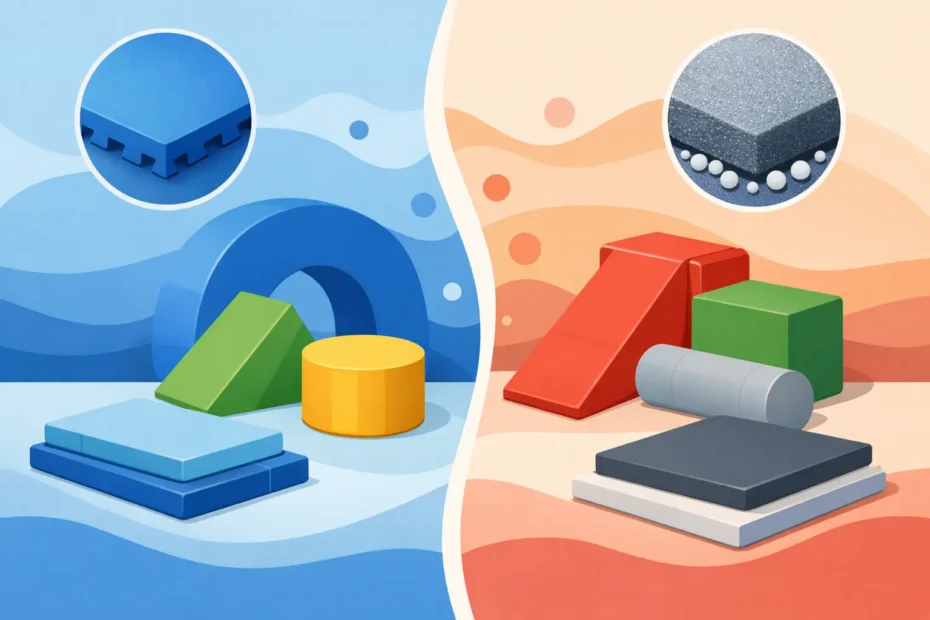
A soft play step may look simple, but the foam inside determines how it feels under little feet, how it performs after hundreds of climbs, and whether it is right for the job. When comparing EVA versus polyethylene foam, there is no single winner for every mat, shape or safety pad. The best choice depends on the child’s age, the type of play, the level of impact and how often the equipment will be used.
For parents building an indoor play corner and for nurseries fitting out a busy room, the right material means safer active play, easier cleaning and better value over time. Here is what really separates EVA and polyethylene foam in soft play equipment.
EVA versus polyethylene foam: the key difference
EVA stands for ethylene-vinyl acetate. It is a closed-cell foam widely used in puzzle mats, sports flooring, footwear and lightweight play products. It is usually recognisable by its slightly springy feel and smooth surface. EVA is flexible, light to handle and can provide a comfortable cushioned layer for everyday floor play.
Polyethylene foam, often shortened to PE foam, is also a closed-cell material. In soft play, it is commonly selected for firmer, shaped products such as climbing blocks, wedges, balance beams and safety padding. PE foam can be manufactured in different densities, so its feel and performance can be matched more closely to a product’s purpose.
Both materials resist moisture far better than open-cell foams. That matters around young children, where spills, wipedown cleaning and regular use are part of normal life. However, their different firmness, rebound and wear characteristics make them better suited to different applications.
How EVA foam performs in home soft play
EVA foam is popular with families because it is lightweight, comfortable and easy to move. A parent can lift, rearrange or store EVA mats without turning playtime setup into a major job. Its soft, slightly yielding surface is particularly useful for babies learning to roll, sit and crawl, as well as toddlers playing on hard laminate, tile or wooden floors.
Best for low-impact floor play
EVA is often a sensible choice for interlocking floor mats, baby play mats and protected activity areas where the primary aim is to create a warmer, softer surface. It adds cushioning between a child and the floor without taking up much height, which is useful in smaller homes.
It is also comfortable for adults sitting on the floor during supervised play. For a family play space used for books, building blocks, tummy time and gentle movement, that softer feel can be a real advantage.
The limits of EVA
EVA is not automatically the right choice for every soft play item. A very soft EVA product may compress too easily under repeated climbing, jumping or adult weight. If a shape needs to hold a crisp form, support confident toddlers or deal with a full nursery session every day, a firmer foam core is usually the better investment.
Surface damage is another consideration. EVA mats can show dents, pressure marks or tooth and claw marks more readily than heavier-duty commercial materials. A good-quality mat used correctly will still provide excellent service, but parents should not expect a lightweight floor mat to perform like a commercial climbing block.
Why polyethylene foam suits shaped equipment
Polyethylene foam earns its place in serious soft play because it is strong for its weight, resists moisture and maintains shape well. The exact result depends on the density specified, but PE foam is generally more structural than EVA. That makes it especially valuable when a product must be soft enough to cushion a child while firm enough to support climbing and balanced movement.
A foam step, ramp or cube should not collapse beneath a child. Equally, it should not be so hard that a tumble feels unforgiving. The right-density PE foam helps create that balance.
Better support for active toddlers
For activity sets, step-and-slide units, climbing shapes and balance equipment, polyethylene foam can deliver a more stable base. Children gain confidence when blocks do not squash or slide away as they climb. That stability supports coordination, gross motor development and independent play, while still keeping the environment far kinder than hard furniture or bare flooring.
Commercial settings benefit too. Nurseries, pre-schools, playgroups and soft play centres need equipment that can cope with repeated handling by many children. Firm, high-quality PE foam is well suited to products that are pulled, stacked, climbed over and reconfigured every day.
Durability is about the full build
Foam choice matters, but it is only one part of the product. The cover, seams, zip position, stitching and base grip all affect how long soft play equipment lasts. A strong foam core under a thin or poorly finished cover will not deliver the performance buyers expect.
For high-use equipment, look for a wipe-clean cover designed for children’s play, neatly finished seams and a construction that keeps the foam securely enclosed. Equipment should be checked regularly for splits, exposed foam, loose stitching and damage caused by rough use. Replace or remove damaged items promptly.
Firmness, density and safety are not the same thing
It is tempting to assume softer always means safer. It does not. Safety depends on the type of movement and the height of the equipment. A crawling baby needs gentle cushioning beneath them. A toddler climbing a low platform needs enough firmness to place their feet securely. A child landing after a jump needs suitable impact protection in the correct location.
If foam is too soft for a climbing shape, a child can lose footing as the surface gives way. If it is too firm for a fall zone, it may not offer enough impact absorption. This is why purpose-built soft play equipment is a better choice than trying to make a climbing course from unsuitable household cushions or generic packing foam.
For commercial installations, consider the whole area rather than buying individual pieces in isolation. The layout should allow room for movement, clear routes around activity sets and suitable protection around walls, posts and hard edges. Bespoke sizing can make a major difference where a nursery room or play venue has awkward corners, pillars or restricted space.
Cleaning and everyday maintenance
Both EVA and polyethylene foam are valued because closed-cell foam does not readily soak up water. That makes routine maintenance more straightforward than with absorbent materials. Still, foam should never be treated as maintenance-free.
Wipe covers and mats according to the manufacturer’s care guidance, using suitable cleaning products that will not degrade the surface. Dry equipment before children use it again. Avoid soaking seams, leaving products outdoors in poor weather or storing mats in damp garages and sheds.
EVA interlocking mats need occasional separation and cleaning beneath the joints, especially in homes with pets or in busy childcare rooms. For covered PE foam shapes, inspect the joins and underside as part of regular cleaning. A clean, dry play area is more comfortable for children and helps protect your investment.
Which foam should you choose?
Choose EVA where you want a lightweight, comfortable cushioned floor surface for babies and younger children. It is a practical option for tummy time, crawling, quieter indoor play and flexible home setups that need to be packed away or moved often.
Choose polyethylene foam for structured soft play that needs to retain its shape. It is the stronger contender for climbing blocks, wedges, tunnels, steps, balance beams, safety pads and commercial-use activity equipment. It is also the better choice when durability and dependable support matter more than the softest possible feel.
Many of the best play spaces use both. An EVA mat can make a hard floor more comfortable around a play area, while PE foam shapes create the active challenge in the middle. The key is matching each material to the job rather than paying for the wrong type of foam.
At Softplay Toys4Kids, we believe affordable should never mean unsuitable. Measure your space, think honestly about how children will use it, and choose equipment built for that level of play. A well-planned soft play area gives children room to crawl, climb, balance and build confidence, while giving parents and settings the reassurance that every piece is working as hard as it should.
Leave a Reply