
Foam Ball Pits: Safe Sensory Play at Home (2026)
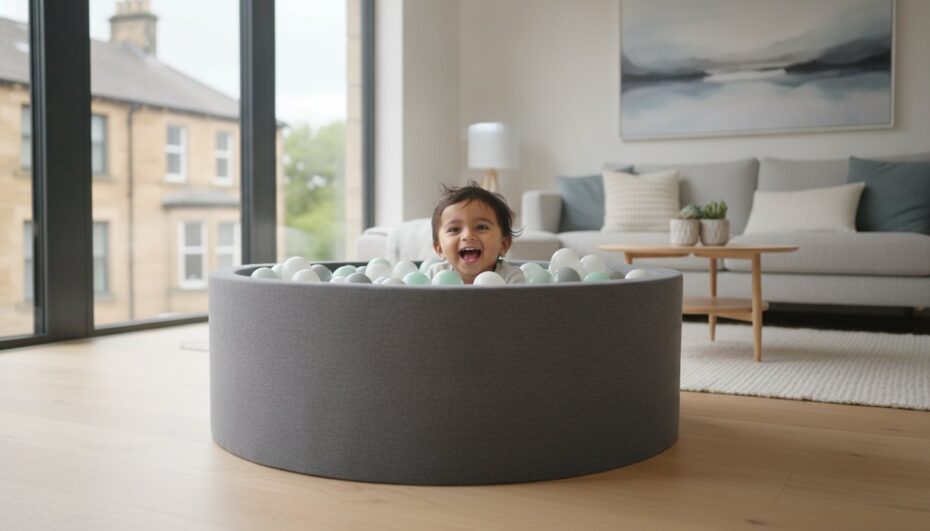
Is that “budget” pop-up ball pit actually a sensory hazard in disguise? It’s a question many parents face when looking at the endless options for their child’s playroom. When you weigh up the foam ball pit vs plastic debate, the choice isn’t just about price; it’s about structural integrity and your child’s safety. You want a play space that encourages confidence and motor skill development, not one that collapses the moment a toddler leans on the side or arrives smelling of harsh industrial chemicals.
We understand that you’re looking for a durable, stylish solution that lasts for years rather than weeks. This guide will show you why high-density, UK-made foam is the safest and most resilient choice for 2026. You’ll learn how to spot premium craftsmanship, understand the latest BS EN 71-1:2026 safety standards, and discover how to maintain a hygienic, nursery-standard environment right in your own home. Let’s find the perfect, handmade ball pool that transforms your living space into a professional-grade sensory haven.
Key Takeaways
- Understand how the calming deep pressure of 200+ balls supports sensory integration and builds essential gross motor skills through active play.
- Discover why high-density foam wins the foam ball pit vs plastic debate by providing superior shape retention and nursery-standard safety for your home.
- Learn to identify premium quality using the “squish test” and why commercial-grade covers are the secret to a long-lasting, hygienic playroom.
- Master ball count calculations and sizing strategies to ensure your Soft Play Ball Pit provides the perfect depth for safe, immersive fun.
- Unlock the value of buying handmade equipment direct from our West Yorkshire factory, ensuring commercial-grade durability without the retail markup.
What is a Foam Ball Pit and Why is it Essential?
A foam ball pit is much more than a box of balls. It’s a purposefully engineered, soft-walled enclosure designed to provide a safe, immersive sensory environment where your child can explore their physical limits. Unlike the old-school hard plastic tubs that often clutter gardens, these modern ball pools use high-density foam to create a cushioned boundary. This shift toward foam represents a significant change in how we view domestic play. We’re moving away from noisy, rigid structures toward “soft play” environments that prioritise safety without sacrificing the fun. It’s about providing a structured space that encourages your toddler to take risks, tumble, and dive without the worry of bumps or bruises.
Research into The Science of Play shows that children develop best when they feel secure enough to test their gross motor skills. Foam ball pits facilitate this by offering tactile feedback and a forgiving surface that absorbs impact. Parents are also choosing foam for its practical benefits; it offers superior noise reduction compared to the clatter of plastic on plastic, and the aesthetic appeal fits seamlessly into a modern UK home. Why settle for a flimsy alternative when you can have a piece of equipment that looks as good as it performs?
The Rise of Soft Play at Home
Why settle for a trip to a crowded play centre once a week? Many parents are now replicating that professional experience in their own living rooms to support daily development. These domestic setups allow for consistent sensory input, which is vital for early years growth. If you’re new to this concept, you can find more context in our guide on What is Soft Play? A Beginner’s Guide for Parents. Unlike the neon plastic alternatives of the past, our handmade ball pools come in sophisticated fabrics that complement your decor while meeting rigorous nursery standards.
Foam vs. Inflatable and Plastic Ball Pits
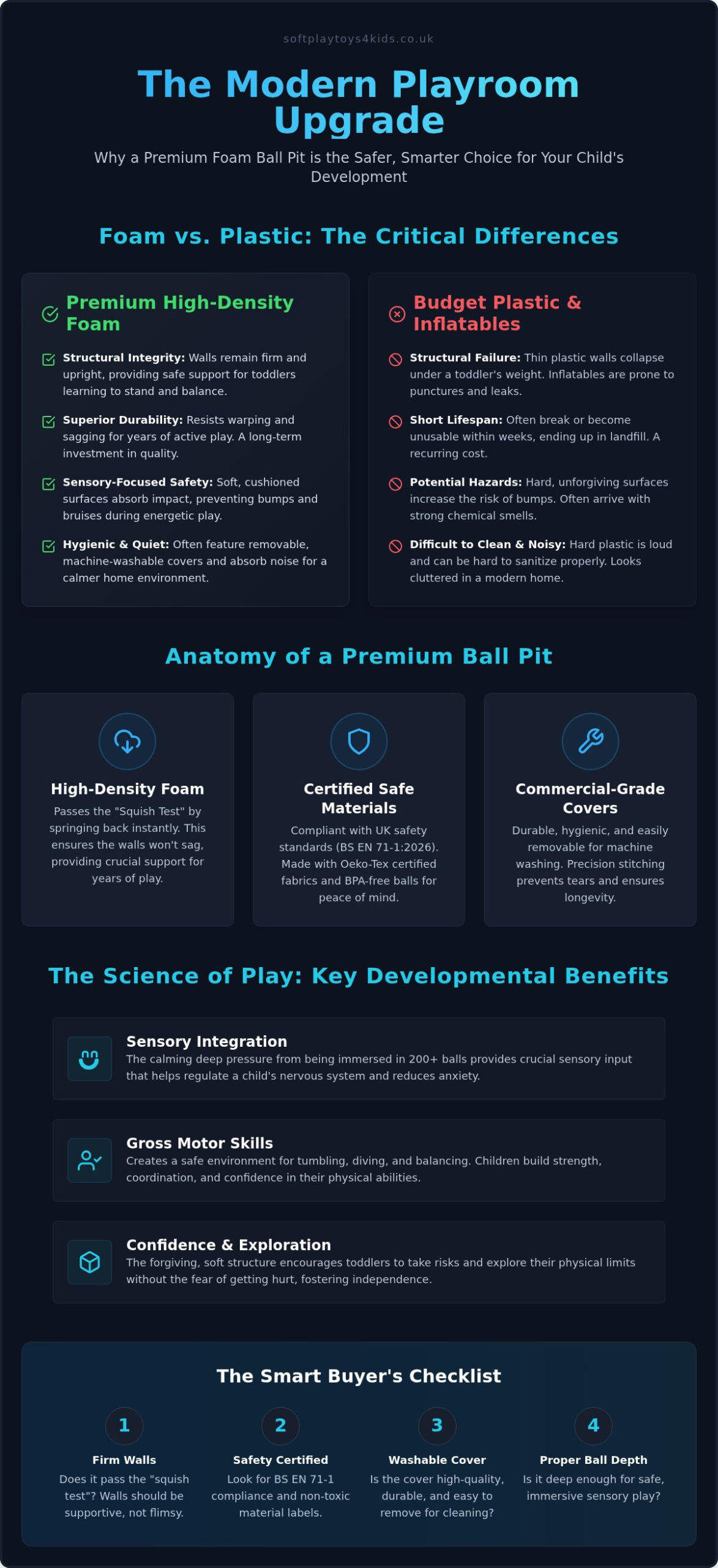
When you compare a foam ball pit vs plastic or inflatable models, the durability factor is undeniable. Budget inflatables are notorious for punctures and slow leaks, often ending up in a landfill after just a few uses. Foam doesn’t leak air or lose its shape. It provides the vital support toddlers need when they’re learning to sit, stand, and pull themselves up. The walls are rigid enough to offer resistance but soft enough to be safe. Because of this structural integrity, high-density foam is the safer, more stable choice for active toddlers who need a reliable play space that won’t collapse under pressure.
Evaluating Quality: What Makes a ‘Premium’ Foam Ball Pit?
How do you tell the difference between a premium ball pool and a cheap imitation? It all starts with the “Squish Test”. When you compare a foam ball pit vs plastic, the quality of the foam itself is the most critical factor for longevity. A premium product feels firm to the touch and springs back instantly when compressed. This is down to foam density, measured in kg/m3. Low-density foam might feel soft initially, but it lacks the internal structure to hold its shape. Within weeks of active play, these budget alternatives begin to sag and warp, eventually failing to keep the balls contained. We take pride in our West Yorkshire manufacturing process, using only nursery-grade foam that ensures your play space stays perfectly circular or square for years, not just days.
Foam Density and Structural Integrity
The “Commercial Standard” isn’t just a marketing term; it’s a promise of durability. Cheap, mass-produced imports often sacrifice density to save on shipping costs. This results in walls that collapse the moment a toddler leans against them. Our Soft Play Ball Pits are engineered to remain upright and supportive. For those looking for broader safety benchmarks, A Buyer’s Guide to Sizes, Balls, and Maintenance provides excellent context on how structural integrity prevents accidents in a play environment. By choosing a high-density set, you’re investing in a product that supports your child as they learn to navigate their physical world with confidence.
Cover Materials and Safety Standards
Safety in 2026 means looking beyond the surface. Every material must be non-toxic and skin-friendly. Oeko-Tex certified fabrics and BPA-free plastics are non-negotiable standards for any reputable UK manufacturer. While jersey cotton offers a soft, t-shirt-like comfort for younger babies, many parents prefer the commercial-grade durability of velvet or wipe-clean PVC for heavy use. Precision stitching is equally vital. We use reinforced seams to prevent fraying or splitting under the pressure of active play. If the seams fail, the entire structure is compromised, which is why we focus on craftsmanship that stands up to the most energetic toddlers.
Maintenance and Hygiene Features
Playrooms can be messy, so hygiene must be a priority. A premium ball pool should always feature a removable, machine-washable cover to handle spills and germs effectively. We also pay close attention to zip safety. Fasteners should be inverted or hidden behind fabric flaps to protect delicate skin and prevent scratches on your flooring. When it comes to the balls themselves, a quick soak in mild detergent keeps the environment fresh. If you’re ready to upgrade your playroom, you can browse our collection of Soft Play Ball Pits to find a set that combines these high-end features with handmade quality.
The Science of Play: Developmental Benefits of Foam Ball Pools
Beyond the sensory calm, there is the physical challenge. Wading through a sea of balls builds significant leg and core strength. It’s much harder than walking on flat ground, requiring every muscle to work in harmony. Your child also refines their hand-eye coordination by grasping, throwing, and tracking the colourful spheres. These repetitive movements are the building blocks for future skills, from holding a pencil to excelling in sports. When you choose a handmade set from our West Yorkshire factory, you’re investing in a tool designed for these specific milestones.
Moving through a ball pool is a masterclass in proprioception, which is the sense of where your body is in space. As the balls shift and roll, children must constantly adjust their balance and posture to stay upright. For a deeper look at how specific play tools impact growth, see our guide on Sensory Toys: The Ultimate Guide to Boosting Your Child’s Development. We ensure that professional playground therapy principles are built into every Soft Play Ball Pit we manufacture, giving your child a clinical-grade developmental tool right in your living room.
Cognitive Development and Social Play
These pits are also fantastic for early cognitive milestones. You can turn a play session into a fun lesson by sorting balls by colour or counting them as they are tossed back into the pool. According to experts at The OT Toolbox, there are numerous Developmental Benefits of Ball Pits that extend into social play. Whether it’s learning to share the space with a sibling or turning the pit into an imaginary “pirate ship” or “castle,” your child is practicing vital communication and cooperation skills. This imaginative play is crucial for emotional intelligence and creative problem-solving as they grow.
Choosing the Right Fit: A Buyer’s Guide to Sizes, Balls, and Maintenance
How do you pick the perfect size for a playroom that is already bursting with toys? It is a common dilemma for parents. When you are weighing up the foam ball pit vs plastic debate, remember that foam sets are often more substantial and permanent than their flimsy plastic counterparts. This means measuring your floor space is the first step toward a successful purchase. You want a piece of equipment that provides an immersive experience without taking over the entire room. It is also about matching the pit to your child’s age; a shallow entry is perfect for an 8-month-old, while a 4-year-old will want deeper walls for more adventurous play.
For an extra layer of protection during those enthusiastic dives, we always recommend placing your pit on a baby play mat. This creates a dedicated, cushioned zone that protects both your child and your flooring. It is these small details that transform a simple toy into a professional-grade play environment.
Sizing Your Play Area
The 90cm round pit is the UK standard for single-child use. It is compact enough for most nurseries but large enough to provide that essential sensory “hug.” If you have multiple siblings or a larger dedicated playroom, consider a 120cm+ pool. You must also think about wall height. Walls should be low enough for a toddler to climb in safely, yet high enough to contain the balls during a “deep dive.” For a comprehensive look at all available options, check out The Ultimate Guide to Ball Pits for Kids: Safe & Fun Play.
The Ball Count Guide
How many balls do you actually need? For a standard 90cm pit, 200 balls is the baseline. This fills the pit to about one-third, which is ideal for babies. If you want that “full” feel for an older child, you will likely need 400 to 500 balls. The quality of the balls matters just as much as the quantity. We use LDPE plastic because it is crush-proof, non-toxic, and retains its shape even after thousands of jumps. Our range of vibrant, CE-certified balls ensures your play space looks stunning and stays safe for years to come. Ready to build your dream setup? You can shop our full range of Soft Play Ball Pits and find the perfect match for your home today.
The SoftplayToys4kids Advantage: Handmade Quality from West Yorkshire
Why settle for a mass-produced import when you can choose a product crafted with pride right here in the UK? At SoftplayToys4kids, we believe that the quality of your child’s play equipment should never be compromised. Every Soft Play Ball Pit that leaves our Bradford facility is a testament to British manufacturing excellence. By keeping our production local, we maintain total control over the materials and methods used. This ensures a superior finish that simply cannot be replicated by factory-line imports. When you compare a foam ball pit vs plastic alternatives found on the high street, the difference in tactile quality and structural resilience is immediate.
We directly challenge you to compare our foam density and cover thickness with any competitor. While others might use thinner fabrics to cut costs, we utilise heavy-duty, hand-stitched covers designed to withstand years of enthusiastic play. Our precision foam cutting ensures that every edge is crisp and every wall is supportive. Because we sell factory-to-door, you get to enjoy this commercial-grade quality at competitive prices, bypassing the retail markups that often inflate the cost of premium toys.
Commercial DNA for Home Use
We don’t believe in “home grade” vs “commercial grade” distinctions. The Soft Play Ball Pits we create for your living room use the exact same high-density foam and durable fabrics as the equipment we supply to schools and professional nurseries across the country. This means your child is playing with equipment designed for heavy, daily use. If you have a specific vision for your playroom, our manufacturing setup allows for unique customisation. Whether you need bespoke sizes to fit a tricky corner or specific colours to match your nursery decor, we can make it happen. We offer a price-matching promise and guarantee that every Soft Play Ball Pit we produce meets the most stringent UK safety standards.
Supporting Local Craftsmanship
Choosing a UK manufacturer isn’t just about quality; it’s about making a responsible choice for the environment. By manufacturing in West Yorkshire, we significantly reduce shipping miles compared to products shipped from overseas. This lower carbon footprint is paired with a rigorous quality control process where every single ball pool is individually inspected by our skilled team before it is dispatched. We take immense pride in being a hands-on, accessible manufacturer for our clientele. You aren’t just buying a toy; you’re supporting local craftsmanship and investing in a play space that is built to last.
Ready to Transform Your Playroom into a Sensory Haven?
Investing in the right play equipment is one of the most rewarding decisions you can make for your child’s early development. When you look at the foam ball pit vs plastic debate, the winner is clear for any parent who prioritises safety, durability, and sensory growth. A high-density foam pool doesn’t just look better in your home; it provides the vital structural support needed for toddlers to build confidence and gross motor skills. By opting for a premium set, you’re ensuring years of safe, immersive play that won’t end in a collapsed or punctured toy.
At SoftplayToys4kids, we take pride in our handmade in West Yorkshire heritage. Our products offer commercial-grade durability and are already trusted by UK schools and nurseries nationwide. Because we offer manufacturer-direct pricing, you can bring professional-standard quality into your own home at an incredible value. You don’t have to settle for mass-produced imports when you can choose a product that is individually inspected for quality and built to survive the most energetic play sessions.
Shop our Premium British-Made Foam Ball Pits today and watch your little one thrive in a safe, vibrant, and supportive environment!
Frequently Asked Questions
Are foam ball pits safe for babies under 12 months?
Foam ball pits are safe for babies who can sit independently, typically from around 6 to 8 months. These soft-walled enclosures provide a much more forgiving environment than hard plastic alternatives. Because our products meet BS EN 71-1:2026 standards, you can trust the materials are non-toxic. Always ensure constant adult supervision and choose a pit with low walls so your baby can see you while they explore their new sensory world.
How do I clean a foam ball pit and the play balls?
Cleaning is straightforward because our Soft Play Ball Pits feature removable, machine-washable covers. Simply zip off the cover and wash it on a gentle cycle to manage spills and germs. For the play balls, a quick soak in a bathtub with mild detergent or a wipe down with a damp cloth keeps the environment hygienic. Regular maintenance ensures your child’s play space remains a nursery-standard haven for daily sensory exploration and fun.
Will the foam ball pit lose its shape over time?
High-quality foam ball pits won’t lose their shape if they use high-density, nursery-grade foam. When comparing a foam ball pit vs plastic or cheap imports, the density is what determines longevity. Our West Yorkshire facility uses commercial-grade foam that springs back instantly, even after heavy use by energetic toddlers. This structural integrity ensures the walls remain upright and supportive for years, rather than sagging or warping after just a few weeks of play.
How many balls do I need for a 90cm foam ball pit?
For a standard 90cm ball pool, 200 balls provide a safe baseline fill that is perfect for younger babies. If you want a more immersive diving experience for an older toddler, we recommend 400 to 500 balls. This provides enough depth to cover their legs without the balls constantly overflowing onto your floor. Our CE-certified balls are designed to be crush-proof, ensuring they stay perfectly round even during the most enthusiastic play sessions.
What is the best type of foam for a children’s ball pool?
The best material is high-density, nursery-grade foam that is both non-toxic and fire retardant. In the UK, it’s vital that the foam complies with BS 5852 for domestic fire safety. We use foam that is specifically engineered for soft play equipment, balancing firm structural support with a soft, cushioned finish. This ensures the pit is stable enough for a child to lean against while remaining gentle enough to prevent any bumps or bruises during active play.
Can I use a foam ball pit outdoors?
Foam ball pits are primarily designed for indoor use to protect the integrity of the foam core. While our commercial-grade PVC covers are durable and wipe-clean, permanent outdoor placement can lead to moisture buildup or sun damage over time. If you do take the pit outside on a dry day, ensure it is placed on a clean Soft Play Mat and brought back inside immediately after use to maintain its premium quality and safety standards.
Why should I choose a UK-made ball pit over a cheaper import?
Choosing a UK-made product ensures your equipment meets rigorous BS EN 71 safety standards and utilises superior foam density. Many cheaper imports sacrifice quality to reduce shipping costs, leading to flimsy walls and chemical odours. By buying direct from our West Yorkshire factory, you get commercial-grade durability at competitive prices. You’re also supporting local craftsmanship and benefiting from a lower carbon footprint compared to products shipped from overseas, ensuring a better finish for your home.
How do I set up a safe soft play area at home?
To set up a safe home play zone, start with a level floor and add high-quality Soft Play Mats for extra cushioning. Position your ball pool away from sharp furniture corners or radiators to create a clear safe zone. Ensure the area is well-ventilated and always maintain a clear line of sight for supervision. Using professional-grade equipment that meets UK safety regulations transforms any corner of your home into a secure, stimulating environment for physical development.
Leave a Reply