
Best Toddler Crawling Ramps for Safe Active Play
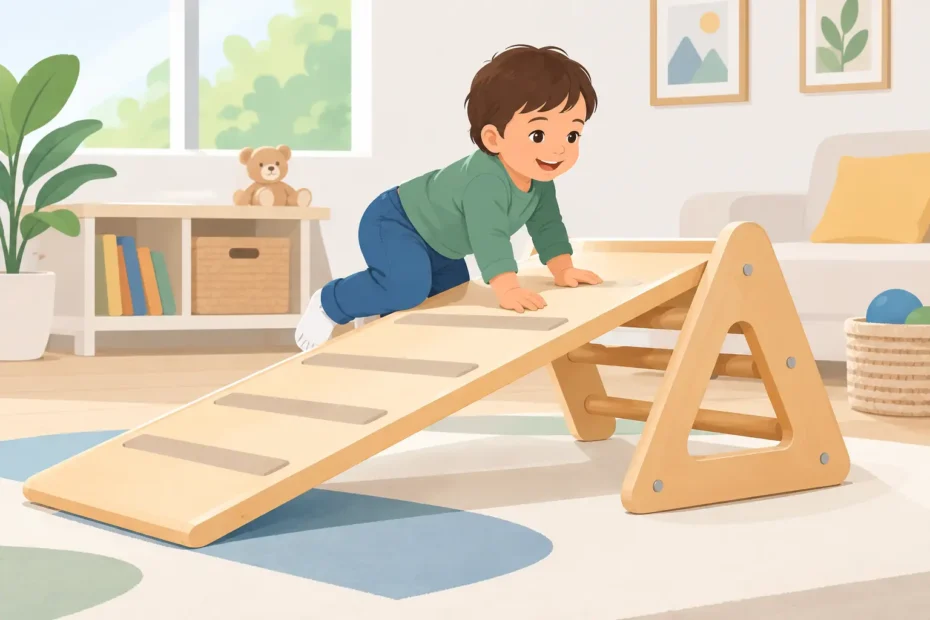
A toddler who has just discovered how to crawl does not want to stay on the floor for long. They want to scramble up the sofa, tackle the step by the fireplace and investigate every raised edge in the room. The best toddler crawling ramps give them a safer, softer place to practise that determination while turning everyday movement into active, confidence-building play.
For parents, nurseries and playgroups, a well-chosen soft play ramp is more than a colourful foam shape. It creates a controlled route for climbing, crawling, sliding and stepping down, with fewer hard corners and less temptation to use furniture as an obstacle course. The right option depends on the child’s stage, the available floor space and how many little adventurers will use it each day.
Why crawling ramps are worth the floor space
Crawling up an incline asks toddlers to shift their weight through their hands, knees and feet. That simple action helps develop core strength, balance, coordination and body awareness. It also encourages problem-solving: a child learns where to place a hand, how far to lift a knee and when to pause before changing direction.
Unlike a flat play mat, a ramp introduces a manageable challenge. The gradient gives children a reason to move with purpose, while a soft landing surface makes supervised exploration feel far less daunting for adults. For babies who are crawling confidently but are not yet ready for taller climbing frames, this is often the sweet spot.
In a nursery or soft play setting, ramps also support shared play. Children can crawl over, around and alongside a shape, take turns on a connected course and build confidence by copying older peers. That makes them a valuable addition to baby rooms, toddler areas and compact indoor play corners.
What makes the best toddler crawling ramps?
The best toddler crawling ramps are not necessarily the biggest or steepest. A good ramp should match a young child’s physical ability, sit securely on the floor and have a finish that stands up to daily wiping, climbing and enthusiastic use.
Choose a gentle gradient for early movers
For crawlers and new walkers, low, gradual slopes are usually the safest and most useful choice. A steep ramp may look exciting, but it can frustrate younger children or encourage tumbles if they have not yet developed the strength to control their descent.
A shallow wedge ramp is ideal for practising the movement pattern of going uphill. It gives babies enough resistance to work their muscles without making the task feel impossible. As confidence grows, combine a ramp with a low platform, step or soft block to create a slightly more varied route.
Older toddlers may enjoy a taller wedge or a step-and-slide arrangement, but height should always be balanced with appropriate supervision and suitable safety matting. The aim is confident movement, not a challenge that is beyond the child’s stage.
Prioritise stable, high-density foam
Foam quality matters. A crawling ramp needs enough firmness to hold its shape when a child climbs over it, yet enough cushioning to reduce the impact of minor slips and knocks. Very soft, lightweight foam can compress too easily, making the surface feel unsteady beneath small hands and feet.
Look for a shape that stays in place during play and works neatly with other soft play pieces. In commercial environments, this is especially important. A ramp used repeatedly by groups of children needs to remain supportive, stable and presentable rather than sagging at the edges after regular use.
Check the cover is practical as well as colourful
Toddlers bring snack crumbs, sticky fingers and the occasional spill. A wipe-clean, hard-wearing cover makes everyday maintenance straightforward and helps keep a home or play setting looking fresh. Strong stitching and neatly finished seams also matter, particularly where children will crawl, pull and lean against the shape every day.
Colour has a practical role too. Bright primary shades can make an activity area feel lively, while softer colour combinations may suit a lounge, sensory corner or modern nursery room. If you are planning a larger setup, choosing coordinated colours across ramps, steps, mats and blocks gives the space a more organised finish.
Think about the whole route, not one shape
A ramp is excellent on its own, but it becomes far more engaging when it leads somewhere. A low platform at the top gives toddlers a goal. A foam tunnel beside it creates a choice. A soft mat at the bottom provides a clear landing and an area for rolling, sitting or resting.
For small homes, a compact wedge and mat may be all that is needed. For nurseries and play centres, connected modular shapes can create a defined crawling zone that encourages children to move without sending the entire group towards the same toy. It depends on your room layout, supervision levels and storage needs.
Popular ramp styles for toddlers
A wedge ramp is the starting point for many indoor soft play setups. It is simple, versatile and easy for young children to understand. Place it against a low block or platform and it becomes a gentle climbing route; place it on an open mat and it works as an independent crawling challenge.
Step-and-slide units add more variety for toddlers who are starting to walk securely. Children can climb the steps, crawl over the top and slide down the other side. They take up more room than a standalone ramp, but offer several play actions in one piece of equipment.
Tunnel-and-ramp combinations are particularly effective for younger children who enjoy hide-and-seek as much as climbing. Crawling through a tunnel, then travelling over a low incline, develops movement confidence without relying on height. They are also useful in group settings because there are different ways to use the equipment at once.
Modular obstacle sets are a stronger choice for commercial spaces or families creating a dedicated indoor play room. Ramps can be paired with cubes, cylinders, bridges, balance beams and ball pits, then rearranged to keep play fresh. The trade-off is that larger sets need more floor space and a clear plan for safe storage when not in use.
Setting up a safer crawling area
Even quality soft play equipment needs sensible placement. Use a level floor and leave clear space around the ramp, especially at the bottom where toddlers are likely to crawl, roll or step off. Keep the setup away from radiators, sharp-edged furniture, windows and busy walkways.
A safety mat beneath and around the play route adds useful cushioning and clearly marks the play zone. If you are connecting several shapes, make sure there are no awkward gaps that little hands, feet or knees can catch in. Check that ramps and blocks sit flush together before each session, particularly in a busy nursery where equipment may be moved regularly.
Adult supervision remains essential. Soft play reduces the severity of everyday bumps, but it does not replace attentive oversight. Encourage children to travel one way at a time on narrower pieces and keep older, more boisterous children separate from babies who are still learning to crawl.
Buying for home, nursery or a soft play venue
Home buyers often need equipment that is compact, easy to clean and useful across several developmental stages. A low ramp, matching safety mat and one or two soft blocks can create a brilliant active-play corner without taking over the whole room. Choose pieces that can be moved easily when guests arrive or when you want to change the layout.
Nurseries, preschools and childminders should consider capacity and daily wear. A broader ramp or modular arrangement allows more children to engage without crowding one narrow climbing point. Durable covers, dependable foam and a layout that staff can supervise from several angles will provide better value than buying a novelty item that quickly becomes overlooked.
Commercial venues need to think at a larger scale. The equipment should fit the age group, the available room and the flow of children through the area. Bespoke sizing can make a major difference where there are awkward corners, pillars or a need to create separate baby and toddler zones. Softplay Toys4Kids manufactures in the UK and can help buyers build practical combinations around the space they actually have, rather than forcing a standard set into an unsuitable layout.
Make active play part of the routine
A crawling ramp earns its place when it is used little and often. Set aside a few minutes after breakfast, before bath time or during a nursery movement session, and let children explore at their own pace. Avoid turning every climb into a performance. A toddler who pauses, tries again and reaches the top independently is building far more than climbing skills.
Choose a ramp that feels safe, supportive and inviting, then give your child room to enjoy the journey upwards.
Leave a Reply