
The Ultimate Guide to Soft Play Wall Padding: Safety, Materials, and Installation
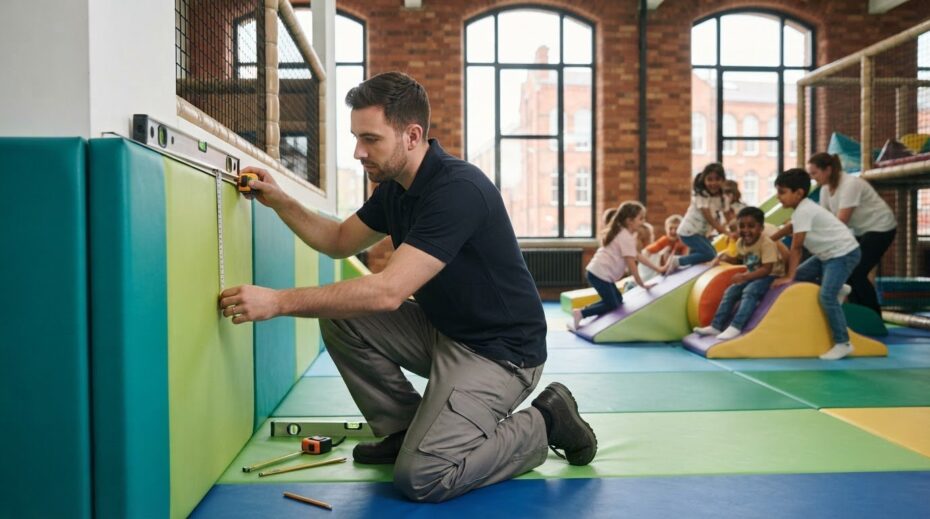
Did you know that properly installed safety surfacing can reduce the risk of serious head injuries by up to 79%? When children are in the zone, their energy is boundless, but hard walls don’t move for anyone. You want to create a space where they can leap, tumble, and explore without you constantly worrying about a trip to the hospital. That’s why investing in high quality soft play wall padding is the single most important step in building a secure play environment.
It’s completely natural to feel overwhelmed by UK fire safety laws like Crib 5 or impact regulations like BS EN 1177. You don’t want to settle for low quality imports that degrade quickly or fail to protect. You need a solution that looks professional, cleans easily, and stands up to years of heavy use. We’re here to help you get it right the first time so you can focus on the fun.
In this guide, we’ll walk you through how to choose the right materials, measure your space accurately, and install your padding like a pro. We’ll cover everything from foam densities to bespoke designs for tricky architectural corners. By the end, you’ll have all the tools to create a vibrant, compliant, and durable play area that keeps kids happy and parents at ease.
Key Takeaways
- Identify the specific foam densities and PVC weights required to balance soft cushioning with durable, long-lasting impact resistance.
- Ensure your soft play wall padding complies with essential UK safety regulations, including Crib 5 fire standards and BS EN 1177 impact requirements.
- Distinguish between permanent commercial installations and modular home systems to find the most cost-effective and safe solution for your space.
- Follow expert tips for precision measuring and mounting to prevent entrapment hazards and ensure your safety pads stay firmly in place.
- Learn the benefits of sourcing handmade equipment from local UK manufacturers to guarantee rigorous quality control and chemical safety.
Why Soft Play Wall Padding is Essential for Safe Play Areas
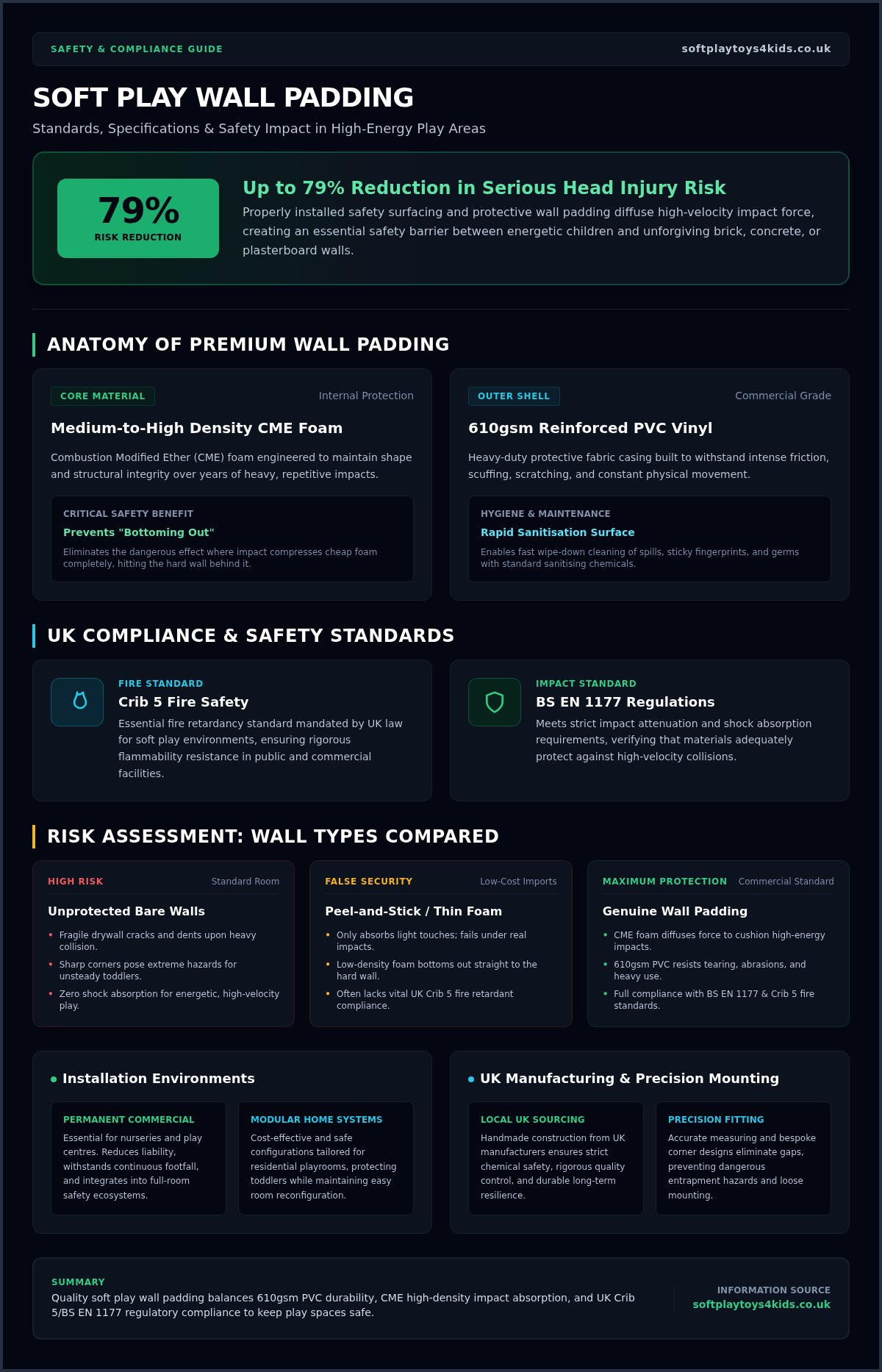
What exactly is this equipment? At its core, professional soft play wall padding consists of high-density, impact-absorbing foam panels wrapped in a heavy duty, 610gsm PVC fabric. It’s designed to be the ultimate safety barrier between energetic children and unforgiving surfaces like brick, concrete, or plasterboard. When kids are in the zone, they aren’t looking at where the floor ends and the wall begins. They’re focused on the fun, which is why your environment needs to do the heavy lifting for them.
For commercial operators, these panels are a non-negotiable part of reducing liability and meeting strict playground safety standards. Whether you’re running a nursery in Leeds or a massive play centre in London, you need equipment that stands up to constant use. These pads integrate seamlessly with your existing soft play equipment, creating a unified safety ecosystem that protects every square inch of the room. It’s about more than just compliance; it’s about providing that total peace of mind that every parent looks for.
Preventing Injuries in High-Energy Play Zones
Active play is all about children testing their physical limits. They run, jump, and tumble at high velocities, and sometimes their coordination doesn’t quite keep up with their ambition. High quality soft play wall padding is engineered to absorb these high-velocity impacts. By diffusing the force of a collision, it significantly minimises the risk of serious head injuries, painful bumps, and those nasty bruises that can cut a play session short. It creates a secure, soft boundary that acts as a life-saving cushion, allowing children to explore their boundaries without the fear of a hard landing.
The Risks of Unprotected Playroom Walls
Leaving your walls bare is a gamble that rarely pays off. Standard drywall isn’t just hard; it’s also surprisingly fragile. Under heavy impact, it can crack or dent, leading to constant maintenance headaches and expensive repair bills. However, the human risk is much higher. Toddlers are notoriously unsteady, and a fall against a sharp corner happens in a heartbeat. You might be tempted by cheap DIY alternatives, but here is the truth:
- Thin foam stickers or “peel-and-stick” pads fail to provide adequate shock absorption for anything beyond a light touch.
- Low-density foam “bottoms out” during an impact, meaning the child still hits the hard wall behind the pad.
- Non-compliant materials often lack the necessary fire retardancy required by UK law.
Don’t settle for subpar protection. Investing in genuine soft play wall padding ensures your space remains a vibrant, safe haven for years to come.
Key Features of Premium Soft Play Wall Padding
What separates a professional setup from a temporary fix? It comes down to the quality of the components hidden beneath the surface. High-grade materials don’t just extend the lifespan of your installation; they are the literal foundation of your safety performance. Premium soft play wall padding must achieve a delicate balance, providing enough compression resistance to support a child’s weight while remaining soft enough to cushion a high-velocity impact. Choosing the right specifications now prevents the frustration of replacing sagging, torn, or non-compliant pads just a few months down the line.
High-Density Foam and Shock Absorption
The core of any superior safety pad is its foam. We utilise medium-to-high density combustion modified ether foam (CME), which is specifically engineered for longevity. Unlike cheaper alternatives that flatten after a few weeks of use, CME foam maintains its structural integrity and shape over years of repetitive impact. This ensures the padding provides a consistent level of protection, preventing the dangerous “bottoming out” effect where a child hits the hard wall through the foam. It’s the perfect blend of firmness for support and soft, springy safety.
Heavy-Duty PVC Covers and Easy Cleaning
The outer layer of your padding takes the most punishment from friction, scratching, and constant movement. To ensure commercial-grade durability, premium wall pads must be encased in a reinforced PVC vinyl cover with a weight of at least 610gsm. These heavy-duty covers are designed for rapid sanitisation, allowing you to wipe away spills, sticky fingerprints, and germs with standard cleaning chemicals without damaging the fabric. If you’re building a space near windows, look for UV-stabilised options that prevent the vibrant colours from fading under direct sunlight.
Meeting Strict UK Fire and Safety Regulations
Safety isn’t just about physical impact; it’s about chemical and fire security too. In the UK, all soft play materials must comply with rigorous fire safety standards, such as BS 5852 (often referred to as Crib 5). This ensures that the foam and PVC are flame-retardant and won’t contribute to a fire’s spread. Furthermore, high-quality pads are manufactured using non-toxic, phthalate-free materials, which is vital for environments where curious toddlers might chew on the surfaces. While global resources like the Public Playground Safety Handbook provide excellent general benchmarks, always ensure your supplier provides certified UK flame-retardant components. If you want to ensure your facility meets these elite standards, consider our range of UK-made safety pads designed for maximum protection.
Commercial vs. Home Wall Padding: Finding Your Perfect Fit
Choosing the right soft play wall padding depends entirely on your specific environment and the level of foot traffic you expect. While the goal is always safety, the engineering requirements for a bustling commercial play centre in West Yorkshire are vastly different from a quiet home sensory room. You need to balance your budget with the physical demands that hundreds of energetic children will place on the equipment every single week. Getting this right ensures your investment lasts for years rather than months.
Commercial Play Centres vs. Home Sensory Rooms
Commercial venues are high-energy zones where impacts are frequent and forceful. To meet the rigorous demands of these spaces, we typically recommend 50mm thick padding. These panels often feature timber backing plates, which allow for a permanent, flush fit against the wall that won’t budge even under heavy use. While we adhere to strict UK regulations, international standards like ASTM F1918 provide excellent context for why durable, high-traffic materials are so vital in these settings. You can explore more about designing these spaces in our guide to indoor playground equipment for commercial businesses.
Home environments and sensory rooms offer more flexibility. Since the traffic is lower, many parents opt for 30mm to 40mm padding. Instead of timber backing, these are frequently attached via heavy-duty Velcro. This modular approach is perfect for bedrooms where layouts might change as the child grows. In sensory rooms, you can also play with specific colour palettes and textured variants to create a calming, tactile experience that supports developmental growth.
Standard Modular Pads vs. Custom Architectural Padding
If you have straightforward, flat walls, standard modular pads are a fantastic, cost-effective solution. They’re quick to install and provide instant protection. However, very few rooms are perfect boxes. You likely have to deal with sharp pillars, low-hanging beams, or protruding radiators that pose significant risks to a tumbling child. This is where bespoke soft play wall padding truly shines.
- Column Padding: We can manufacture pads that wrap perfectly around square or circular pillars, turning a hard obstacle into a soft safety feature.
- Cut-outs: Professional manufacturing allows for precision cut-outs, ensuring your electrical sockets and light switches remain safely accessible without leaving gaps in the protection.
- Windows and Radiators: Custom solutions can cover window sills or create ventilated radiator covers that keep the room warm while keeping the children safe.
Don’t let tricky architectural features compromise your safety standards. Whether you’re kitting out a professional centre or a safe haven at home, there’s a tailored solution that fits your space perfectly.
How to Measure and Install Wall Padding for Maximum Safety
You’ve selected your materials and confirmed your safety standards. Now comes the most critical phase: getting the equipment onto your walls. A poor installation isn’t just an eyesore; it’s a genuine safety hazard. Accurate measurements are your best defence against dangerous gaps where small fingers or toes can get trapped. If a pad isn’t fixed properly, it won’t absorb impact as intended, leaving children vulnerable to the very surfaces you’re trying to hide. Proper wall preparation guarantees long-term adhesion and structural stability so your investment stays exactly where it belongs.
How to Measure Your Space Accurately
Start by defining the impact zone. Measure the total length of the walls you want to cover and decide on the height. Standard heights often range from 1.2m, but high-impact areas might require coverage up to 2m. Don’t just measure at floor level. Walls are rarely perfectly straight, so take measurements at the top, middle, and bottom of your intended padding height. Precision here prevents overlapping or unsightly gaps.
Remember to account for these common obstacles:
- Fixed Fixtures: Measure the exact position of skirting boards, dado rails, and wall projections that might prevent a flush fit.
- Corner Angles: Use a protractor or template for corners. Not every room is a perfect 90 degrees, and custom corner pads must fit snugly to maintain safety.
- Access Points: Mark the location of electrical sockets and light switches. We can manufacture precision cut-outs so these remain safely accessible without compromising the protective barrier.
Loose or poorly secured wall panels in a commercial play area pose a significant risk of collapse during high-energy play, potentially leading to serious entrapment or impact injuries.
Choosing the Right Mounting Method
The best fixing method depends entirely on your specific environment and how much traffic you expect. Your goal is to ensure the soft play wall padding remains anchored even during the most boisterous play sessions.
- Velcro Strips: These are ideal for home playrooms or sensory spaces. Using industrial-strength Velcro allows you to remove the pads quickly for deep cleaning or to adapt the room layout as your child grows.
- Wood-Backed Panels: This is the gold standard for commercial installations in schools and nurseries. These panels are screwed directly through the timber backing into wall battens or masonry for a permanent, rock-solid fit.
- Keyhole Brackets: These provide a clean, professional finish for modular panels. The brackets are hidden behind the pad, allowing it to slide onto fixed wall screws without any visible fixings on the PVC surface.
Before you begin the physical installation, ensure the wall surface is clean, dry, and free of loose plaster or peeling paint. A stable wall is the only way to guarantee a stable pad. Ready to secure your space with professional precision? Enquire about our professional installation services and let our West Yorkshire team handle the technical details for you.
Why UK-Manufactured Soft Play Wall Padding Outperforms Cheap Alternatives
Why risk the safety of your little ones on mass-produced imports that cut corners? When you choose UK-manufactured soft play wall padding, you aren’t just buying foam and PVC. You’re investing in a guarantee of quality that cheaper alternatives simply cannot match. Many imported pads arrive with chemical odours or low-density foam that sags within months. By contrast, buying British means your equipment is built under rigorous oversight, ensuring every component meets the highest safety benchmarks. We believe that safety is a promise, not a suggestion. It’s time to compare our bespoke options before making your final investment in children’s safety.
The Benefits of British Manufacturing in West Yorkshire
In our West Yorkshire factory, we take immense pride in our handmade process. Handmade precision ensures every seam, stitch, and corner is built to endure the roughest play sessions. When you work with a local manufacturer, you’re getting decades of textile expertise poured into every single panel. Supporting local UK manufacturing also guarantees ethical labour and sustainable sourcing, which is something every modern business and parent can feel good about. Plus, you won’t have to deal with the headache of international customs. With typical lead times of around 3 to 4 weeks for made-to-order items, we offer fast shipping across the UK. This means your new play area can be up and running while the competition is still waiting for a shipping container to clear the docks.
Custom Design and Professional Installation Services
One of the biggest advantages of working directly with the factory is the level of customisation available. You aren’t limited to whatever is sitting in a warehouse. You can work directly with our creative design teams to match your specific brand colours or create a unique theme that sparks a child’s imagination. Whether you need a specific shade of primary blue or a calming pastel for a sensory room, we make it happen. We don’t just stop at manufacturing, either. Our experienced installation crews handle complex layouts safely and efficiently. They know exactly how to navigate tricky architectural features, ensuring every panel is anchored perfectly for years of heavy use. Don’t settle for “good enough” when you can have the best craftsmanship in the country.
Ready to secure your play area? Explore our custom soft play wall padding options today!
Take the Next Step Toward a Safer Play Environment
Creating a space where children can flourish requires more than just bright colours; it demands a foundation of uncompromising safety. You now know that high-quality soft play wall padding is the secret to preventing injuries while meeting strict UK fire safety standards like BS 5852. Whether you’re kitting out a commercial centre or a home sensory room, the difference lies in the materials and the precision of the installation. We challenge you to compare our craftsmanship with any mass-produced alternative. You’ll quickly see why being handmade in our West Yorkshire factory is the superior choice for your project.
Our team is ready to help you navigate tricky architectural corners with our custom design and professional installation services. We’re proud to be a trusted partner for parents and business owners across the country. It’s time to build a vibrant, compliant, and durable environment that lasts for years. Don’t leave safety to chance. Browse our premium UK-manufactured soft play wall padding collection today! Your children’s happiness and safety are worth every penny.
Frequently Asked Questions
What is the standard thickness for soft play wall padding?
The standard thickness for professional soft play wall padding in UK nurseries and schools is 50mm. This specific depth provides the ideal balance between shock absorption and rebound for active children. For domestic playrooms, a thinner 30mm or 40mm pad is often sufficient. If you’re designing a high-impact zone for older kids, we can manufacture bespoke pads up to 100mm thick to ensure maximum safety during high-energy play.
How do you clean and maintain PVC wall padding panels?
Maintaining your PVC wall padding is incredibly simple. Use a soft cloth with warm, soapy water or a mild, non-abrasive detergent to wipe away sticky fingerprints and dust. For commercial play centres, standard sanitising sprays are perfectly safe to use for daily hygiene. Don’t use harsh bleach or abrasive scouring pads, as these can damage the reinforced PVC cover and compromise the vibrant colours over time.
Can soft play wall padding be installed on any wall surface?
Yes, our padding can be installed on almost any internal surface, including brick, concrete, and plasterboard. The secret is ensuring the wall is clean, dry, and structurally sound before you begin. For masonry walls, we typically recommend direct fixings or timber battens for a permanent fit. If you’re installing on plasterboard at home, industrial-strength Velcro or adhesive strips work perfectly for a modular, non-permanent setup.
Are your wall padding materials fire retardant and UK compliant?
Absolutely. Every safety pad we produce is fully compliant with rigorous UK fire safety standards, specifically BS 5852 (Crib 5). We also ensure our impact-absorbing foam meets BS EN 1177 requirements. Because we manufacture everything in our West Yorkshire factory, we maintain total control over the quality and chemical safety of our materials, giving you absolute peace of mind that your facility meets all national safety regulations.
How do I choose between Velcro and wood-backed wall padding?
Choose Velcro if you need a modular setup for a home playroom or sensory space where you might want to remove the pads for deep cleaning. It’s quick and easy to install. However, for commercial venues or schools, wood-backed padding is the superior choice. These panels are screwed directly into the wall, providing a permanent, rock-solid fit that won’t budge even during the most boisterous play sessions.
Can you manufacture custom shapes for pillars, columns, and corners?
We certainly can. As a specialist UK manufacturer, we excel at creating bespoke solutions for tricky architectural features. We can produce custom soft play wall padding that wraps perfectly around square or circular pillars, as well as angled corner pads and precision cut-outs for light switches or electrical sockets. This ensures your safety barrier is seamless and leaves no hard surfaces exposed to tumbling children.
How long does custom-made UK wall padding take to deliver?
Since each order is handmade to your specific requirements in our West Yorkshire factory, our typical lead time is approximately 3 to 4 weeks. This duration allows our craftsmen to ensure every stitch and seam meets our premium standards. Because we ship directly from within the UK, you won’t have to worry about the long international shipping delays or unexpected customs fees often associated with cheaper, mass-produced imported equipment.
Leave a Reply