
Best Playroom Toys: A Guide for Joyful, Balanced Play

What if a happier playroom came from fewer, better-chosen toys rather than a bigger pile? Finding the best toys for a playroom can feel tricky when you’re trying to keep your child interested, make the most of limited space and avoid clutter. It’s understandable to wonder what will actually get played with, whether toys suit your child’s age and how to make room for both energetic fun and quieter moments.
A balanced playroom doesn’t need every toy going. It needs a thoughtful mix that reflects your child and your everyday routine. This guide will help you choose options for active, creative and sensory play, while considering age suitability, safety and the space you have available.
You’ll find practical ways to create welcoming play zones without letting toys take over, plus ideas for making soft play ball pits, play mats and sensory toys part of a varied play space. Soft play products from SoftplayToys4kids, a UK-based manufacturer, can sit alongside creative, open-ended activities. The aim is a playroom that feels joyful, useful and manageable, with room for children to play in different ways.
Key Takeaways
- Choose the best toys for a playroom by thinking about how your child likes to play, not by chasing the latest trends.
- Build a balanced mix of active, creative, sensory and quieter play with a few options that suit your family.
- Compare toys by the play they encourage, the room they need and how easily they can be stored.
- Plan practical play zones by measuring your space, arranging toys thoughtfully and reviewing how the layout works day to day.
- Consider how ball pits, play mats and sensory toys could complement other playroom activities.
Best toys for a playroom: start with how your child likes to play
Choosing toys can feel overwhelming when every option promises hours of fun. But a playroom doesn’t need to be packed with every kind of toy to feel exciting. Start with what your child naturally enjoys, then make room for a few different ways to play. This helps you choose the best toys for a playroom that suit your home, rather than options that only look appealing on a shelf.
“A balanced playroom toy mix includes a few options for movement, imagination, hands-on exploration and calmer moments, chosen to suit your child and your space.” Toys can invite children to explore, experiment and play in different ways, as described in The importance of toys in child development. Use this checklist to compare options:
- Your child’s interests: Do they gravitate towards movement, making, pretend games or exploring textures and objects?
- Age and ability: Can they use the toy appropriately and enjoy it at their current stage?
- Available space: Will it fit with room to play and without blocking walkways?
- Family routines: Is it practical to set up, put away and use during your usual playtime?
What does your child enjoy doing during play?
Notice what captures your child’s attention without prompting. Do they dance, climb or chase a ball? Spend time drawing, stacking or building? Make up stories with everyday objects, or enjoy touching and sorting different materials? These observations offer more useful clues than choosing toys based only on a product photo.
Look at household play, too. A child who turns cushions into a den may enjoy imaginative play, while one who likes sorting objects may be drawn to hands-on exploration. Interests can change, so your choices don’t have to be permanent. Keep what’s engaging now, and let the playroom evolve as your child discovers new favourites.
How should age and ability shape toy choices?
Choose toys that match your child’s current abilities and interests, and follow the age guidance on the packaging. Consider how they handle objects, follow simple instructions and play independently or with support. For younger children, check carefully for small parts that could pose a choking risk, and supervise play appropriately.
Simple toys can stay interesting as skills develop because children may find new ways to use them. Blocks might first be stacked, then arranged into a road or an imaginary home. A play mat can provide a defined floor area for different activities, while sensory toys invite hands-on exploration. Think about what your child can enjoy today, and whether the toy leaves room for fresh ideas later.
Finally, picture the toy in your everyday home, not just during a perfect play session. If energetic play is a favourite, leave enough clear floor space for movement. If your child enjoys quieter activities, make those easy to reach as well. A toy that fits your child’s interests, abilities and routine is more likely to become a useful part of play than another item to manage.
Build a balanced playroom with toys for active, creative and sensory play
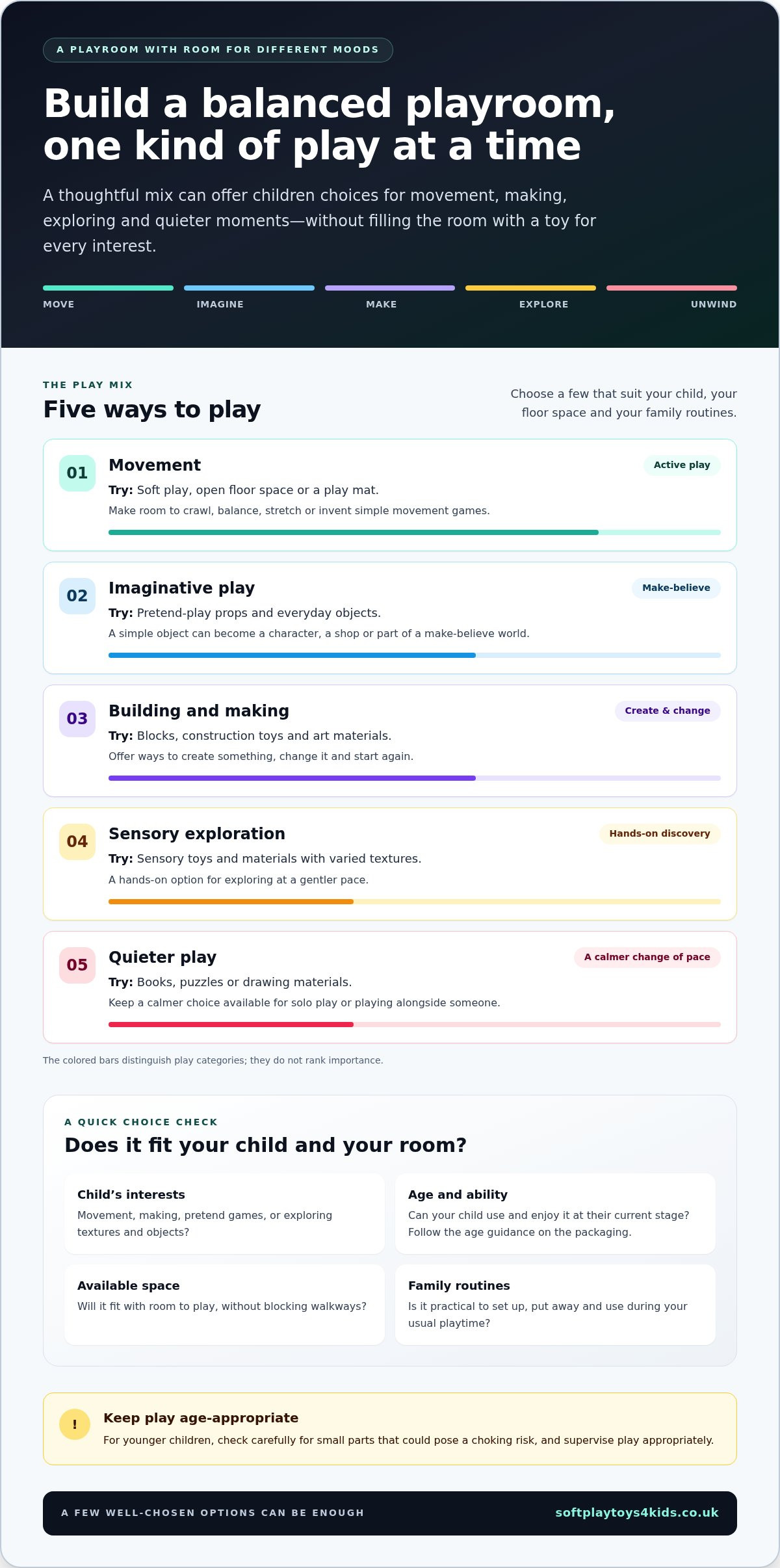
A playroom can offer a lively choice of activities without containing a toy for every possible interest. Think in play types instead: movement, imagination, building, sensory exploration and quieter activities. These categories complement one another, giving children options to match their energy and mood. You don’t need to buy everything. Choose a few suitable toys that fit your child, available floor space and family routines, then notice what gets used.
- Movement: Soft play and open floor space can invite children to crawl, balance, stretch or invent simple movement games.
- Imaginative play: Pretend-play props and everyday objects can become characters, shops or make-believe worlds.
- Building and making: Blocks, construction toys and art materials offer ways to create, change and start again.
- Sensory exploration: Sensory toys and materials with varied textures can provide hands-on discovery at a gentler pace.
- Quieter play: Books, puzzles or drawing materials can give children a calmer option, whether playing alone or alongside someone.
Which toys encourage movement and imaginative play?
For energetic play, consider how your child can move safely within the room, rather than choosing equipment that fills every open patch. Soft play mats can mark out a comfortable area for floor-based movement, while a ball pit can provide a contained space for active play. Compare each item’s size with the clear floor area you have, including space to approach and move around it. The right fit also depends on your child’s age and interests.
Imagination can turn simple play opportunities into something new. A child might invent a route, tell a story or make up a game with another person. Leave room for these ideas to emerge. Toys don’t need to dictate exactly how play should unfold; open floor space can be just as useful as another item. For an overview of soft-play basics, explore this beginner’s guide to soft play.
How can quieter and sensory play complement active toys?
After lively movement, some children may enjoy switching to a more focused activity. Sensory toys offer a different kind of hands-on experience, while drawing, looking at books or completing a puzzle can create a quieter change of pace. Keep these choices easy to reach, but consider separating them from energetic play where the layout allows. This gives children a place to settle into an activity without movement happening right beside them.
Think about whether each play type works for independent moments, shared play or both. A child might explore a sensory toy alone, then invite a caregiver to join in, while building or pretend play can naturally become a shared activity. Families looking for more ideas can use this guide to sensory toys to explore sensory play in greater depth.
Start with a small selection, observe what your child returns to, and adjust the mix as interests change. If soft play, mats or sensory toys suit your planned activities, explore soft play and sensory options for a home playroom as part of a varied setup.
Compare playroom toys by play value, space, upkeep and age fit
A toy’s appeal is only part of the decision. Consider what kind of play it invites, how much floor area it uses, whether it can be put away easily and what upkeep it involves. The best toys for a playroom are the ones that make sense for your child and your home, not simply the ones with the longest list of features.
“Age fit and available space belong together: a toy should suit your child’s abilities and leave enough room to use it safely and comfortably.” Use the comparison below as a starting point. Space and storage needs vary with the size and design of each toy, so check its dimensions before deciding where it will go.
| Toy type | Play opportunity | Space needs | Storage considerations |
|---|---|---|---|
| Building blocks | Stacking, designing and rebuilding | A clear floor or tabletop area | Small pieces need a container or shelf |
| Pretend-play toys | Make-believe stories and role play | Room for props and imaginative setups | Choose a place to gather loose accessories |
| Sensory toys | Hands-on exploration and focused play | Often usable in a small, defined area | Keep together so they’re easy to find and put away |
| Play mats | A defined surface for floor-based activities | Needs clear floor space while in use | Plan where it can be stored or kept between sessions |
| Ball pits | Active play in a dedicated area | Requires space for the pit and access around it | Consider where the pit and balls will go when not in use |
| Books and puzzles | Quieter, focused activities | A small spot to sit and play | Shelves or boxes can keep pieces organised |
Do open-ended toys offer more ways to play?
Open-ended toys can be used in different ways, so the play idea isn’t always fixed. Blocks might become a tower, a pretend shop or a route for toy figures. By contrast, a toy designed around one particular activity may offer a more defined experience. Neither is automatically the better choice: consider what your child enjoys and whether they like inventing games or prefer a clear purpose.
Upkeep matters, too. Check whether an item has parts that need gathering, surfaces that need regular cleaning or specific care instructions. Follow the maker’s guidance and consider what you can realistically maintain as part of your usual routine.
How much space and storage will each toy need?
Measure the usable floor area before choosing larger, floor-based play items. Include room to move around them, rather than planning only for the toy’s footprint. Compact toys may fit on shelves or in boxes; stackable items can make better use of vertical storage. Mats and ball pits need a clear area during play, so decide whether they’ll stay set up or be moved afterwards.
Make the tidy-up plan practical. If a toy has several parts, choose a storage spot close to where it’s used. Keep everyday favourites accessible and leave walkways clear. For a home play area that includes soft play, mats or sensory toys, explore soft play and sensory options as you compare what could suit your space.
Plan a playroom setup that feels safe, inviting and easy to use
A welcoming playroom doesn’t have to be large or perfectly styled. A clear layout can make it easier for children to find what they want, move around and switch between activities. Before deciding where toys go, plan the room around the space you have and the way your family uses it. These steps give you a practical starting point for arranging the best toys for a playroom.
- Measure the usable area. Note the floor space available, including doorways, walkways and furniture that needs to stay. For larger play items, allow room to get around them as well as room for the item itself.
- Select play zones. Group activities by how they’re used. Where the layout allows, set energetic play apart from quieter activities such as reading, drawing or puzzles.
- Place toys thoughtfully. Keep suitable everyday choices within easy reach, and store items that need caregiver help where they can be supervised. Leave clear pathways between play areas.
- Review the setup. Notice which toys get used, where clutter gathers and whether the layout works during ordinary family routines. Adjust the zones or storage when something isn’t working well.
How can you make a small playroom work harder?
Start with one clear surface for play rather than filling every corner. A few well-chosen toys can offer variety without making the room hard to move through. If space is tight, think carefully before adding large floor-based equipment. Keep a compact selection available and rotate other choices when your child’s interests shift. This can refresh the play area without needing to display everything at once.
Storage should make tidy-up manageable and give children access to toys they can use appropriately. Low, open shelves or clearly organised containers can help children see their choices; keep heavier or less suitable items out of easy reach. Leave walkways clear, and avoid stacking toys in a way that could fall during play.
What should caregivers check before play begins?
Take a quick look over toys and play areas before use. Check for visible damage, loose parts or anything that seems unsuitable, and follow the manufacturer’s instructions for use, cleaning and care. Keep the age guidance in view, particularly if children of different ages share the room. Match the activity to each child’s abilities, and supervise whenever the toy or situation calls for it.
Practical safety habits matter every day: keep pathways open, arrange toys so children can use them safely, and put damaged items aside rather than leaving them in the play area. Revisit the layout as children grow and their play changes.
Once you’ve planned the zones and measured the available floor space, decide whether soft play would suit your home setup. Explore soft play options for home as one part of a playroom designed for joyful, everyday play.
Bring soft play, mats and sensory toys into your playroom plan
Soft play can add a dedicated movement option to a playroom, while mats and sensory toys bring different ways to explore. They work best as part of a considered mix, alongside the activities your child already enjoys, rather than as a reason to fill every available space. Think about the play need each item could meet, how it fits your room and whether it suits your child’s age and interests.
When might a ball pit or play mat suit your space?
A ball pit could be a destination for active, supervised play, especially if your child enjoys movement and exploring within a defined area. Before choosing one, compare its dimensions with the usable floor space and consider how children will get to and around it. A ball pit buying guide can help you think through selection questions for your family and room.
A play mat can help mark out a comfortable floor-based play area. Use it to distinguish a space for sitting, crawling or playing with other toys, while keeping routes through the room unobstructed. A mat can be useful when you want a defined play surface without making every part of the room an activity zone. Consider how it will fit alongside furniture and where it can go when it’s not in use.
How can sensory toys add variety to a playroom?
Sensory toys offer hands-on exploration and can provide a different pace from more energetic play. Children’s interests vary, so choose options that feel inviting to your child rather than trying to cover every sensory experience. A small, purposeful selection can sit alongside building, pretend or quieter activities, giving children choices without crowding shelves or floor space. As interests change, adjust which toys are kept within easy reach.
SoftplayToys4kids is a UK-based manufacturer of handmade soft play products, including ball pits, play mats and sensory toys. Each can play a different role in a home setup: a ball pit provides an area for active play, a mat defines floor space and sensory toys offer hands-on exploration. Match your choice to the room and your family’s routines, and follow product guidance for appropriate use.
For larger commercial playroom projects, SoftplayToys4kids offers design and installation support to help plan and set up a play area around its space and intended use. Families planning a home playroom can follow the same principle: choose soft play options that fit, then leave room for other kinds of play. Explore playroom products and find options to consider for your balanced play space.
Make your next playroom choice a thoughtful one
Your playroom doesn’t need to be finished all at once. Start with one choice that feels right for your child and your home, then notice how it fits into everyday play. What sparks interest? What gets left aside? Those clues can guide your next decision and help the space grow naturally with your child.
The best toys for a playroom aren’t simply the most eye-catching. They’re the ones that invite your child back to play and feel manageable within your family’s space and routines. A ball pit, play mat or sensory toy could be a joyful addition when it matches the kind of play you want to make room for.
Explore handmade soft play options from SoftplayToys4kids, a UK-based manufacturer serving families and organisations. Explore soft play toys for your playroom and choose an option that suits your space and the play you want to encourage.
Frequently Asked Questions
How many toys should a playroom have?
There’s no ideal number; aim for a selection your child can use and your household can comfortably manage. If toys are difficult to find or tidy away, keep a smaller choice accessible and store the rest elsewhere. Think in terms of activity options rather than counting items: a few well-used toys can be more useful than shelves crowded with things your child rarely chooses. Adjust the selection as interests and routines change.
What is a good first toy for a new playroom?
A good first toy is one that suits your child’s current interests and can be used in the space you have. For example, a play mat can create a defined floor area for a baby or toddler’s supervised play, while simple building toys may suit a child who enjoys making things. Check the age guidance and consider how the toy will fit around furniture before making it the room’s first addition.
Can one playroom work for children of different ages?
Yes, with thoughtful organisation and supervision. Keep toys with small parts separate from areas used by younger children, and make age-suitable choices easy to identify. Older siblings can have a higher storage space for activities that need closer adult oversight, while shared options such as drawing or pretend play may suit different ages in different ways. Review the setup as children grow, since abilities and supervision needs can change.
How can I make a playroom feel inviting without buying lots of toys?
Make the room feel ready for play by keeping a clear surface, displaying a few favourite books or creations, and placing toys where children can see them. A cosy corner with cushions or a familiar blanket can make a quiet spot feel welcoming, provided the setup is appropriate for the child and supervised as needed. Small changes to arrangement can refresh the room without adding more things to store.
Are household objects useful alongside playroom toys?
Yes, everyday objects can inspire pretend games and creative play, as long as they’re safe and suitable for the child using them. A large cardboard box might become a pretend shop or den with adult supervision; empty containers can be used for sorting if they’re clean and have no sharp edges. Avoid items with small detachable parts, cords, fragile components or other hazards, and put them away after play.
How often should I change the toys available in a playroom?
There’s no fixed schedule. Change what’s available when your child stops choosing certain toys, develops a new interest or needs a different level of challenge. You could note what gets played with over a typical week, then swap just a few items rather than refreshing the whole room. Keep much-loved favourites accessible, and check stored toys before bringing them back into rotation.
How do I choose playroom toys for a small home?
In a small home, prioritise toys that fit the area where they’ll actually be used and can be stored without blocking everyday routes. Measure the available space, including room to move, then consider compact options such as sensory toys or play mats alongside toys that can be put away. The best toys for a playroom in a smaller home are those that suit your child without making the room harder for everyone to use.
Leave a Reply