
Soft play equipment for day nurseries

A nursery play space can be more than somewhere to let off steam. Soft play equipment for day nurseries, including ball pools, tunnels, mats, bean bags and soft play sets, gives children inviting ways to move, crawl, climb and explore. Different pieces support different kinds of movement and help make active play part of the day.
Choosing equipment is about more than filling a room. Children’s ages, available space and the activities you want to encourage all matter. A well-planned setup should feel welcoming and work with the everyday rhythm of a nursery.
This guide explains how different soft play pieces can support movement and physical development, how to think about age groups and room layout, and what to consider when selecting equipment. You’ll also see how ball pools, tunnels, mats, bean bags and larger sets can create varied opportunities for children to play, practise movement and explore at their own pace.
Key Takeaways
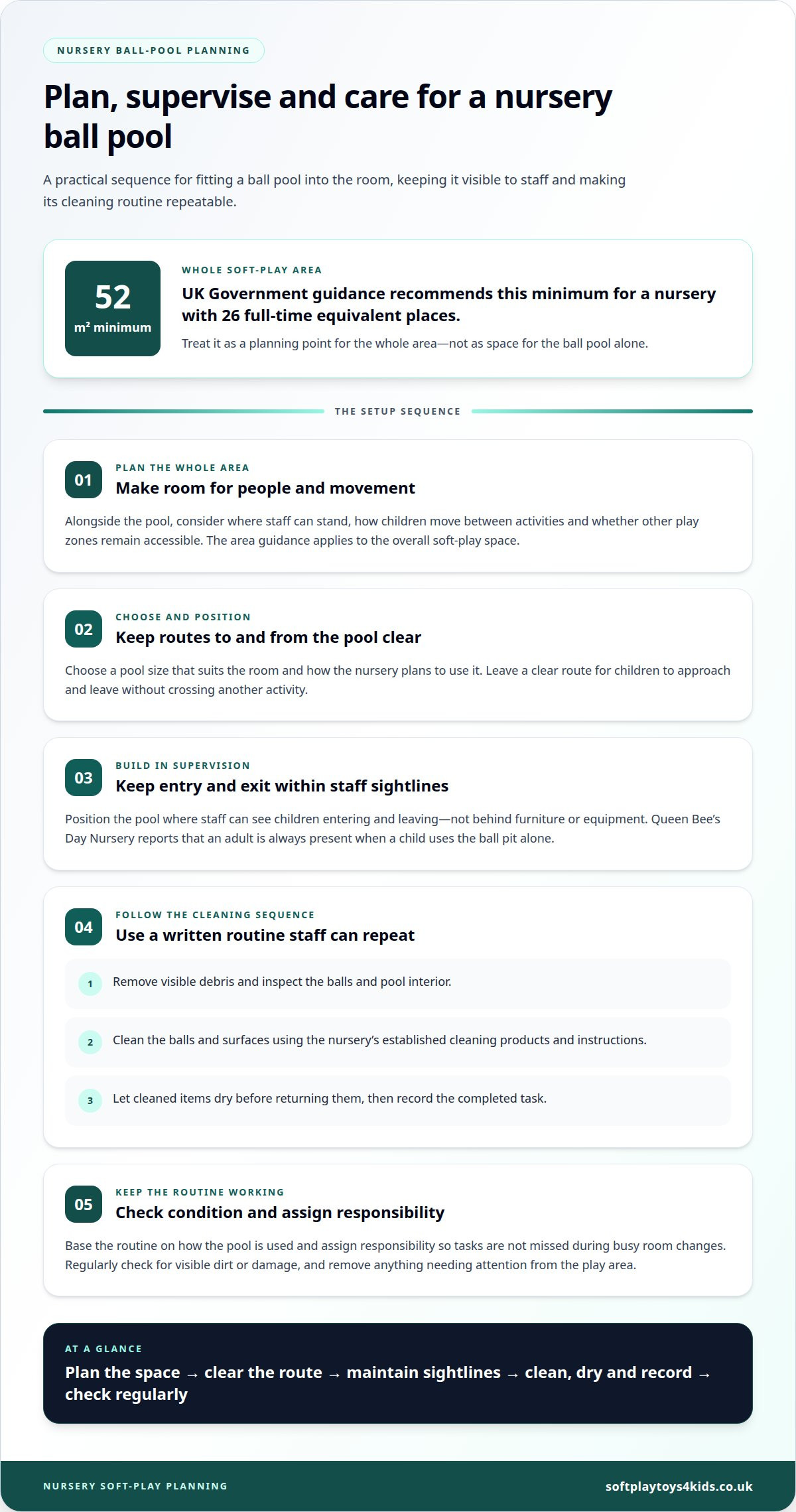
- Plan the play area around the number of children using it and the activities you want to support. According to UK Government, a nursery with 26 full-time equivalent places should have a minimum 52m² soft play area.
- Match equipment to children’s movement and play: ball pools invite reaching and handling, while tunnels and varied obstacles encourage crawling and exploring.
- Compare mats, bean bags and soft play sets by how they’ll fit into the room and the experiences you want children to enjoy.
- Use the article’s age-group and layout guidance to shape a more purposeful play space, then explore suitable soft play products for your nursery.
Ball pools and ball pool balls
An indoor ball pool gives children a hands-on space to reach, bend, grasp and move balls. Rolling or passing balls adds simple opportunities to practise coordination and interaction. Position the pool with clear routes around it, so children can approach and leave without crossing another activity. Choose a size that suits the room and how the nursery plans to use it.
Space planning matters as much as the pool itself. According to UK Government, for a nursery with 26 full-time equivalent places, the guidance recommends a minimum 52m² soft play area. Treat that as a planning point for the whole area, not a target for the ball pool alone. Consider where staff can stand, how children move between activities and whether the pool can be reached without blocking the room’s other play zones.
Include supervision in your layout. At Queen Bee’s Day Nursery, an adult is always present when a child uses the ball pit alone. Position the pool where staff can see children entering and leaving, rather than behind furniture or equipment. Clear access helps staff stay attentive as children explore, share space and take turns.
Make ball-pit cleaning practical and repeatable with a written routine. A simple sequence can help staff remember each task:
- Remove visible debris and inspect the balls and pool interior.
- Clean the balls and surfaces using the nursery’s established cleaning products and instructions.
- Let cleaned items dry before returning them, then record the completed task.
Base the routine on how the pool is used, and assign responsibility so tasks aren’t missed during busy room changes. Regularly check the pool and balls for visible damage or dirt, and remove anything needing attention from the play area. A consistent process helps keep the activity organised for children and staff.
Physical development through movement and obstacles
Movement-based play gives children practical opportunities to practise balance, coordination and body control. A clear route with varied challenges can make active exploration part of everyday nursery play.
Movement and Obstacle Play
Low obstacles invite children to crawl beneath, step over, move around or change direction. Each action calls for a different adjustment: crawling uses hands and knees, while stepping requires balance and controlled foot placement. For children aged 2-3, Queen Bee’s Day Nursery provides play equipment and resources to support physical development. Build a simple route with space to approach, turn and leave each obstacle safely.
Motor Skills and Developmental Benefits
Soft play can encourage gross motor skills through whole-body actions such as crawling, climbing and balancing. Reaching for an object or placing it carefully also involves smaller hand movements. For children aged 3-5, Queen Bee’s Day Nursery provides resources to practise physical control and body awareness. Select activities that invite children to judge distance, shift their weight and coordinate more than one movement.
Make the route purposeful rather than crowded. Arrange pieces so children can try one movement at a time, then combine actions as they gain confidence. For example, a child might crawl through a tunnel before stepping across a low block. Keep sightlines open and leave room for children to move without interrupting one another. Plan for the children using the space, rather than simply filling the available floor area.
- Offer a clear starting point and an open exit.
- Use varied shapes to invite crawling, stepping and balancing.
- Observe which movements children choose, then adapt the route.
Also consider fixed features beside play routes. Column padding for exposed indoor columns can be considered as part of the room layout, keeping the focus on a play area designed for movement.
Product types including tunnels, mats, bean bags and soft play sets
Suitable types for UK day nurseries include crawl tunnels, mats, low blocks, step-and-slide sets, bridge sets, bean bags and modular soft play sets. UK nurseries can buy from UK-based manufacturers and specialist soft-play suppliers, choosing products around children’s ages, room layout and intended activities.
For babies aged 0-18 months, low blocks, crawl tunnels and mats create varied floor-level play. For toddlers aged 18 months to 3 years, step-and-slide sets and bridge sets offer routes for climbing and moving between surfaces. Larger modular blocks suit pre-school and reception children aged 3-5 years.
Each type offers a different play experience. A tunnel invites crawling, a mat defines a space for floor play, and blocks can form simple routes. Bean bags can create a quieter corner, while soft play sets combine shapes for active exploration. Choose pieces that suit the room’s purpose instead of filling every open area.
- For movement: combine mats, tunnels and low blocks to create a route.
- For calming play: use a bean bag in a quieter, clearly defined space.
- For flexible layouts: select blocks or sets that can be rearranged.
Colour affects how equipment fits into a room’s visual plan. Coordinated colours can create a calm-looking area, while contrasting colours can help distinguish play zones. Consider how the colours work with existing nursery furnishings, and keep the layout easy for children and staff to understand.
Nurseries prioritising domestic manufacture can consider British-made soft play products as part of their purchasing criteria. Compare the product’s stated origin alongside its type, intended age group, colour choices and role in the room. For shared nursery use, washable covers are a practical feature to consider, especially where equipment is handled throughout the day.
Soft play equipment for nurseries
A well-planned nursery setup balances safety, usable space and clear activity zones. Assess each purchase by how children will use it, how it will fit and what supporting information is provided.
Safety Standards for Nursery Soft Play
UK safety assessment should consider each item’s intended use, design and installation, rather than treating all soft play as identical. Ask what safety documentation accompanies the equipment and which product or use it covers. BS EN 1176 and BS EN 1177 should not be presented as blanket claims for every indoor item; check their stated scope in the documentation.
Checking BS EN 1176 and BS EN 1177
Check supplier documents for the exact standard reference, which equipment or surface it covers, and any stated conditions. Compare these details with the item being purchased and its planned location. Keep the documents with installation and maintenance records. Follow the equipment instructions for its arrangement, then include its position and condition in routine room checks.
Equipment Costs
UK nursery equipment costs depend on the type, size and number of pieces, plus whether the purchase includes a set or individual items. Soft play building blocks typically cost between £55 and £170 on the market, with a median of about £83. That range applies to blocks, not to every product or a complete nursery play area.
VAT relief and funding depend on the nursery’s tax position and the rules of each funding programme. Budget separately for equipment and installation, and assess each funding route against its eligibility criteria.
Space and Flooring Requirements
Scottish Government says a soft play area should be spatially appropriate for its users and activities. Plan the layout, leave clear movement routes between pieces and consider staff sightlines. Choose flooring suited to the activities and room, and make sure the surface and equipment arrangement work with the way children will move.
Before installation, measure the available area, mark activity zones, and follow the product’s installation instructions. Include nearby columns and exposed edges in the room assessment. Explore nursery safety pads as one option for addressing padded protection within the wider layout.
SoftplayToys4kids: Soft Play Ball Pits
SoftplayToys4kids is a practical next step for nurseries planning a welcoming play environment. If your room plan includes sensory exploration, its Sensory Toys can complement movement activities with additional ways for children to engage.
Consider the needs of the whole setting, not just one play zone. For example, lamp post protectors can address exposed posts in relevant spaces. Match each product to the room layout and activities you want to support, while keeping clear routes and staff visibility in mind.
Explore SoftplayToys4kids’ relevant products when you’re ready to develop your nursery environment. Contact SoftplayToys4kids or visit softplaytoys4kids.co.uk.
Make your next play-space decision count
Before choosing another item, decide what you want the room to make possible. A focused plan turns a general wish for more active play into a clear purchasing brief: name the activity, identify where it belongs and consider how it will work alongside existing resources.
SoftplayToys4kids offers Soft Play Ball Pits, Soft Play Mats and Sensory Toys for nursery environments. Choose the category that best fits the experience you want to create, whether that means adding a dedicated play feature or bringing a different sensory element into the room. The right next step is the one that supports your setting’s priorities.
If you’re planning soft play equipment for day nurseries, take your room plan and priorities into the conversation. Contact SoftplayToys4kids to discuss your needs, and take the next step towards a play space children can enjoy.
Frequently Asked Questions
What age groups and developmental needs should nursery soft play equipment suit?
Choose soft play equipment for day nurseries to suit children’s ages, abilities and the movements they’re ready to practise. Babies can explore at floor level, while older toddlers may be ready for more varied movement challenges. In mixed-age rooms, select soft play equipment for day nurseries that offers distinct play choices at suitable levels. Observe how children approach each item, then adapt the selection as their confidence and physical control develop.
How often should nursery soft play equipment be inspected, cleaned and maintained?
Set a repeatable routine that suits how the equipment is used, and act promptly when a problem appears. Before play, staff can look for visible damage, loose seams, displaced pieces or debris. After use, clean surfaces and items according to product instructions and nursery procedures. Record checks and cleaning, and remove damaged equipment from use until it has been assessed or repaired.
What are the main risks of soft play equipment in nurseries and how can they be reduced?
Common concerns include damaged coverings, displaced equipment, blocked routes and children using a space beyond its intended layout. Keep walkways clear, arrange equipment securely, supervise play and respond promptly to visible wear or contamination. For example, if a mat shifts into an exit route, move it before play continues. Review the layout whenever activities or equipment change.
Leave a Reply