
How to Upgrade Your Church Hall Play Area and Assess Costs

The best way to start upgrading your church hall play area may be with a small change rather than a major rebuild. Try practical improvements first, then use what works to guide a wider plan. This keeps the project focused on children’s play and the needs of your hall.
It’s natural to want a space that feels welcoming, safe and worth the investment, especially when it serves church groups and pre-school families. This guide explains how to assess what needs improving, estimate costs based on the project’s scope, and decide whether the benefits justify the spend. It also covers planning a workable timeline, from setting priorities to coordinating play-area changes with wider hall work.
As you plan, consider the layout, equipment and practical use of the space without assuming every hall needs the same solution. The aim is a clear, considered upgrade plan that supports joyful play and makes good use of your budget.
Key Takeaways
- Build a realistic timeline around permissions, funding and work that can happen in parallel; allow extra time for a larger building project.
- Start improvements with the hall’s users and current layout, then trial smaller changes before committing to a wider upgrade.
- Estimate costs by separating play equipment from building work, and assess payback against practical benefits and ongoing use.
- Plan inclusive play by considering clear routes, different ways to engage and the needs of children and families using the space.
Project timelines and installation duration
How do you choose between new, second-hand or modular play equipment? Compare each option’s condition, fit with the hall and flexibility as needs change. A modular layout can support a phased project, while second-hand equipment needs careful assessment before use.
The main risks are setting an unrealistic deadline, overlooking permissions or spending before the group agrees on priorities. When upgrading your church hall play area, base decisions on a clear plan and allow time for fundraising and approvals.
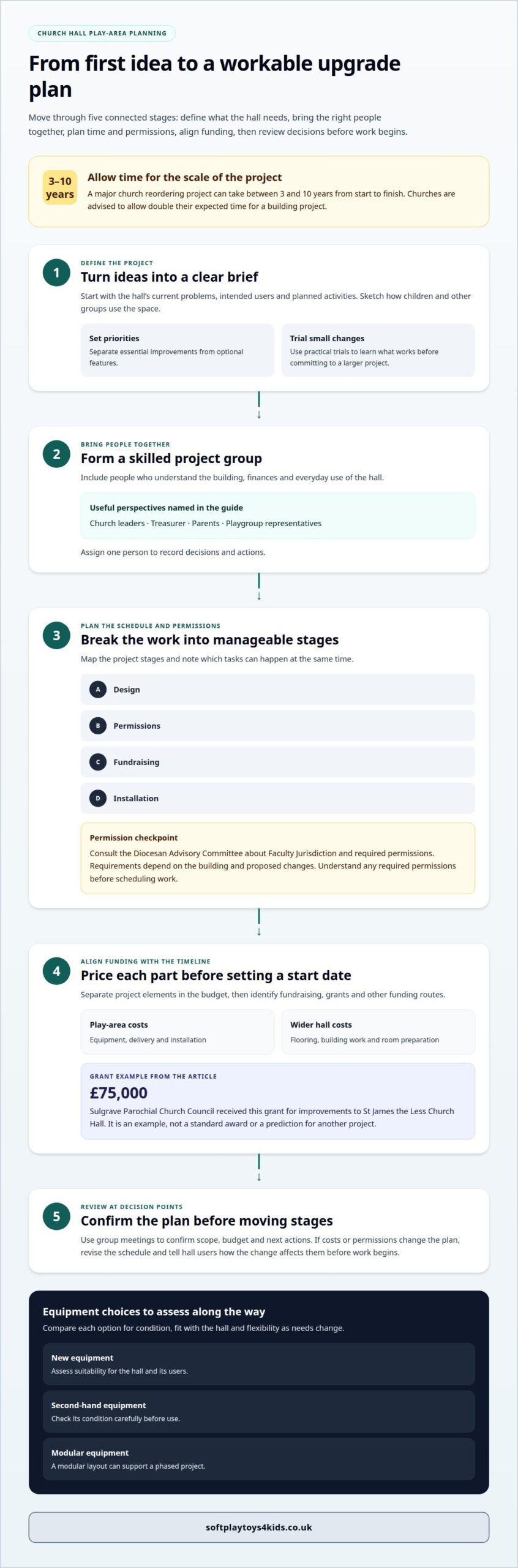
- Turn ideas into a defined project. List the hall’s current problems, intended users and planned activities. Separate essential improvements from optional features, then sketch how children and other groups will use the space. Churches are advised to trial small changes before starting a large-scale project, helping the team learn what works before committing to more.
- Form a skilled project group. Bring together people who understand the building, finances and everyday use, such as church leaders, a treasurer, parents and playgroup representatives. Assign one person to record decisions and actions. Churches undertaking building projects should consult their Diocesan Advisory Committee about Faculty Jurisdiction and required permissions.
- Set a realistic schedule. A major church reordering project can take between 3 and 10 years from start to finish. Churches are advised to allow double their expected time for a building project, and some stages may need to happen at the same time. Split the work into design, permissions, fundraising and installation, noting which tasks can run concurrently.
- Build the funding plan alongside the timeline. Price each project element separately, then identify fundraising, grants and other funding routes before setting a start date. Sulgrave Parochial Church Council received a £75,000 grant for improvements to St James the Less Church Hall. Treat that as an example, not a standard award or a prediction for another project.
- Review progress at decision points. Use group meetings to confirm the scope, budget and next actions before moving between project stages. If costs or permissions change the plan, revise the schedule and communicate the impact to hall users before work begins.
Church hall and pre-school play area improvements
Map the hall’s activities before choosing changes, so play, cleaning and shared use work together. Account for flooring, permissions and maintenance from the outset.
Check flooring options
Compare flooring options with the activities, existing surface and cleaning routine in your church hall. No single material is safest for every play area. Choose a surface that suits the room, is even and easy to clean, and works for the children using it. Consider how play mats or other temporary play zones will sit on the floor, and avoid creating awkward edges or obstacles.
Check permissions and building regulations
Speak with your Diocesan Advisory Committee (DAC) before planning building work, and establish whether Faculty Jurisdiction permissions apply. Requirements depend on the building and proposed changes, so describe the work clearly, including flooring alterations or changes to the room’s layout. Avoid scheduling work until you understand any required permissions, especially if the hall is part of a church building project.
- Prioritise improvements by use. List who uses the hall, when they need it and what currently gets in the way. A pre-school session may need a clear play zone, while church gatherings need flexible space. Separate essential repairs from additions, then trial smaller changes before beginning a large-scale project.
- Plan cleaning into the layout. Keep play equipment and furniture arranged so the floor remains accessible for routine cleaning. Choose surfaces and play-area components that can be wiped or cleaned using practical methods suited to their materials. A simple storage place for movable items helps clear the room between sessions and keeps cleaning manageable.
- Coordinate upgrades with other hall work. The Community Hall at Christ Church in Ardsley received new flooring, electrics, emergency lighting and redecoration as part of its improvements. Use that example to consider whether planned play-area changes can be coordinated with wider hall improvements, rather than disrupting activities in separate rounds.
Installation costs and payback
Estimate the whole project, not just the play equipment. Separate one-off costs from ongoing upkeep, then weigh the financial return against the hall’s practical benefits.
- Break the budget into cost lines. List equipment, delivery, installation, flooring or building work, and any changes needed to prepare the room. Keep play-area purchases distinct from wider improvements, such as electrics or redecoration. This makes it easier to see which choices drive the total and which can be phased if fundraising takes longer.
- Compare options by useful life and fit. Assess new, second-hand and modular equipment against condition, suitability and how readily the layout can change. A lower initial outlay may not represent better value if an item needs repairs or does not suit the hall. Include cleaning, storage and replacement needs in the comparison, rather than judging options on purchase cost alone.
- Define what payback means for your hall. A play area may support more regular pre-school sessions, attract wider community use or make the space more useful between church activities. Record the outcomes the project aims to achieve, then review them after opening. For a shared hall, practical gains in usability can matter alongside any income generated.
- Match fundraising to eligible work. Specific grant schemes often have strict rules on what they will cover when upgrading your church hall play area. For instance, a particular grant may not fund adaptations or improvements unless they form part of a larger capital repair grant application, and it often does not fund community programmes. Build the funding plan around the actual scope.
- Separate relevant tax considerations. Qualifying energy-saving-material installations in buildings used solely for a relevant charitable purpose are zero-rated for VAT until 31 March 2027, before reverting to 5%. Treat this as a consideration for eligible energy-saving work, not a discount on play equipment. Keep invoices and project costs separated so the budget reflects each type of work accurately.
- Set a review point. Compare actual spending with the approved budget after installation, then revisit use and maintenance at a planned project review. This gives the committee a clear record for future fundraising decisions.
How should a church hall play area be planned for accessibility and inclusive play?
Plan the room around the children and families who use it, considering how they enter, move, play and take a break. These steps turn inclusive intentions into practical layout decisions.
- Map the route from entrance to play space. Walk through the hall as a family might, noting doors, tight turns, furniture and changes in floor level. Keep a clear route between the entrance, play area, seating and toilets. A pushchair or mobility aid should not have to weave through stored equipment to reach the activity space.
- Arrange play zones for different kinds of movement. Leave open floor space beside active play, rather than making every activity depend on running or climbing. Put quieter activities in a calmer area, away from busy entrances and louder play. Clear boundaries help children understand where activities happen and make shared use easier for pre-school groups.
- Offer different ways to take part. Include choices for children who prefer watching before joining, playing alongside others or taking a quiet break. A low-stimulation corner with familiar toys can provide a useful change of pace. Keep activities visible to supervising adults without placing every child in the centre of the room.
- Make seating and storage work for families. Place chairs near the play area so carers can support children while remaining part of the activity. Store movable equipment where adults can reach it without blocking routes. Keep bags and coats away from entrances, turning points and the edges of play zones.
- Review fixed features and potential obstacles. Check whether columns, radiators or furniture narrow routes or create hard edges beside active play. Reposition movable items where possible, and consider suitable padding around exposed columns. Test the layout during a real session, when children and carers are moving through the hall.
- Gather feedback after use. Ask families and group leaders which routes feel difficult and which activities children choose. Use those observations to adjust the arrangement before making permanent changes. Explore ideas for more inclusive play spaces as you shape your hall plan.
SoftplayToys4kids
SoftplayToys4kids can help complete your church hall play plan with products that support the space’s intended use. Sensory Toys offer another way for children to engage with play, while Lamp Post Protectors can be considered where exposed posts form part of the hall layout. Choose additions that fit your room, the activities you’ve planned and the needs of the children using it.
As you refine the design, consider how each item fits alongside routes, seating and shared activities. A considered selection can make the play area more welcoming while respecting the hall’s wider purpose. For a UK church or pre-school project, set clear priorities and match product choices to the space.
Contact SoftplayToys4kids to discuss your play-area plans.
Make your next step a practical one
A welcoming play space starts with decisions that reflect how children and families actually use the hall. Before moving ahead, agree on the first improvement your group wants to make and how it will support everyday activities. This gives the project a clear starting point while leaving room to adapt as the hall’s needs change.
For equipment that complements your plans, SoftplayToys4kids offers Soft Play Ball Pits, Soft Play Mats and Sensory Toys. These options can help shape a play area with opportunities for active, comfortable and sensory play. Keep the focus on a layout that works for your community, not simply on adding more equipment.
Ready to take the next step in upgrading your church hall play area? Contact SoftplayToys4kids to discuss your project and explore options for your space. A thoughtful plan can help your hall become a more joyful place for children and families.
Frequently Asked Questions
What are the best ways to upgrade a church hall play area?
Start by listing the equipment and noting what is damaged, rarely used or requested by families. Then agree which improvements will make the biggest difference during sessions. For example, a playgroup could trial a revised activity arrangement before buying additional items. Record feedback from carers and group leaders, then use it to refine the plan and prioritise future purchases.
How much does it cost to renovate or equip a church hall play area in the UK?
The budget depends on the work involved, the room’s condition and the equipment selected. Separate equipment purchases from delivery, installation, flooring and wider building work to identify the main cost drivers. Also account for ongoing cleaning and upkeep. To assess value, consider how often the area will be used and whether it supports the hall’s planned activities, not just its initial purchase cost.
What UK safety standards apply to indoor play equipment and soft play areas?
Choose equipment with relevant safety documentation and follow its manufacturer’s setup and care instructions. The appropriate checks depend on the product and its intended use. SoftplayToys4kids describes its products as meeting “BS Safety Standards”; that phrase does not identify a specific British Standard number. Keep product documents with the hall’s records so the installed items can be identified and reviewed.
What safeguarding requirements apply when children use a church hall play area?
Set clear safeguarding procedures for every session, including who supervises children, how children are handed over and what happens if a concern arises. Make sure group leaders understand the venue’s arrangements before activities begin. Keep sightlines clear and agree how shared areas will be managed when several groups use the hall. The church’s safeguarding lead can help align session procedures with its policies.
What local suppliers and funding options are available for church play areas in the UK?
SoftplayToys4kids is a UK-based manufacturer and supplier in West Yorkshire, serving organisations including schools, nurseries and playgroups. Funding routes can include community fundraising, grant programmes and local initiatives. The Places of Worship Renewal Fund supports eligible capital repair projects, but does not fund community programmes or standalone improvements. Match each funding application to its stated purpose and the actual scope of hall work.
Which flooring is safest and most suitable for a church hall play area?
No single flooring is safest for every play area. Choose an even, easy-to-clean surface suited to the hall, its activities and the children using it.
Leave a Reply