
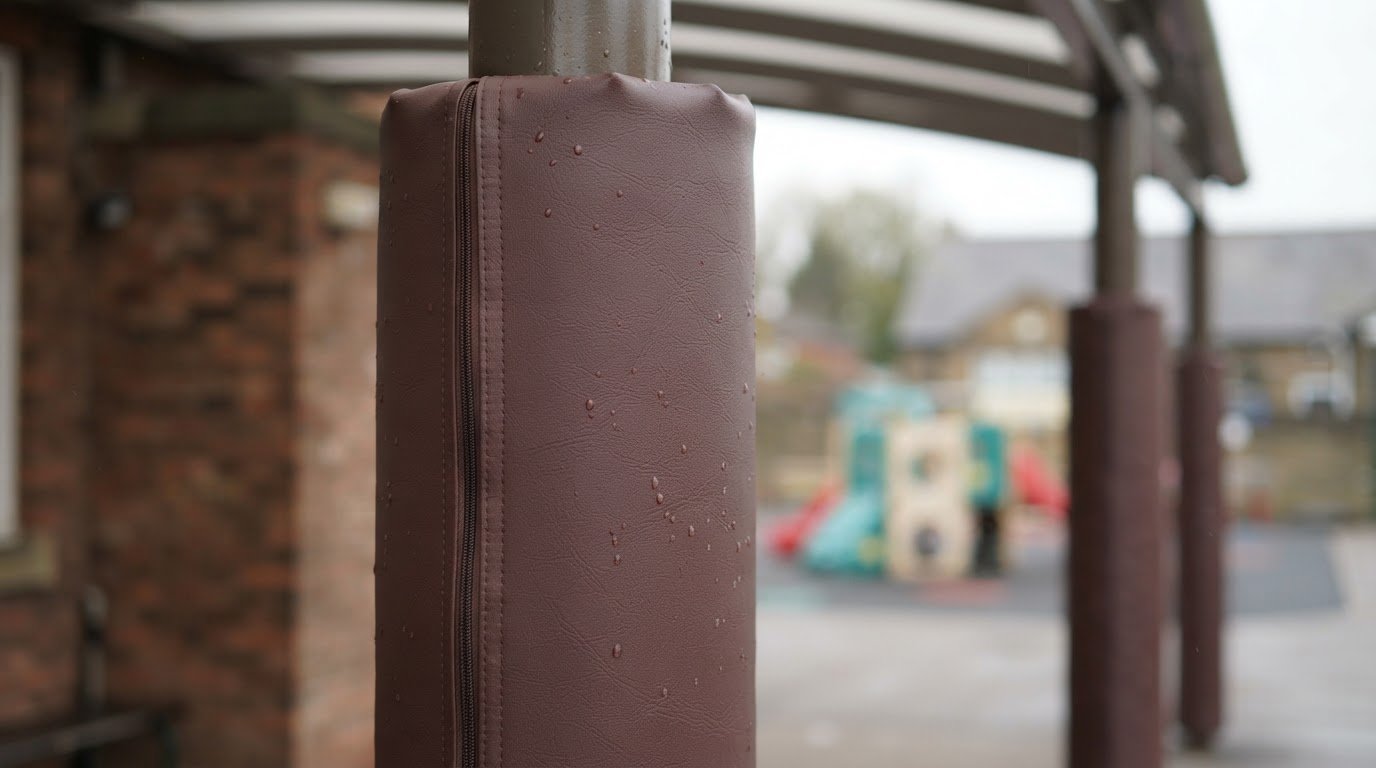
UV stabilised vinyl post wraps for school and play area canopies
For school canopies, UV stabilised vinyl post wraps combine a UV-resistant vinyl cover with a padded inner layer. The waterproof cover makes them a practical option for posts in outdoor school and play areas.
Colour matters too: canopy post protectors are available in 13 colours, so the wrap can complement the surrounding space or add a bright accent. The right fit depends on the post’s shape and measurements, as well as how much of its height you want to cover.
Choosing padding and a finish suited to the setting can help create a comfortable play and learning space while keeping durability in view. This guide covers colour choices, suitable locations and sizing for round, square or rectangular posts. Use these considerations as a starting point when selecting a wrap for your canopy and the children who use the area.
Key Takeaways
- Plan a colour scheme that works with the wider school or play-area setting, and see how different combinations can help posts feel coordinated.
- Consider how canopy post wraps can support the way outdoor spaces are used for play, teaching and shelter.
- Measure post height and width carefully, then use the post’s shape to guide the wrap size you need.
- Understand what affects a wrap’s lifespan in UK weather and which care habits can help maintain its condition.
Available colours and colour combinations
School canopy post protectors are available in 13 colours, giving schools a choice of coordinated or contrasting finishes. Select a main colour that relates to the school’s existing outdoor scheme, then consider whether every post should match or whether different areas need distinct accents.
For example, a school could use a consistent colour along a covered walkway and a contrasting colour around an outdoor learning area. This creates a visual distinction without changing the canopy structure. Colour is decorative: it does not establish the padding’s impact performance or prove that the material suits a particular installation.
Coordinate wraps with school awning colours by comparing them with the existing fabric, signage and nearby play equipment. Powder-coated frame colours also shape the overall look. A close match creates a unified appearance, while a contrast makes each element stand out. Check colours outdoors, where daylight and surrounding surfaces affect how they look.
Canopy colour options depend on the roof and frame specification. Polycarbonate or laminated glass describes the roof material, not a colour choice; the available facts include 16 mm multiwall polycarbonate and 8.8 mm laminated glass. Keep the post-wrap palette compatible with the installed canopy rather than assuming its panels or frame can be recoloured.
A printed logo is a separate design consideration. Decide whether it belongs on a wrap, awning or another sign, and make sure it remains legible against the background. Before production, specify the logo colours and intended position in the artwork brief.
Are there UK fire-safety requirements for vinyl wraps on school canopies? Colour alone does not establish fire performance. Include the vinyl and padding materials in the school’s project specification, then assess their fire-performance information for the intended setting.
Do post wraps need planning permission or building-regulations approval in the UK? A wrap covers a post, but approval depends on the wider project and site, not colour selection alone. Consider the canopy installation separately from the wrap.
What are prices in the UK? There is no single price for every wrap: dimensions, coverage, quantity and printed artwork affect the specification and quote. Which suppliers offer them? Specialist UK school-canopy and playground-safety suppliers are the relevant categories. Compare each product’s suitability for the post and setting.
Applications in schools and play areas
A fixed canopy can provide sheltered outdoor space for play, lessons and movement between buildings. A school might use the same covered area for a morning reading group and supervised play later. Post wraps add padding around the supports; they do not replace the roof’s role in providing shade or rain shelter.
Consider activity around each post when planning its position and coverage. Posts beside a busy play route may need a different protection plan from those at the edge of a quiet outdoor learning area. Mark entrances, seating, play equipment and teaching zones on a simple site plan to identify posts close to children’s usual routes.
Sun protection depends on the canopy roof, not the post covering. Polycarbonate canopy panels can block 99 percent of the sun’s harmful UV rays, while vinyl post wraps cover the posts themselves. Children are more susceptible to sun damage than adults, so shade planning matters for outdoor lessons and play. A wrap alone doesn’t make an exposed area shaded.
Map how the canopy will be used before planning a bespoke layout. A covered teaching space, for example, may need clear routes between tables, while a play area may see more activity near the posts. Aligning wrap coverage with post locations keeps the design focused on the outdoor space.
- Walkways: identify posts beside entrances and regular routes.
- Learning areas: note where students gather for lessons or group activities.
- Play zones: mark posts near equipment and active play.
This assessment helps distinguish post padding from canopy functions. The roof provides overhead shelter; wraps cover individual posts. Keeping their roles clear makes it easier to plan a layout suited to children, students and everyday learning.
Custom sizes and post shapes
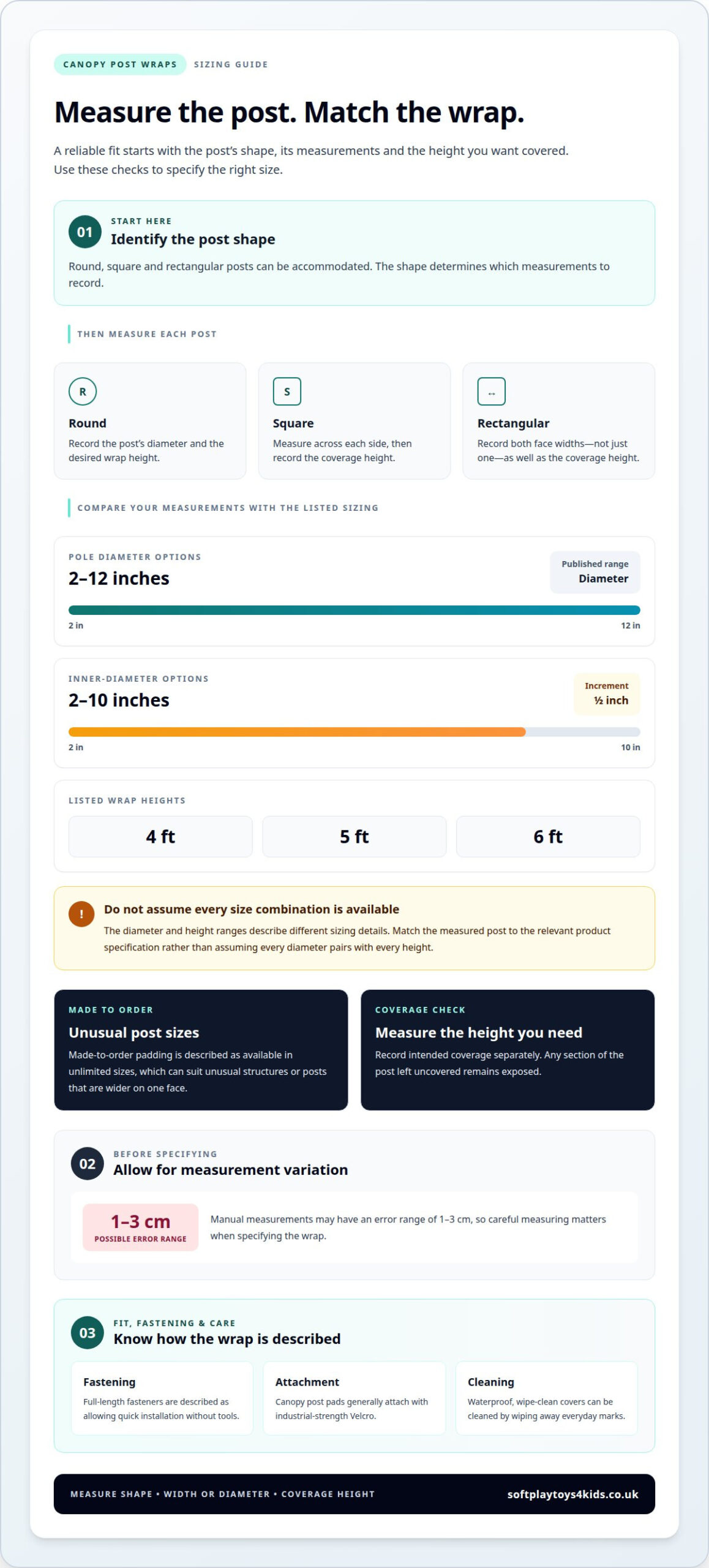
Start by identifying the shape of each canopy post, then measure its width and height. For a round post, record its diameter; for a square or rectangular post, measure across each face. Record the required coverage height separately, because any uncovered section of the post remains exposed.
Published size details include pole diameters from 2 to 12 inches, while inner-diameter options range from 2 inches to 10 inches in half-inch increments. Listed height options are 4ft, 5ft and 6ft. These ranges describe different sizing details, so match the measured post to the relevant product specification rather than assuming every diameter pairs with every height.
Round, square and rectangular posts can be accommodated, and made-to-order padding is described as available in unlimited sizes. This flexibility can suit unusual canopy structures, including posts that are wider on one face. For a rectangular support, record both face measurements rather than treating it like a round pole.
How are vinyl post wraps measured, fitted and maintained? Measure the post dimensions and intended coverage height, then use those figures to specify the wrap. Manual measurements may have an error range of 1-3 cm, so accurate measuring matters. Full-length fasteners are described as allowing quick installation without tools; canopy post pads generally attach with industrial-strength Velcro. Waterproof, wipe-clean covers can be cleaned by wiping them, helping remove everyday marks from a bright playground setting.
- Round post: record its diameter and desired wrap height.
- Square post: measure each side and the coverage height.
- Rectangular post: record both face widths and the coverage height.
Before ordering, compare each post’s measurements with the selected size range. If the canopy has posts of different shapes, list each shape and dimension separately. A clear specification helps plan consistent coverage around the playground, whatever the weather.
How long do UV-stable vinyl post wraps last in UK weather?
UV stabilisation helps a vinyl cover resist sunlight, but does not make it immune to wear. A post wrap’s service life depends on its material, installation, exposure and care. A post sheltered beneath a canopy faces different conditions from one exposed to driving rain or direct sunlight.
UK weather changes outdoor exposure throughout the year. Rain, damp conditions, temperature changes and sunlight all affect materials over time. A canopy left in place year-round faces these conditions in every season. Its roof may shelter posts from some rain and sun, but the protection depends on the canopy’s design and each post’s position.
Check the cover and its condition during routine site inspections. A waterproof, wipe-clean vinyl cover is easier to clean after mud or everyday marks. Cleaning keeps the surface presentable, but does not repair damage. Inspect seams, fastenings and contact points for loosening, splitting or wear. A wrap that shifts against the post may experience more friction than one that stays secure.
- Exposure: note whether the post sits beneath the roof or near an exposed edge.
- Fit: look for movement, gaps or repeated rubbing against the post.
- Condition: inspect the cover and fastenings during regular site checks.
- Cleaning: wipe away dirt using care suited to the cover’s material.
Assess UV-stabilised vinyl post wraps for school canopies by their condition, not colour alone. Fading may be visible, but appearance does not reveal every change to the cover or padding. If damage, loose fastenings or exposed padding appears, restrict contact with the area while the school arranges appropriate attention. Keep a simple record of inspection findings to track changes over time.
For a canopy project, take the next step with your post-protection plans.
SoftplayToys4kids: Lamp Post Protectors
SoftplayToys4kids offers Lamp Post Protectors for settings where padded post protection is part of a school or play-area plan. They’re a relevant next step when you’re assessing exposed supports around children’s activity spaces and want to explore post padding alongside the canopy layout.
Before choosing protection, note each post’s shape, measurements and position. A support beside a playground route may need a different coverage plan from one at the edge of a covered area. Accurate measurements help match protection to the post and its setting.
SoftplayToys4kids also offers Sensory Toys for children’s play and exploration. If post protection is the main need, focus on the Lamp Post Protectors; if you’re planning a wider play environment, consider how sensory resources fit your goals.
Contact SoftplayToys4kids to discuss your school or play-area requirements.
Plan a canopy space that works for children
Plan a canopy space around how children learn, play and move through the school day. Look beyond the posts and consider how the surrounding area could support group activities, quiet moments or active play. UV stabilised vinyl post wraps for school canopies can be one part of that wider plan, alongside resources chosen for the age group and intended use.
SoftplayToys4kids also offers Soft Play Ball Pits, Soft Play Mats and Sensory Toys, giving schools options to consider for indoor play and sensory activities. Choose what fits your setting and priorities, then take the next step with a clear idea of the space you want to create.
Contact SoftplayToys4kids about post wraps to discuss your plans. A thoughtful design can help make room for more joyful moments at school.
Frequently Asked Questions
What Material Should I Use?
For a canopy post wrap, choose a UV-resistant vinyl cover with a padded inner layer. This pairs an outdoor-facing surface with cushioning around the support. Match the material to the setting and the post’s shape. Specify the roof material separately: polycarbonate or glass describes the canopy covering, not the wrap around its posts.
What are UV-stabilised vinyl post wraps for school canopies?
These are padded post coverings with a vinyl outer surface designed to resist UV exposure. Their role is to cover canopy supports, not to provide overhead shade or rain shelter. For example, a school planning a covered route can consider wraps for the posts while specifying the roof and post protection separately.
Which vinyl grades and UV ratings are suitable for outdoor canopy post wraps in the UK?
Choose vinyl described as UV-resistant and suitable for outdoor use, based on the product’s stated material details. Do not infer a particular performance level from colour or the word “vinyl” alone. For a canopy exposed to direct sunlight, consider the cover’s stated UV resistance and suitability for the intended outdoor setting.
How do vinyl post wraps compare with painted or powder-coated canopy posts?
Paint and powder coating are finishes applied to a post; a vinyl wrap is a separate covering, usually padded around the support. They serve different purposes. A coated post retains its exposed surface, while a padded wrap adds a layer over it. Choose based on whether the project needs a finish, post padding or both.
Are vinyl post wraps safe, durable and suitable for high-traffic school environments?
Wraps can be considered for busy school settings when they fit the post and their cover and padding suit the intended use. UV resistance and a wipe-clean surface are useful attributes, but do not establish suitability on their own. Consider the post’s location, the level of contact and the wrap’s condition as part of the school’s site assessment.
Are there UK fire-safety requirements for vinyl wraps on school canopies?
Include the vinyl and padding materials in the school’s project specification, then assess their fire-performance information for the intended setting.