
Padded Wall Panels for Sensory Rooms: The Ultimate Safety & Design Guide
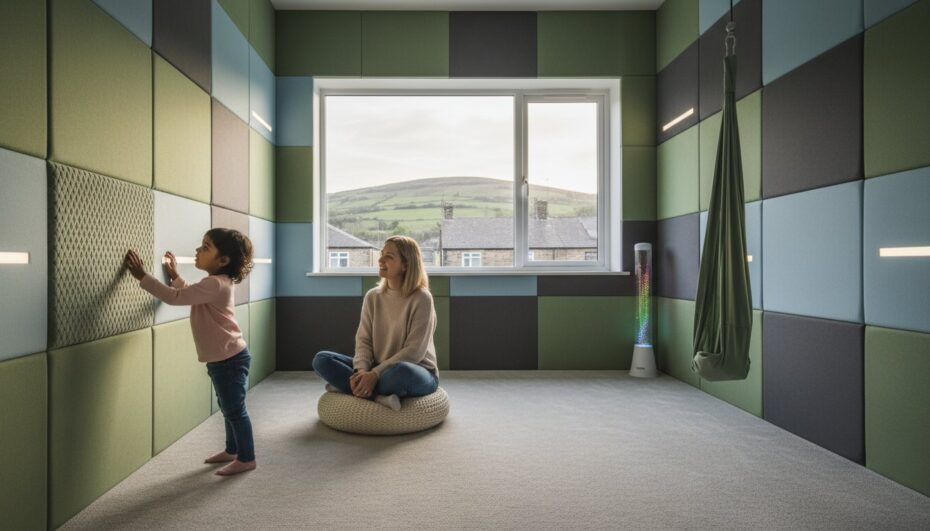
What if the very walls of your home could actively soothe your child during a meltdown instead of being a source of constant worry? You know the feeling of holding your breath every time play gets a little too energetic or a sensory overload leads to a physical release. It’s exhausting to constantly monitor every hard corner and flat surface. You want a home that feels like a hug, not a hazard. High-quality padded wall panels for sensory rooms are the bridge between clinical safety and domestic comfort, turning any spare room into a professional-grade sanctuary.
We understand that you’re looking for more than just a bit of foam. You need to know which PVC types actually last, which foam densities provide the right rebound, and how to keep everything hygienic without a struggle. This guide will walk you through the essentials of choosing the right materials and why our UK-made craftsmanship sets the standard for durability. You’ll learn exactly how to design a space that encourages independence while keeping your little ones protected from injury. Let’s build a safer, happier environment together.
Key Takeaways
- Understand how specialized impact-absorbing cushions do more than just line a room; they actively prevent injuries while providing vital tactile stimulation for development.
- Learn how the right padding reduces anxiety for both caregivers and children by creating a secure environment designed for emotional regulation and grounding.
- Master the buyer’s framework for selecting padded wall panels for sensory rooms, including why reinforced PVC and specific foam densities are non-negotiable for long-term durability.
- Get practical, step-by-step guidance on measuring your space accurately around skirting boards and outlets to ensure a professional, seamless finish.
- Discover the benefits of choosing bespoke, UK-made products handcrafted in our West Yorkshire factory to ensure your rigorous safety standards are always met.
What Are Padded Wall Panels for Sensory Rooms?
At their heart, padded wall panels for sensory rooms are high-performance, impact-absorbing cushions designed to transform hard, unforgiving surfaces into safe, tactile environments. These aren’t just decorative additions; they’re structural tools engineered for therapeutic settings. To understand why these spaces are so vital for development, you can explore the history and purpose of What is a Sensory Room? on Wikipedia. While the room provides the experience, the padding provides the peace of mind.
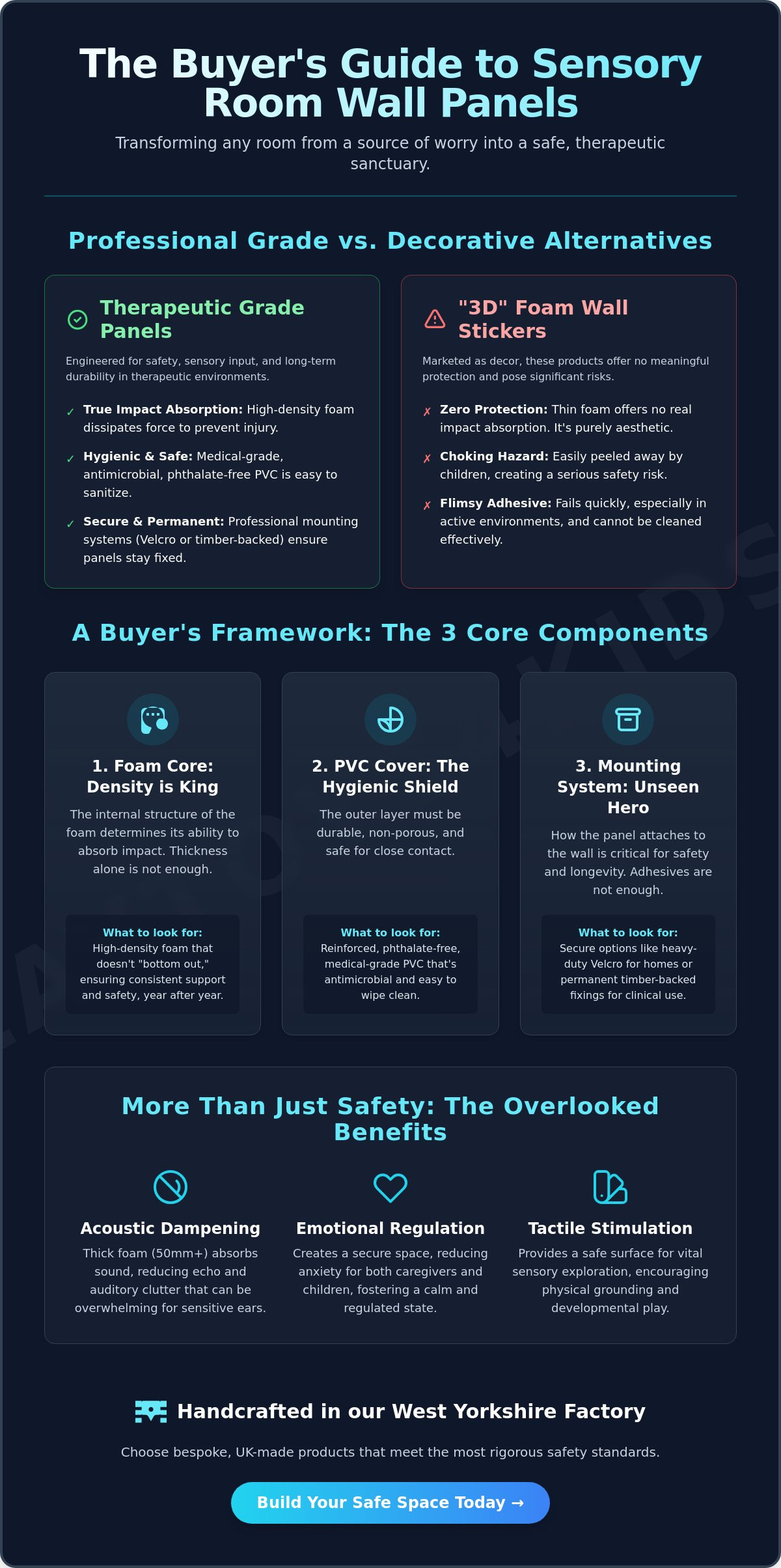
The primary job of these panels is to prevent injury during moments of high energy or physical distress. However, professional-grade padding also serves a dual purpose by offering tactile and visual stimulation. You’ve likely seen thin, peel-and-stick foam stickers on sites like Amazon marketed as “3D wall decor.” Don’t be fooled. These products are purely aesthetic and lack the impact absorption ratings required for a true safety environment. They peel away easily, can be a choking hazard, and offer almost zero protection against a heavy impact. Real safety requires professional engineering.
Key Components of a Professional Sensory Panel
- High-density foam cores: Density is king. While thickness provides the visual bulk, it’s the internal cell structure of the foam that determines how much force it can safely dissipate. We use premium foam that won’t bottom out, ensuring it remains supportive year after year.
- Medical-grade PVC covers: Our panels are wrapped in reinforced, phthalate-free PVC. It’s antimicrobial and incredibly easy to wipe clean, which is essential for maintaining a hygienic space.
- Specialized mounting systems: We don’t rely on flimsy adhesives. Depending on your needs, we offer everything from heavy-duty Velcro for domestic bedrooms to permanent timber-backed fixings for high-traffic clinical suites.
Common Applications: From Bedrooms to De-escalation Suites
Safe spaces in the home are a top priority for many parents. By installing padded wall panels for sensory rooms in a child’s bedroom, you create a “safe zone” where they can sleep and play without the risk of injury from hard walls or bed frames. It’s about giving them independence and giving you a night of better sleep.
In SEN classrooms, these panels allow students to engage in high-energy play or find grounding during a sensory overload. Professional clinical environments also rely on our robust surfaces because they stand up to rigorous sanitization protocols. Whether it’s a small corner in a nursery or a full de-escalation suite in a hospital, the goal remains the same: total safety without compromising on a warm, inviting feel. We manufacture every piece in our West Yorkshire factory to ensure it meets these exact, demanding standards.
The Sensory and Therapeutic Benefits of Wall Padding
Why do we focus so much on the “feel” of a room? For a child with sensory processing needs, the environment itself is a form of therapy. When you install high-quality padded wall panels for sensory rooms, you aren’t just putting up a safety barrier. You’re creating a predictable, controlled atmosphere that allows a child to explore their physical limits without the constant “no” or “be careful” that often limits their play. This freedom is where real developmental progress happens.
Acoustic Regulation and Thermal Comfort
One of the most overlooked benefits of professional padding is how it handles sound. We typically use foam that is 50mm or thicker, which acts as a powerful acoustic absorber for sensitive ears. Hard walls bounce sound waves around, creating a chaotic “echo chamber” that can be physically painful for some children. By dampening the harsh echoes of a room, wall padding directly reduces the auditory “clutter” that can trigger sensory overload in children with sensory processing disorder. Additionally, these thick foam cores provide excellent thermal insulation. This keeps the space warm and “cosy” even during the colder UK months, making the floor and walls much more inviting for floor-based play.
Encouraging Independent Movement
When the fear of a hard fall is removed, children feel empowered to practice gross motor skills like crawling, climbing, or jumping. For those with low muscle tone or postural challenges, our padded wall panels for sensory rooms create vital “leaning zones” where they can safely support their body weight. To get the most out of these protected areas, you might consider adding specialized items from our sensory toys guide to encourage reaching and stretching. This combination of soft surfaces and engaging stimuli helps build physical confidence in a way that clinical settings often can’t match. If you’re looking to complete your sanctuary, our bespoke safety pads are the perfect foundation for a truly inclusive play space.
Choosing the Right Padded Wall Panels: A Buyer’s Framework
How do you decide between a full room makeover and a simple protected corner? It’s a question we hear every day. Selecting the right padded wall panels for sensory rooms isn’t just about picking a pretty colour; it’s about matching the technical specs to your child’s specific physical needs. While some big-box retailers offer a “one size fits all” approach, we know that a de-escalation space for a teenager requires a very different build than a soft play corner for a toddler. You need to assess the “Impact Risk” before you commit to a purchase.
If your child uses the room for high-energy play or has frequent physical meltdowns, full-height wall coverage is a smart investment. For others, a “safe corner” or a three-quarter height layout provides ample protection while keeping costs manageable. We take pride in our reinforced PVC because it’s built for the long haul. In the UK, where dampness and frequent cleaning are part of daily life, cheap foam stickers just won’t cut it. Our professional-grade materials ensure your investment lasts for years, not months. Don’t settle for flimsy alternatives when your child’s safety is on the line. Compare our craftsmanship with any mass-produced import; the difference in durability is clear from the first touch.
Foam Thickness and Density Explained
- 25mm to 30mm: These are best for light-touch areas or decorative home use where the risk of high-velocity impact is low. They provide a soft feel without taking up too much floor space.
- 50mm: This is the industry standard for most UK schools and nurseries. It offers the perfect balance of rebound and protection for daily play.
- 75mm to 100mm: Essential for high-impact zones. If you’re designing a professional care setting or a room for high-energy physical releases, this thickness is non-negotiable for maximum safety.
PVC vs. Fabric Covers
Hygiene should be a top priority when choosing your finishes. Wipe-clean PVC is the gold standard for shared spaces or homes where spills and germs are a concern. It’s tough, snag-resistant, and stays looking new even after hundreds of cleans. While some prefer vapour-permeable “breathable” fabrics for their soft texture, they often trap odours and are harder to deep-clean. Colour psychology also plays a massive role in your layout. We often suggest “Cool Blue” to help lower heart rates in calming zones, while “Bright Yellow” or orange can be used in small sections to stimulate engagement and joy. It’s about creating a bespoke environment that speaks to your child’s unique sensory profile.
Planning and Installing Your Sensory Room Padding
Ready to turn your vision into a reality? Installing padded wall panels for sensory rooms requires a bit more precision than hanging a standard picture frame. You aren’t just decorating; you’re creating a safety-critical environment. The first step is always precise measuring. Don’t just measure the wall’s width and height. You must account for skirting boards, electrical outlets, and light switches. If your panels don’t sit flush against the wall because of a missed socket measurement, you create “snag points” that can compromise the entire installation.
Choosing your fixing method is the next big decision. For many domestic settings, heavy-duty Velcro is a fantastic choice because it allows you to remove panels for deep cleaning or relocation. However, for high-impact environments like schools, Z-clips or direct screw-through fixings provide a permanent, tamper-proof finish. Before you start, ensure the wall surface is clean, dry, and free of loose plaster to allow for maximum grip. Managing corners and cut-outs is where the professional finish really shows. We recommend mitring your corner joints to ensure there are no sharp edges. Finally, perform a rigorous safety check. Ensure no gaps exist between panels where small fingers could get trapped. A gap-free finish is a safe finish.
DIY Installation vs. Professional Fitting
Is it safe to tackle this yourself? If you’re working with a straightforward, square room, many parents find they can successfully install our soft play equipment and wall panels with basic tools. However, if your room features complex obstructions like radiators, windows, or low-slung pipes, professional fitting is a wise investment. We can manufacture specialized padded covers for radiators that allow heat to circulate while keeping the surface soft to the touch. It’s about ensuring every inch of the room is protected, leaving no “hard spots” behind.
Maintenance and Longevity
Keeping your sensory space hygienic is easy if you follow the right protocols. Use a mild detergent and a soft cloth to clean our medical-grade PVC; avoid harsh bleach or abrasive scrubbers that can degrade the antimicrobial coating. Regularly inspect your panels for any signs of foam “bottoming out,” which is when the foam loses its rebound and feels flat against the wall. A high-quality, UK-manufactured wall panel is designed to provide consistent protection for up to ten years under normal domestic or educational use. Don’t leave your child’s safety to chance with flimsy imports. Invest in quality and browse our full range of safety pads to find the perfect fit for your project today.
Why SoftplayToys4kids is the UK’s Trusted Choice for Sensory Padding
What sets us apart from the flood of mass-produced imports found on discount sites? It’s simple: we are makers, not just resellers. Every one of our padded wall panels for sensory rooms is handmade right here in our West Yorkshire factory. This local approach means we maintain total quality control at every single stitch. We don’t just ship boxes; we craft safety solutions that we’d be proud to use in our own homes. When you buy from us, you’re supporting British manufacturing and getting a product built to withstand the most energetic play sessions.
Safety isn’t just a buzzword for us; it’s the foundation of everything we build. We use only high-grade, fire-retardant foam and non-toxic, phthalate-free PVC that meets rigorous UK safety standards. You won’t find any hidden nasties or “chemical smells” here. Because we sell direct to you, we can offer competitive, direct-from-manufacturer rates. By cutting out the middleman, we pass those savings straight to your budget, allowing you to create a bigger, better sensory sanctuary for less. Why pay more for a generic product when you can have a bespoke solution designed specifically for your needs?
Our Manufacturing Heritage in Bradford
Our roots in Bradford run deep, and our team brings decades of combined expertise in textile and foam fabrication. We’re proud to be a local business that understands the specific requirements of UK schools, nurseries, and private homes. Our creative team doesn’t just manufacture; they help you plan. Whether you’re a parent looking for a single corner pad or a business owner seeking a full-scale installation, we’re here to guide you. For those looking to kit out larger commercial spaces, our indoor playground equipment guide offers deeper insights into building professional-grade play zones that last.
Customisation Options for Every Space
Every room is different, so why settle for standard sizes? While we offer popular 1.2m x 0.6m panels for quick setups, our specialty is floor-to-ceiling bespoke solutions. We can cut around awkward alcoves, chimney breasts, or low ceilings with ease. You also have access to a massive palette of colours. Match your school’s branding or create a calming, neutral bedroom that blends perfectly with your home decor. The possibilities are endless when you work with a manufacturer that listens to your vision. Don’t leave your project to chance with off-the-shelf parts. Contact us today for a bespoke sensory room padding quote and let’s start building your child’s dream space together.
Build Your Child’s Safe Haven Today
Creating a sanctuary where your child can explore, grow, and regulate their emotions is one of the greatest gifts a parent or educator can provide. We’ve explored how the right foam density prevents injury and how acoustic dampening reduces the sensory overwhelm that often leads to distress. By choosing professional-grade padded wall panels for sensory rooms, you’re investing in a structural tool for emotional regulation that bridges the gap between clinical protection and the warmth of home.
Why settle for generic alternatives when you can have quality you can trust? Our products are proudly handmade in our West Yorkshire factory, using only fire-retardant and phthalate-free materials for your absolute peace of mind. Because we sell direct from the manufacturer, you get premium craftsmanship without any middleman markup. It’s time to stop worrying about hard surfaces and start focusing on the joy of safe play. Compare our standards with anyone else; the pride in our work is evident in every panel we produce.
Shop our range of professional UK-made padded wall panels and take the first step toward a safer, calmer environment. We’re excited to be your partner in building a space where every child can thrive and feel secure.
Frequently Asked Questions
Are padded wall panels easy to clean?
Yes, our panels are incredibly easy to maintain. We use a medical-grade PVC that is designed to be wipe-clean with just a mild detergent and a soft cloth. This makes them perfect for busy family homes or shared clinical spaces where hygiene is a top priority. Unlike fabric alternatives, our surfaces don’t trap odours or dust, ensuring a fresh and healthy environment for your child’s daily sensory sessions.
Can I install sensory wall padding on any surface?
Most flat, dry, and structurally sound surfaces are suitable for installation. Whether your walls are made of plasterboard, brick, or timber, our panels can be securely mounted. The key is ensuring the surface is clean and free of loose debris before you begin. For uneven walls, we recommend using a timber-backed fixing method to create a perfectly level and professional-looking finish that stays put.
What is the best thickness for a child’s sensory bedroom?
For a standard domestic bedroom, 50mm is usually the best choice for padded wall panels for sensory rooms. This thickness provides a substantial safety barrier against impacts while ensuring the room doesn’t feel too cramped. If you’re designing a space for very high-energy play, you might consider stepping up to 75mm. However, 50mm remains the industry standard for balancing clinical-grade safety with a cosy, domestic feel.
Are the materials used in your wall panels non-toxic?
Absolutely, safety is our number one priority at every stage of manufacturing. We use only phthalate-free PVC and fire-retardant foam that meets all relevant UK safety standards. Because we manufacture everything in our West Yorkshire factory, we have total oversight of the materials used. You won’t find any harsh chemical smells or hidden toxins in our products, making them safe for children to touch and explore.
Do you offer custom sizes for awkward room layouts?
Yes, we specialize in bespoke manufacturing to fit any space perfectly. We understand that UK homes often have awkward alcoves, chimney breasts, or low-slung pipes that need covering. Our creative team can work from your specific measurements to create panels that fit around these obstructions seamlessly. This ensures total room protection without leaving any dangerous hard spots exposed, regardless of your room’s unique architectural quirks.
Can wall padding help with noise reduction in a classroom?
Yes, wall padding is an excellent tool for managing classroom acoustics. The dense foam core absorbs sound waves rather than letting them bounce off hard surfaces. This dampens the “echo chamber” effect that can be so distressing for children with auditory sensitivities. By reducing background noise, you create a much calmer atmosphere that helps students focus on their tasks without feeling overwhelmed by chaotic sound reflections.
How do I measure my room for wall padding?
Measure the width and height of each wall section using a metal tape measure for accuracy. Don’t forget to subtract the height of your skirting boards and note the exact position of light switches and electrical sockets. We recommend drawing a simple bird’s-eye view map of the room to help visualize the layout. This precision ensures your panels arrive ready for a perfect, gap-free installation that looks professional and safe.
What is the difference between home-grade and commercial-grade padding?
The main difference involves the durability of the outer cover and the fixing system used for padded wall panels for sensory rooms. Commercial-grade panels often feature a thicker, reinforced PVC and are permanently mounted using timber backings or Z-clips to withstand high traffic in schools. Home-grade options typically use heavy-duty Velcro, which is more than enough for domestic use and allows for easy removal if you need to deep-clean or move.
Leave a Reply