
Educational Soft Play Benefits for Children
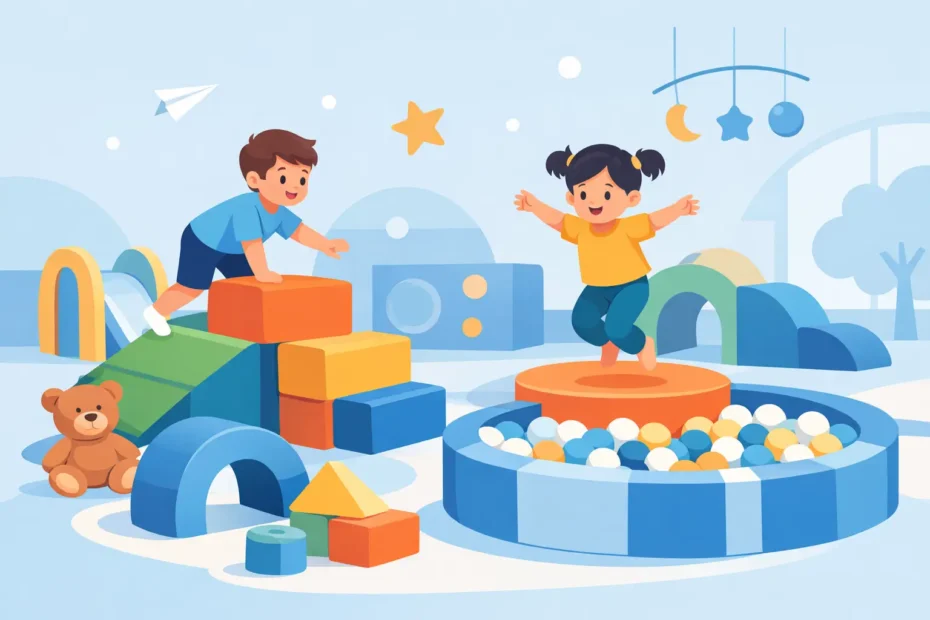
A child stacking foam shapes into a tower, crawling through a soft tunnel, then launching themselves onto a padded mat is not just keeping busy. That is learning in action. The real educational soft play benefits show up in those small repeat moments – reaching, balancing, sorting, climbing, falling safely and trying again. For parents, nurseries and playgroups, that matters because the right equipment does more than fill a room. It gives children a safer way to build confidence, coordination and concentration through active play.
Soft play earns its place when it works hard on every level. It needs to be safe, easy to clean, durable enough for daily use and engaging enough to hold a child’s attention. Just as importantly, it should support development naturally, without making play feel forced or over-structured. That is where educational soft play stands out.
Why educational soft play benefits early development
Young children learn best when their whole body is involved. They do not separate movement from thinking in the way adults do. When a toddler climbs onto a foam step, judges the height, shifts their weight and steps down again, they are developing physical control and problem-solving at the same time.
This is one of the biggest educational soft play benefits. It combines active play with real developmental value. Balance beams help children understand how their bodies move through space. Step-and-slide units encourage planning and risk awareness. Soft play shapes invite building, carrying, sorting and imaginative use. Ball pits stimulate sensory exploration, hand-eye coordination and social interaction when shared.
For babies and toddlers especially, repetition is not wasted time. Doing the same movement again and again is how strength, stability and confidence are built. Soft play gives them a child-safe environment to practise without the hard edges and impact risks you get from ordinary household furniture.
Physical skills improve through safe challenge
Children need challenge, but it has to be the right kind. If equipment is too basic, they lose interest. If it is too advanced, it becomes frustrating or unsafe. Good soft play sits in that useful middle ground where children can test themselves while staying supported by padded surfaces and age-appropriate shapes.
That safe challenge helps develop gross motor skills such as climbing, crawling, stepping, pushing and balancing. These are the foundations for everyday movement, from walking up stairs to joining in with nursery games. It also supports core strength, posture and coordination, which feed into other areas of learning later on.
Fine motor skills can develop too, particularly with smaller foam shapes, interactive activity sets and objects that children can grip, stack and arrange. A simple set of blocks or wedges can lead to lifting, turning, matching and building. It looks like free play, but there is a lot going on underneath.
For commercial settings, this matters because parents are not only looking for entertainment. They want equipment that justifies the space and spend. Nurseries and preschools need resources that support EYFS-style learning through play while standing up to frequent use.
Sensory and cognitive gains are often overlooked
The educational value of soft play is not just about movement. Sensory development plays a major role, especially for babies and younger toddlers. Different textures, shapes, sizes and colours help children process information through touch and sight. Padded equipment can feel more approachable than hard plastic or wooden alternatives, which encourages exploration.
Children also start learning about cause and effect very quickly in soft play environments. If they push a shape, it topples. If they climb from one level to another, they feel the difference in height and stability. If they build a structure badly, it collapses. That kind of instant feedback helps early reasoning develop naturally.
There is also an attention benefit. Well-designed soft play keeps children involved for longer because it invites active decision-making. They choose where to climb, what to stack, how to crawl through and which route to take. That independence builds confidence and supports concentration in a way passive toys often cannot.
Social confidence starts with shared play
Not every child charges straight into a group setting. Some hang back, watch and take longer to join in. Soft play can help because it creates simple, low-pressure opportunities to interact. Passing shapes, taking turns on a slide, sitting in a ball pit together or building side by side all encourage communication without demanding formal cooperation from the outset.
This is particularly useful in nurseries, schools and playgroups, where equipment needs to support both individual exploration and shared play. Children begin to understand space, boundaries and turn-taking in practical ways. They learn to wait, respond and move around others.
At home, soft play can support sibling play as well. It gives children a shared activity that is physical, creative and less dependent on screens. That does not mean every session is calm and perfectly organised. Sometimes it is noisy and chaotic. But even then, children are learning how to play around one another, negotiate space and invent games together.
Educational soft play benefits at home and in commercial spaces
The setting changes how soft play is used, but the core benefits stay strong. At home, parents usually want compact, versatile equipment that fits around daily life. A baby play mat, a few soft shapes or a small step-and-slide unit can turn a corner of a room into a practical developmental play area. The advantage is convenience. Children can be active indoors whatever the weather, and parents have more control over safety and supervision.
In nurseries and schools, the priority tends to be durability, hygiene and layout. Equipment has to cope with heavier traffic, different age groups and repeated cleaning. It may also need custom sizing to suit a particular room or dedicated soft play area. Commercial buyers are usually balancing educational value with operational realities, so products need to earn their keep.
Softplay Toys4Kids understands that difference. Parents often need affordable, ready-to-use options for home. Nurseries, playgroups and soft play operators may need bespoke foam sets, safety pads, post protectors or custom-built areas designed around their space and budget. One-size-fits-all rarely works well in this market.
Choosing the right equipment matters
Not all soft play delivers the same outcome. The quality of materials, design and layout makes a real difference. If the foam density is poor, shapes lose their support. If the covers are hard to clean, hygiene becomes a problem. If the design is awkward, children stop using it as intended.
For parents, that means looking beyond price alone. Affordable matters, but so does value. A better-made set that lasts, wipes clean easily and keeps children engaged is the smarter buy. For institutions, durability becomes even more important because replacing worn equipment too soon costs more in the long run.
It also helps to think about developmental stages. Babies need softer, lower-level sensory play. Toddlers benefit from climbing, stepping and crawling features. Older children may want more varied layouts with balancing, building and imaginative play potential. The best setup is not always the biggest one. It is the one that matches the children using it.
Safety and confidence go hand in hand
Parents and commercial buyers are right to focus on safety. It is not a box-ticking exercise. It is the reason children feel able to explore freely. When surfaces are padded, edges are softer and equipment is designed for children’s use, the fear factor drops. That encourages more movement, more experimentation and more learning.
Of course, soft play is not risk-free and it should not be treated as supervision-free. Children still need age-appropriate equipment and sensible oversight. But there is a major difference between managed physical challenge and unnecessary hazard. Quality soft play helps create that balance.
This is also why easy-clean, hard-wearing materials matter so much. In homes, that means less stress after messy play. In nurseries and commercial environments, it supports hygiene standards and day-to-day practicality. Good equipment should be safe to use and realistic to maintain.
The long-term value is bigger than the purchase
When people weigh up the cost of soft play, they sometimes compare it only against other toys. That misses the point. Educational soft play is closer to a multi-use developmental resource than a single-purpose toy. It supports movement, sensory learning, confidence, imagination and social play in one setup.
That makes it a strong investment for parents trying to create better indoor play options, especially in homes where outdoor space is limited or British weather gets in the way. It also makes commercial sense for nurseries, schools and soft play venues that need equipment to work hard every day.
The strongest setups are the ones that combine safety, quality and clear play value without pushing the budget beyond reason. Children do not need gimmicks. They need equipment that invites them to move, think, build and explore again and again. Choose soft play with that in mind, and the benefits keep showing up long after the first excited play session ends.
Leave a Reply