
How to Clean Soft Play Equipment: The Ultimate Maintenance & Hygiene Guide
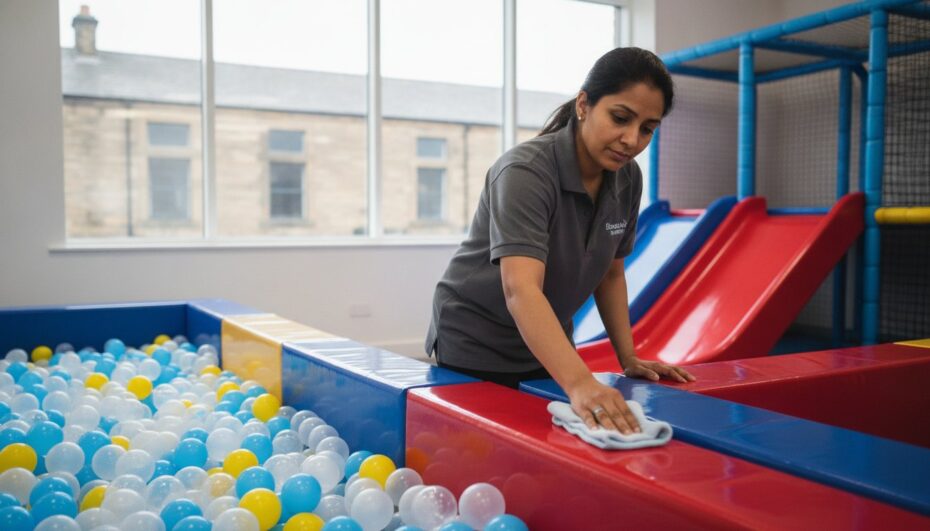
Using the wrong chemical cleaner is often just as damaging to your soft play area as the germs you’re trying to eliminate. Are you worried that harsh disinfectants might ruin your expensive PVC or foam? We understand that your top priority is the safety and joy of the children in your care. However, the constant worry about spreading illnesses can make learning how to clean soft play equipment feel like a high-stakes guessing game. You need a solution that works without ruining your investment or your peace of mind.
You’re about to master professional techniques that keep your play area sparkling, safe, and looking brand new for years to come. We’ll show you how to implement a fast-paced daily routine and choose the right UK-available products that won’t perish your foam or dull your vibrant colours. From conquering the “impossible” task of ball pit hygiene to following the latest EN 1176-1:2017 safety standards, we’re providing the ultimate roadmap to hygiene excellence. Get ready to protect your equipment and your little explorers with confidence.
- Safeguard your investment and protect the children in your care by mastering the professional techniques for how to clean soft play equipment without damaging sensitive materials.
- Discover why pH-neutral detergents and microfibre cloths are the gold standard for preserving foam density and keeping your PVC covers looking brand new.
- Master the “Top-Down” wiping method and efficient vacuuming routines to ensure your play mats and high-traffic areas stay germ-free and inviting.
- Simplify the most time-consuming maintenance tasks with the “Net and Soak” technique for ball pit balls and specialized care for delicate sensory toys.
- Establish a reliable long-term safety routine using the “Squeeze Test” and regular inspections to ensure your equipment always meets the highest industry standards.
Why Hygiene and Maintenance are Non-Negotiable for Soft Play
Your soft play area is a sanctuary for growth and laughter, but without the right care, it can quickly become a magnet for germs. High-traffic environments are wonderful for social development, yet they also expose developing immune systems to a variety of challenges. For nurseries and public play areas across the UK, meeting health and safety standards isn’t just a legal hoop to jump through; it’s a promise of safety to every family that walks through your doors. Understanding how to clean soft play equipment correctly ensures that this promise is kept every single day.
Parents possess an incredible instinct for safety. They don’t just see the bright colours; they notice the “sticky” spots and the dusty corners. A pristine environment builds immediate trust and encourages repeat visits, whereas a neglected space drives customers straight to your competitors. It’s about projecting confidence in your quality and your commitment to childcare excellence. When a parent sees a spotless play area, they feel reassured that their child is in a safe, premium environment. This emotional connection is the foundation of a successful business.
Maintaining these standards also safeguards your reputation within the community. Word of mouth travels fast, and “cleanliness” is often the first thing mentioned in reviews. By prioritising hygiene, you aren’t just following rules; you’re building a brand that caregivers can rely on. This commitment to excellence ensures your facility remains a bustling hub for happy children and satisfied parents.
This commitment to excellence should ideally extend to every part of your facility; for example, ensuring that surrounding carpets and upholstered parent seating are professionally maintained by carpetcleanerinmanchester.co.uk helps create a consistently hygienic and welcoming atmosphere.
The Link Between Cleanliness and Equipment Longevity
Regular maintenance protects your financial investment. Sweat and body oils can break down antimicrobial coatings on your PVC over time. These oils attract abrasive grit that acts like sandpaper, causing microscopic surface cracks and foam degradation. If you want your soft play set to retain its vibrant look and trade-in value, consistent cleaning is essential. A well-cared-for piece remains a premium asset for years.
Infection Control: Beyond Just “Looking” Clean
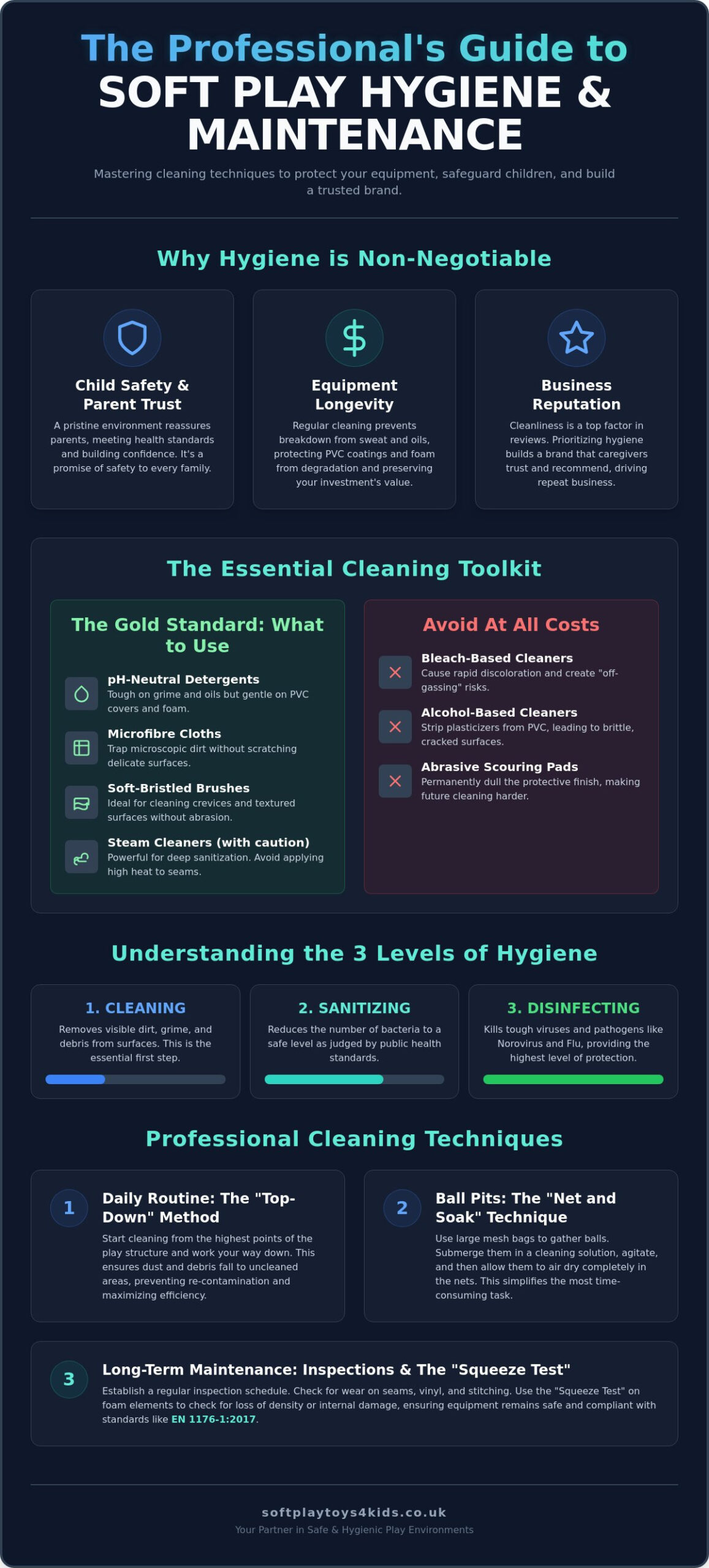
You must distinguish between cleaning, sanitising, and disinfecting. Cleaning removes dirt, while sanitising reduces bacteria. Disinfecting kills tough viruses like Norovirus and Flu. Modern playgrounds require a multi-layered approach to stay truly hygienic. Creating a “Hygiene First” culture is vital. Learning how to clean soft play equipment means you’re proactively defending your space against invisible threats, separating top-tier facilities from the rest.
The Essential Cleaning Toolkit: Safe Products for Soft Play
Picking the right supplies is half the battle when you’re figuring out how to clean soft play equipment. You want products that are tough on germs but gentle on your premium PVC and foam. Using the wrong tools can lead to costly damage, but the right toolkit ensures your play area stays vibrant and inviting. High-quality microfibre cloths are the gold standard here. Unlike paper towels or rough sponges, they trap microscopic dirt and bacteria without scratching the delicate surface finish. They’re reusable, effective, and perfect for daily wipe-downs.
For the cleaning solution itself, pH-neutral detergents are your safest choice. These cleaners are specifically formulated to break down grime and oils without reacting with the PVC covers. If you’re dealing with stubborn dirt in crevices, a soft-bristled brush is indispensable. It reaches into textures that a cloth might miss without causing abrasions. Steam cleaners can also be a powerful ally for deep sanitisation. However, you must use them cautiously. Avoid applying high heat directly to the seams, as this can weaken the stitching and lead to premature failure. If you’re looking to upgrade your space with durable gear, our soft play mats and ball pits are designed to withstand these professional cleaning routines.
Chemicals to Avoid at All Costs
You might be tempted to reach for bleach, but it’s one of the most dangerous choices for soft play. Bleach causes rapid discolouration and creates “off-gassing” risks in enclosed play spaces, which can irritate sensitive young lungs. Alcohol-based cleaners are equally problematic. They strip the plasticisers from the PVC, leading to brittle surfaces and premature cracking. Never use abrasive “scouring” pads either. These will permanently dull the protective finish, making the equipment harder to clean in the long run. When you master how to clean soft play equipment using the correct methods, you avoid these expensive mistakes.
Eco-Friendly and Child-Safe Alternatives
Many caregivers prefer natural solutions that are as kind to the planet as they are to the kids. Diluted white vinegar is a fantastic natural descaler and deodoriser for non-porous surfaces. Plant-based surfactants provide excellent cleaning power while leaving zero toxic residue behind. A child-safe disinfectant is defined as a product that kills 99.9% of germs without requiring a post-application rinse. Following professional guidelines for inspections and replacement ensures your facility remains compliant and safe for every little guest; to further maintain these high hygiene standards, you can visit PureH2O Ltd to learn about ensuring the biological purity of your water supply.
Step-by-Step Guide: How to Clean Soft Play Equipment Like a Pro
Ready to transform your cleaning routine? Moving from a quick wipe to a professional-grade deep clean doesn’t have to be a chore. It’s about working smarter, not harder. Mastering how to clean soft play equipment starts with a logical, systematic approach that ensures no corner is left untouched. Whether you’re a parent keeping a home nursery safe or a business owner managing a high-traffic centre, these steps will keep your gear in peak condition. Don’t just clean; clean with a plan that protects your investment.
Step 1: Clear the ground. Begin by vacuuming the surrounding baby play mat area. If the floor is covered in crumbs or dust, those particles will migrate onto your soft play shapes the moment play begins. Step 2: Follow the “Top-Down” rule. Gravity is your best friend here. Start cleaning from the highest point of your equipment and work your way down. This prevents dirty water or cleaning solution from dripping onto areas you’ve already sanitised. It’s a simple change that saves you from re-cleaning the same spot twice.
Step 3: Target the germ traps. Don’t ignore the “hidden” areas. Seams, Velcro strips, and the undersides of mats are where bacteria love to hide. Use a soft brush to agitate dirt out of the Velcro and ensure your disinfectant reaches deep into every stitch. Step 4: The drying phase. This is the most critical part. Moisture is the ultimate enemy of foam. If you leave your equipment damp, you’re inviting mould to grow inside. Always ensure every surface is bone-dry before allowing children back on the equipment.
Daily Maintenance vs. Monthly Deep Cleans
Consistency is the secret to a long-lasting play area. For busy parents, a 15-minute daily “Reset” routine is enough to keep things fresh. Commercial operators should use standardised checklists to ensure staff never miss a step. Once a month, perform a seasonal deep clean. This involves moving every piece of equipment to inspect and sanitise the flooring underneath. It’s the only way to ensure how to clean soft play equipment actually results in a truly hygienic environment that parents can trust.
The Importance of Airflow and Drying
Airflow is your best defence against mould and mildew. If you’ve done a heavy scrub, use fans or dehumidifiers to speed up the evaporation process. This protects the internal foam cores from absorbing moisture. Never “bag up” wet soft play equipment for storage. Trapping moisture in a bag is a recipe for a smelly, ruined set. Let it breathe, keep it dry, and your equipment will serve you for years. We take pride in our craftsmanship, and following these steps ensures that quality lasts.
Tackling the Tough Spots: Cleaning Ball Pits and Sensory Toys
Cleaning thousands of individual items might feel like an endless task, but it doesn’t have to be. If you don’t have an automated ball-washing system, which can reduce labour costs by up to 70%, you need a manual strategy that actually works. Learning how to clean soft play equipment efficiently means mastering the “Net and Soak” method. This technique allows you to sanitise large volumes of ball pit balls without losing hours of your day. It’s about maintaining that “brand new” feel for your little explorers while keeping your schedule manageable.
Efficient Ball Pit Management
Use mesh laundry bags to batch-wash balls in a large tub or industrial sink. Submerge the bags in a child-safe disinfectant for the recommended dwell time, usually less than 10 minutes. While they soak, inspect the balls for cracks or “squashed” spots; removing damaged items prevents injury and keeps the pit looking premium. The “ball pit rotation” method ensures all balls are cleaned over a 30-day cycle by processing a few bags each night. This consistent approach prevents the build-up of hidden grime and keeps your play area inviting.
Caring for Sensory and Developmental Gear
Developmental tools require a delicate touch. When cleaning sensory toys, you must handle varied textures and electronic components with care. Use a damp microfibre cloth for tactile elements and avoid submerging anything with batteries. For “mouthable” items used by babies and toddlers, ensure you use a food-grade, rinse-free sanitiser. Weighted items or fabric-covered soft play often need specific spot-cleaning to prevent the internal filling from shifting or becoming waterlogged. These high-value items deserve the same level of craftsmanship in their care as they received during their manufacture.
Accidents happen, especially in high-energy play zones. Your rapid-response kit should include absorbent towels and a professional-grade enzymatic cleaner to break down bodily fluids immediately. This prevents staining and deep-seated odours. For general freshness in foam pits, avoid heavy perfumes that can trigger allergies. Instead, use odour neutralisers that target the source of the smell. If you’re ready to refresh your play zone with gear that’s built to last, explore our range of safety pads and ball pits to see how quality manufacturing makes maintenance a breeze.
Long-Term Maintenance: Inspections and Replacement
Even the most rigorous daily cleaning schedule can’t stop the natural wear and tear that comes from hours of high-energy play. That’s why consistent inspections are just as vital as knowing how to clean soft play equipment. You need to spot minor issues before they become major hazards. We recommend conducting a “Squeeze Test” at least once a week. Simply press down firmly on your mats or shapes and watch the rebound. Does the foam spring back instantly? If it feels flat, “mushy,” or sluggish, the internal structure is failing. This rebound is what protects children from impact, so never ignore a foam core that has lost its bounce.
Seam integrity is another critical checkpoint. A loose thread is often a repairable nuisance, but a gaping hole that exposes the internal foam is a serious safety hazard. Keep a detailed maintenance log to track the age and care history of your soft play equipment. This documentation isn’t just for your peace of mind; it’s a professional record that proves your commitment to safety during official inspections. It helps you stay ahead of the curve, ensuring you’re never caught off guard by equipment that’s past its prime.
When to Repair vs. When to Replace
Deciding when to retire a piece of gear is essential for a safe environment. Use the “Three Strike” rule for surface punctures and Velcro fatigue. One small nick can often be professionally patched, but three or more indicate the PVC skin is reaching the end of its life. If your Velcro strips no longer grip tightly, the pieces can shift during play, leading to dangerous slips. Avoid “DIY” tape repairs at all costs. Tape edges peel quickly, creating a sticky trap for hair, dirt, and bacteria. It’s a breeding ground for germs that no amount of scrubbing can reach. When you master how to clean soft play equipment, you’ll recognise when a surface is no longer hygienic enough for children to use.
The Advantage of UK-Made Quality
There is a massive benefit to choosing equipment made close to home. At SoftplayToys4kids, we use heavy-duty PVC specifically designed to withstand frequent cleaning and the rigours of commercial use. Our Bradford-made craftsmanship means you’re getting durability that international imports often struggle to match. Plus, you have the peace of mind that comes with local support. You can contact our West Yorkshire factory directly for bespoke maintenance advice or to order replacement covers. We’re proud to be your partner in keeping your play area safe, vibrant, and ready for action.
Create a Safer, Brighter Future for Every Little Explorer
You’ve now mastered the professional secrets of how to clean soft play equipment like an industry expert. By choosing the right pH-neutral products and establishing a “Top-Down” routine, you’re doing more than just removing dirt; you’re protecting your investment and the health of every child who plays. Remember that consistent ball pit rotation and the weekly “Squeeze Test” are your best defences against premature wear and hidden germs. These simple steps ensure your facility remains a premium, trusted destination for families.
When you choose equipment built for durability, maintenance becomes a breeze rather than a burden. Our products are handmade in our West Yorkshire factory with high-quality, wipe-clean PVC covers designed to withstand the busiest environments. It’s why we’re proudly used by UK schools and nurseries to deliver excellence that lasts for years. You don’t have to settle for anything less than the best for your play area.
Browse our durable, easy-clean Soft Play collections today!
Take pride in your pristine play space and watch the children thrive in a safe, premium environment. You have the tools and the knowledge to lead the way in hygiene excellence. Keep up the fantastic work!
Frequently Asked Questions
How often should I clean my home ball pit?
You should perform a quick surface wipe daily and a deep soak of the balls once a month for a home setup. For commercial spaces, the Minnesota Department of Health mandates cleaning daily or even more frequently. Learning how to clean soft play equipment properly ensures that high-traffic areas stay safe for developing immune systems. A consistent routine prevents the build-up of abrasive grit that can damage your premium PVC.
Can I put soft play covers in the washing machine?
No, you should never put PVC soft play covers in a washing machine because the heat and agitation can ruin the protective coating and weaken the seams. Instead, use a microfibre cloth and a pH-neutral detergent to wipe the surface clean. This manual approach preserves the material’s integrity and ensures your equipment lasts for years. Machine washing often leads to permanent wrinkling or delamination of the PVC skin.
What is the best disinfectant for PVC soft play equipment?
The best choice is a child-safe, pH-neutral disinfectant that kills 99.9% of germs without requiring a post-application rinse. Avoid bleach and alcohol-based cleaners because they strip plasticisers from the PVC, leading to premature cracking. Look for a product with a dwell time of less than 10 minutes to keep your routine efficient. This is a vital step in knowing how to clean soft play equipment without compromising its durability.
How do I remove stubborn scuff marks from play mats?
You can remove most scuff marks by using a soft-bristled brush and a small amount of extra pH-neutral detergent. For tougher marks, a magic eraser can work, but use it very gently to avoid stripping the shine from the PVC surface. Always test a small, hidden area first to ensure you don’t damage the vibrant colour. Regular maintenance prevents these marks from becoming permanent features on your premium play mats.
Is steam cleaning safe for all soft play toys?
Steam cleaning is safe for most PVC surfaces, but you must avoid applying direct heat to the seams or any electronic components. High temperatures can melt the glue or weaken the stitching, which eventually leads to safety hazards. Use the steam at a slight distance to sanitise the surface effectively without soaking the internal foam core. It’s a powerful tool for deep cleaning when used with a professional, cautious touch.
What should I do if a child has an “accident” on the equipment?
You must act immediately by removing the child from the area and using absorbent towels to soak up the spill. Clean the affected area with an enzymatic cleaner to break down proteins and prevent lingering odours. Disinfect the surface thoroughly and ensure it is completely dry before allowing children back into the play zone. Rapid response is the absolute key to maintaining a hygienic and inviting environment for everyone.
How do I clean the foam inside if the cover is punctured?
If moisture reaches the internal foam, you must dry it out completely using a dehumidifier or a fan before attempting to seal the puncture. If the foam has absorbed significant bodily fluids or dirty water, it’s often safer to replace the item entirely to avoid mould growth. Internal contamination is difficult to treat effectively, so preventing punctures through regular inspections is your best strategy for long-term equipment health and safety.
Are there specific UK regulations for play centre hygiene?
UK play centres are guided by the EN 1176-1:2017 standards for equipment safety and performance. While specific cleaning frequencies aren’t always dictated by national law, local health authorities expect a high standard of hygiene. Most insurance carriers treat a four-tier inspection schedule as the required standard of care. This includes everything from daily walk-throughs to an annual audit by a Certified Playground Safety Inspector to ensure total compliance.
Leave a Reply