
How to Build a Soft Play Area at Home: 2026 Ultimate Guide
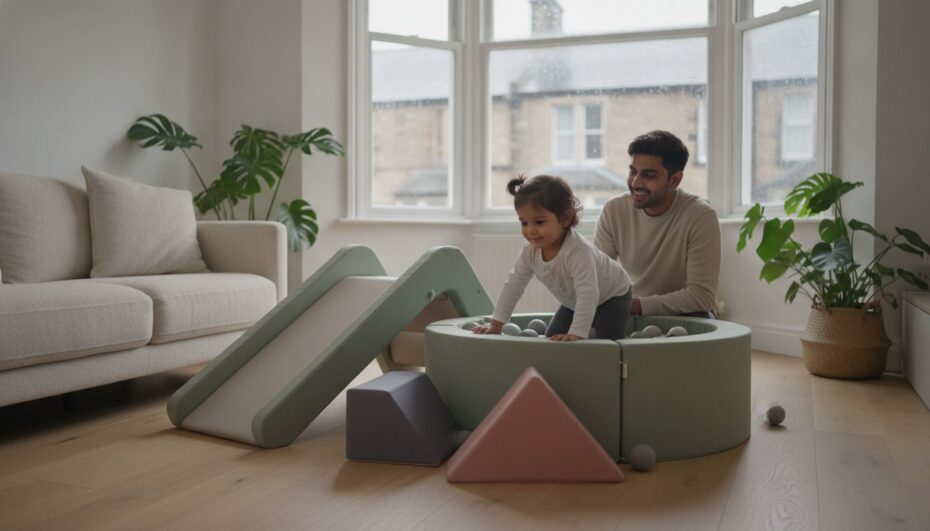
What if the secret to surviving another rainy British afternoon isn’t more screen time, but a professional-grade soft play sanctuary right in your living room? We know the struggle of trying to keep kids active in a typical UK home where space is tight and the weather is unpredictable. It’s natural to worry about the safety of cheap, flimsy imports when your child’s wellbeing is on the line. You deserve peace of mind and products that actually earn their place in your home.
Learning how to choose soft play equipment for home is the first step toward building a durable, developmental zone that lasts for years. We’re here to help you transform any corner into a safe haven using premium, handcrafted equipment made right here in our West Yorkshire factory. This 2026 ultimate guide will show you how to navigate UKCA safety standards and select modular pieces that promote active play. You’ll discover how to create a high-quality sanctuary that supports your child’s physical growth while fitting perfectly into your modern interior. Get ready to turn your home into the ultimate playground that your children will love for years to come.
Key Takeaways
- Understand the developmental benefits of active play, including how professional-grade equipment improves your child’s proprioception and vestibular systems.
- Learn how to measure your space accurately to eliminate “trap points” and ensure a seamless fit for any room size.
- Discover how to choose soft play equipment for home by identifying the hallmarks of high-density foam and avoiding the risks of cheap, unsafe imports.
- Follow a professional installation sequence, from preparing a level subfloor to creating a secure safety perimeter with high-quality play mats.
- Implement a simple maintenance routine to keep your handmade, UK-made equipment hygienic and durable for long-term use.
Beyond the Living Room: Why Build a Home Soft Play Area?
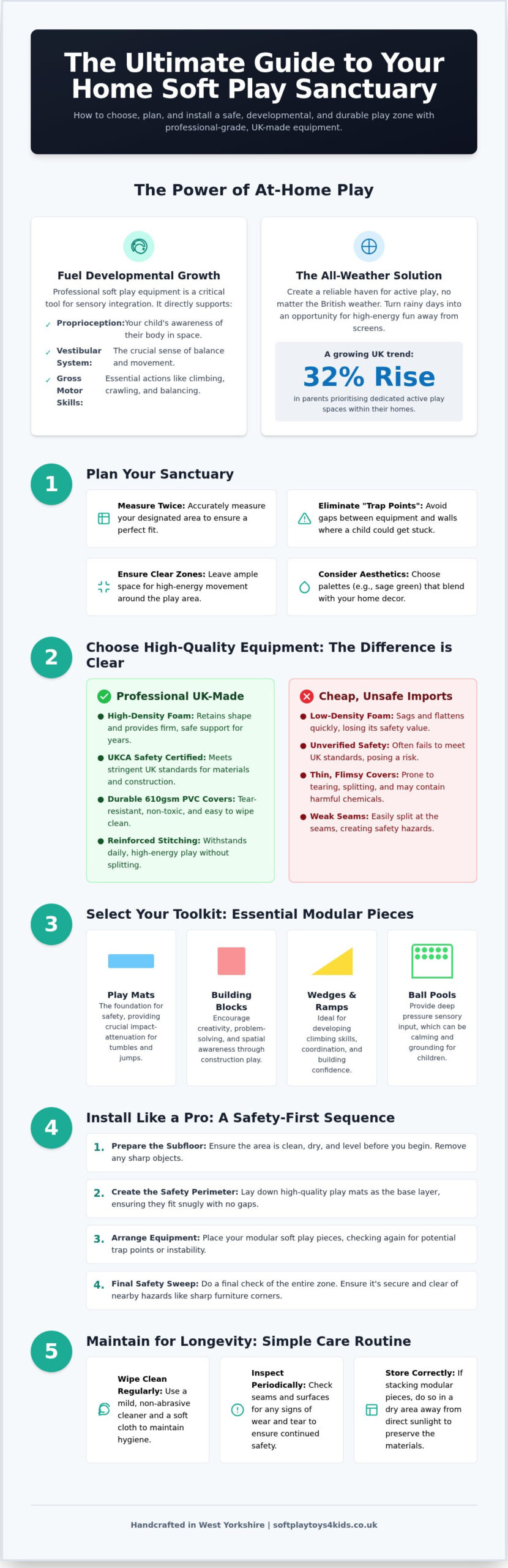
The UK home is evolving. In 2026, we’re seeing a massive 32% rise in parents prioritising creative, active play spaces within their own four walls, according to recent insights from The Insights Family. It’s no longer about just having a toy box; it’s about creating a dedicated sanctuary where kids can burn off energy safely. When you start researching how to choose soft play equipment for home, you’re not just buying foam. You’re investing in your child’s daily happiness and development.
For families in the capital struggling with limited space, working with house extension specialists London can be the ideal way to create the permanent, dedicated area needed for a professional-grade play sanctuary.
Think about the “Yes Space.” In a public centre, you’re often managing crowds or worrying about hygiene. At home, you provide an environment where “no” isn’t the default answer. Your child can climb, tumble, and jump without the restrictions of a busy public park or the stress of a rainy day trek. It’s about giving them the freedom to explore their physical limits in a space you control.
The Developmental Power of Soft Play
Soft play is a critical tool for sensory integration and motor development. It isn’t just about fun; it’s about building the brain-body connection. If you’re looking for a basic definition of what is a soft play area, it’s essentially a safe environment designed specifically for children’s physical development using padded surfaces. These setups directly support gross motor skills like climbing, crawling, and balancing. By navigating through ball pits and over soft play mats, children improve their proprioception (knowing where their body is in space) and their vestibular systems (balance). For a deeper dive into the basics, check out our guide on What is Soft Play?
Solving the “Rainy Day” Problem in the UK
British winters are long, and the “rainy day” struggle is real. An indoor setup ensures your child stays physically active even when the local park is a mud bath. It’s a high-energy alternative to screen time that keeps them moving. Beyond the physical, these zones act as a vital “cool down” area. For an overstimulated child, the deep pressure provided by a ball pool or the cushioning of a high-quality mat can be incredibly grounding. When you understand how to choose soft play equipment for home that meets professional standards, you’re giving your family a reliable outlet for energy all year round. Our handmade equipment from West Yorkshire is designed to handle this daily intensity while meeting the strictest UK safety standards.
Designing Your Sanctuary: Planning the Perfect Home Play Zone
Planning your home play area is where the dream starts to take shape. It isn’t just about picking out a few colourful blocks; it’s about strategic design that ensures safety and longevity. When you’re figuring out how to choose soft play equipment for home, you need to look at your floor plan with a professional eye. Start by measuring your designated area twice. You want to ensure there’s enough room for high-energy movement without creating “trap points” where a child could get stuck between the equipment and a wall. While often cited for larger garden structures, the CPSC Outdoor Home Playground Safety Handbook provides excellent foundational logic on surfacing and clear zones that every parent should consider for indoor setups too.
Space-Saving Ideas for Smaller UK Homes
You don’t need a sprawling mansion to build a world-class play zone. Many of our clients transform small lounge corners or under-stairs areas using modular mats and wedge shapes. These pieces can be tucked away or stacked when not in use. Foldable play mats are a lifesaver for multi-functional rooms, providing instant impact-attenuation that you can slide under a sofa later. For those dealing with compact terrace houses or apartments, check out The Ultimate Guide to Choosing the Perfect Baby Play Mat for expert advice on space-saving flooring. Our team at SoftplayToys4kids can even help you explore custom padding solutions tailored to your specific room dimensions.
Zoning Your Play Area for Different Ages
If you have children of different ages, zoning is your best friend. Create a dedicated baby zone using thick, high-density padding and sensory elements that encourage tummy time. For toddlers, design a more active zone featuring ball pits and climbing blocks to challenge their growing motor skills. Keeping these areas distinct helps prevent collisions and ensures that younger ones can explore safely while older siblings practice their balance. By setting these clear boundaries, you create a multi-generational sanctuary that grows with your family.
The Toolkit: Choosing High-Quality Soft Play Equipment
Choosing the right gear is where you decide between a setup that lasts six months and one that lasts six years. When you’re researching how to choose soft play equipment for home, the foundation is everything. Don’t be tempted by cheap, vacuum-packed imports that often arrive thin, misshapen, and smelling of chemicals. High-density foam is the gold standard because it provides the structural integrity needed for daily climbing and tumbling. Our West Yorkshire factory uses only premium foam that doesn’t “bottom out” when a child lands on it, ensuring every jump is cushioned by professional-grade materials that maintain their shape for years.
UK-based manufacturing gives you a level of quality control that international shipping simply can’t match. Every piece we produce adheres to strict UK safety standards, including the mandatory UKCA marking for 2026. This means you aren’t just buying a toy; you’re investing in a piece of equipment that’s been rigorously tested for flammability under BS 5852 and for non-toxic materials under EN71-3. We take immense pride in our craftsmanship, ensuring every seam is reinforced to withstand even the most energetic toddlers.
The Essential Ball Pit Guide
A ball pit is the undisputed king of the home play zone. While inflatable options are cheap, they’re prone to punctures and offer zero support for a child leaning against the walls. Foam-walled pits are the superior choice for home use, providing a sturdy, safe “plunge” zone that looks great in any room. To get that satisfying deep-dive feeling, you’ll generally need between 500 and 1,000 balls depending on the pit’s diameter. For a full breakdown of dimensions and capacities, see The Ultimate Ball Pit Guide.
High-Performance Flooring and Padding
UK-manufactured foam density is far superior for impact absorption compared to the low-grade alternatives found on discount marketplaces. We use medical-grade, wipe-clean PVC that makes hygiene effortless, which is vital for keeping a germ-free environment. Investing in professional-grade mats isn’t just about comfort; it’s a non-negotiable safety step that creates a seamless perimeter around your active zones. These mats are designed to stay in place, preventing the slips and trips that occur with flimsy, lightweight alternatives.
Sensory and Active Play Elements
Don’t forget the details that spark imagination and build core strength. Incorporating sensory toys helps engage all five senses and supports cognitive growth during those critical early years. Soft play blocks are fantastic for creative construction and problem-solving, while balance boards are the secret weapon for building coordination. When you know how to choose soft play equipment for home that balances physical challenge with sensory input, you create a truly holistic developmental sanctuary that keeps children engaged for hours.
Safety First: The Step-by-Step Guide to Professional Home Installation
You’ve done the hard work of learning how to choose soft play equipment for home, but your job isn’t finished once the delivery driver leaves. Proper installation is what separates a professional-grade play sanctuary from a chaotic room full of foam. Start by preparing your subfloor. A level surface is non-negotiable because even a slight slope can cause ball pits to drift or mats to separate, creating trip hazards. If you’re installing over carpet, ensure it’s low-pile; for hard floors, a sweep and damp mop are essential to remove any grit that could damage the underside of your new equipment.
Always install your play mats first. These create your seamless safety perimeter and act as the foundation for everything else. When positioning larger items like climbing blocks or ball pools, keep them well away from hard furniture, door frames, or radiators. We recommend following a modified “Fall Zone” rule: for any equipment that encourages climbing, ensure you have at least one full mat’s width of padding in every direction. This gives your little ones a safe landing strip for those inevitable tumbles.
Before you let the kids loose, perform a final safety walk-through. Check for “finger-trap” gaps between modular pieces and ensure there are no “head-entrapment” zones where a child could get stuck. If a gap is wider than 8mm but narrower than 25mm, it needs to be closed. Our handmade designs are built to minimise these risks, but your layout plays a huge role in keeping the environment secure.
Securing Your Equipment
Stability is the secret to a long-lasting play zone. Use heavy-duty Velcro connectors to prevent mats from sliding apart during high-energy games. If you’ve chosen a large ball pit, ensure it’s positioned against a wall or in a corner to provide extra lateral support so it won’t tip during a vigorous “plunge.” For rooms with particularly active toddlers, consider adding wall-padding to create dedicated “crash zones” where they can jump and play without bumping into cold, hard plaster.
Safety Standards You Need to Know
When you’re deciding how to choose soft play equipment for home, always look for the UKCA or CE markings. These certifications prove the equipment meets rigorous UK safety requirements for 2026. Be extremely cautious with second-hand foam; older products often contain outdated fire retardants that no longer meet modern health standards. We ensure every item leaving our West Yorkshire factory is made from non-toxic, phthalate-free, and fire-retardant materials that are safe for babies and toddlers alike. Ready to start building? Browse our full range of safety-certified soft play gear to find the perfect fit for your home.
Beyond the Build: Care, Maintenance, and the British-Made Advantage
Your new home play sanctuary is finally ready, but how do you keep it looking and performing like new? Professional-grade equipment is a significant investment in your child’s happiness. Taking care of it ensures they enjoy a safe, hygienic environment for years to come. When you’ve mastered how to choose soft play equipment for home, you already know that quality materials are much easier to maintain. Our medical-grade PVC covers are designed specifically for heavy use and effortless cleaning, helping you stay on top of the inevitable spills and sticky fingers that come with active play.
Routine inspections are vital for long-term safety. Once a week, take a moment to check the seams of your mats and ball pits. Are they still tight and secure? Handmade products from our West Yorkshire factory are built with reinforced stitching, but even the toughest gear needs an occasional check-up. Look for any changes in the foam’s bounce. High-density foam should spring back immediately. If you ever notice a rare issue, being a UK-based manufacturer means we’re right here to help with repairs or replacements. You won’t find that level of service with cheap international imports.
Cleaning and Hygiene Best Practices
Keeping a germ-free play space doesn’t have to be a chore. For daily maintenance, use a mild, child-safe disinfectant or simple soapy water on the PVC surfaces. This keeps the environment hygienic without stripping away the vibrant colours that spark your child’s imagination. When it’s time to deep-clean the ball pit, don’t panic. A simple trick is to place the balls in mesh bags and soak them in a mild sterilising solution in the bath. It’s an easy, hassle-free way to ensure the “plunge zone” stays fresh and safe for every play session.
The SoftplayToys4kids Difference
Why settle for mass-produced imports when you can have British craftsmanship? Every item we sell is handmade in our West Yorkshire factory, ensuring a premium standard that meets all 2026 UKCA safety requirements. Because we manufacture everything ourselves, we provide manufacturer-direct pricing. This means you get professional-grade durability without the middleman markup. You’re getting more play for your budget while supporting a local business that’s dedicated to UK families.
As your child grows, your play area can grow too. Our modular designs allow you to scale up the challenge by adding new sensory toys or larger climbing blocks whenever you’re ready. We’re proud to be your partner in creating a safe, fun, and developmental sanctuary. Ready to start your build? Shop our full range of soft play equipment today!
Ready to Transform Your Home into a Play Sanctuary?
Building a dedicated soft play zone is one of the most rewarding investments you can make for your child’s early development. You’ve seen how professional-grade foam and strict UKCA safety standards are the non-negotiable foundations of a successful setup. When you understand how to choose soft play equipment for home, you’re choosing durability over disposable toys and safety over uncertainty. You’re creating a “Yes Space” where rainy British afternoons are transformed into opportunities for physical growth and creative laughter.
We take immense pride in every piece of equipment we create. Every ball pit and play mat is handmade in our West Yorkshire factory, ensuring the same premium quality trusted by UK schools and nurseries. By offering manufacturer-direct prices, we make it easier for you to build a professional-standard sanctuary without the middleman markup. It’s time to reclaim your living room and give your children the active, safe, and sensory-rich environment they deserve.
Create your dream home play area with SoftplayToys4kids! Your child’s ultimate indoor playground is just a few clicks away, and we can’t wait to help you bring it to life.
Frequently Asked Questions
Is it cheaper to build or buy a soft play area for home?
Buying professional-grade equipment is usually much better value than trying to source materials for a DIY build. We leverage manufacturer-direct pricing and industrial machinery in our West Yorkshire factory to create products that are both durable and safe. Attempting to buy high-density foam and medical-grade PVC separately often ends up costing more and lacks the vital safety certifications required for children’s play equipment.
How much space do I really need for a home soft play setup?
You can create a fantastic play zone in as little as a 1.5m x 1.5m corner. The secret of how to choose soft play equipment for home is picking modular pieces that adapt to your space. Whether you’re filling a small nook or a large playroom, our mats and pits are designed to be flexible. This ensures every UK home can have a safe, developmental sanctuary regardless of its square footage.
What is the best age to start using soft play at home?
Soft play is ideal from the moment your baby starts to roll or sit up, typically around six months old. Early exposure to soft surfaces encourages tummy time and builds the core strength needed for crawling. As they grow into toddlers, the equipment provides a safe environment for more adventurous climbing and jumping, making it a long-term investment in their physical development.
Is soft play equipment safe for babies and toddlers?
Yes, provided it is manufactured to professional standards and used under supervision. High-quality equipment uses non-toxic, phthalate-free materials and fire-retardant foam. Our products are specifically designed for the youngest explorers, featuring reinforced seams and soft edges to prevent any bumps or scrapes during high-energy play. Always ensure your setup is installed on a level surface away from hard furniture or radiators.
How do I clean soft play mats and ball pits effectively?
Effective cleaning is simple with the right materials. Use a damp cloth with a mild, child-safe detergent or a specialised PVC cleaner for the mats and pit walls. For the balls, a quick soak in a mild sterilising solution in the bathtub is the most efficient method. Avoid harsh chemicals like bleach, as these can damage the vibrant colours and the protective coating of the medical-grade PVC.
Can I install a soft play area on a carpeted floor?
You certainly can, and many UK parents choose to do so for extra cushioning. Just ensure the carpet is low-pile to maintain stability for larger pieces like ball pits. If you’re using modular mats on top of carpet, we recommend using Velcro connectors to keep them from shifting. A level, firm base is always the goal to ensure your children can play without the equipment sliding.
What safety certifications should I look for when buying equipment in the UK?
Always look for the UKCA and CE markings on any play gear you purchase. These labels are your guarantee that the equipment meets strict UK safety and environmental standards for 2026. You should also verify that the products comply with EN71 for non-toxic materials and BS 5852 for fire retardancy. Understanding how to choose soft play equipment for home means prioritising these verified standards over cheap, uncertified alternatives.
Leave a Reply