

Custom Foam Safety Pads for Play Areas, Floors and Walls
The softest pad isn’t automatically the safest choice. Custom foam safety pads for play areas need to suit the installation, the way people use the space and the impact they are intended to cushion.
That matters in a busy play area, and also in a school hall or gym where walls, posts and floor edges may need padding. Foam density and resilience affect how a pad feels and performs, while thickness, construction and fit matter too. Where a specific fall height is involved, assess the complete tested system, not foam density alone.
This guide explains how to assess those choices, how bespoke shapes and cuts can cover awkward spaces, and what to consider when specifying pads for floors, walls and columns. It also explains when general-purpose padding may not suit a particular impact risk, helping you make a more informed choice for your space.
Key Takeaways
- Choose foam by considering density and resilience alongside thickness, construction and the full installed system.
- Plan bespoke shapes and cuts around the surfaces and features that need padding, including posts, columns and awkward edges.
- Match floor and wall padding to how children or gym users move through the space, and keep routes and exits clear.
- Learn which details a professional considers when selecting and fitting pads for play areas, schools and gyms.
Foam density, resilience and impact absorption
Choose foam according to the activity, surface and impact risk. For flooring beneath active play, density alone cannot establish whether the complete installed system is suitable.
Foam Density and Resilience
Density describes how much material is packed into foam; resilience describes how it responds under pressure and recovers afterwards. Both affect impact absorption, but neither tells the whole story. An IFD number indicates firmness: a higher IFD means firmer foam, while a lower IFD means softer foam. Sports may call for a firmer feel than a sensory room, so match the specification to the activity rather than choosing by density alone.
Impact Protection in Childcare Settings
In childcare settings, consider where children sit, crawl, move quickly or may fall. A soft floor surface can support quieter play, but a thin mat may not suit elevated equipment or gymnastic movement. Where a play area has a specific fall height, use a tested system designed for that purpose. Keep flooring stable, and manage joints and edges to avoid creating trip points.
Closed-Cell Impact-Absorbing Foam
Closed-cell describes the foam’s internal structure, but the label alone does not establish impact performance. For a floor pad or wall panel, consider its tested purpose, thickness, firmness and construction as part of the installed system. Compare those details with the activity, such as crawling on a play mat or practising sports near a padded wall. Choose for the application, not the material description alone.
Impact Protection Standards
In public places such as schools and sports centres, fire performance matters alongside impact absorption. Fire performance may be one factor to consider when choosing wall pads for public settings. That rating concerns fire performance, not cushioning, so it does not replace an assessment of impact risk. Consider applicable premises requirements alongside a suitable tested system, and inspect flooring for separation, compression or damage.
Bespoke foam shapes, sizes and bulk orders
Bespoke padding is shaped around the surface, equipment and people using the space. A clear specification helps ensure pads fit neatly and address the intended hazards.
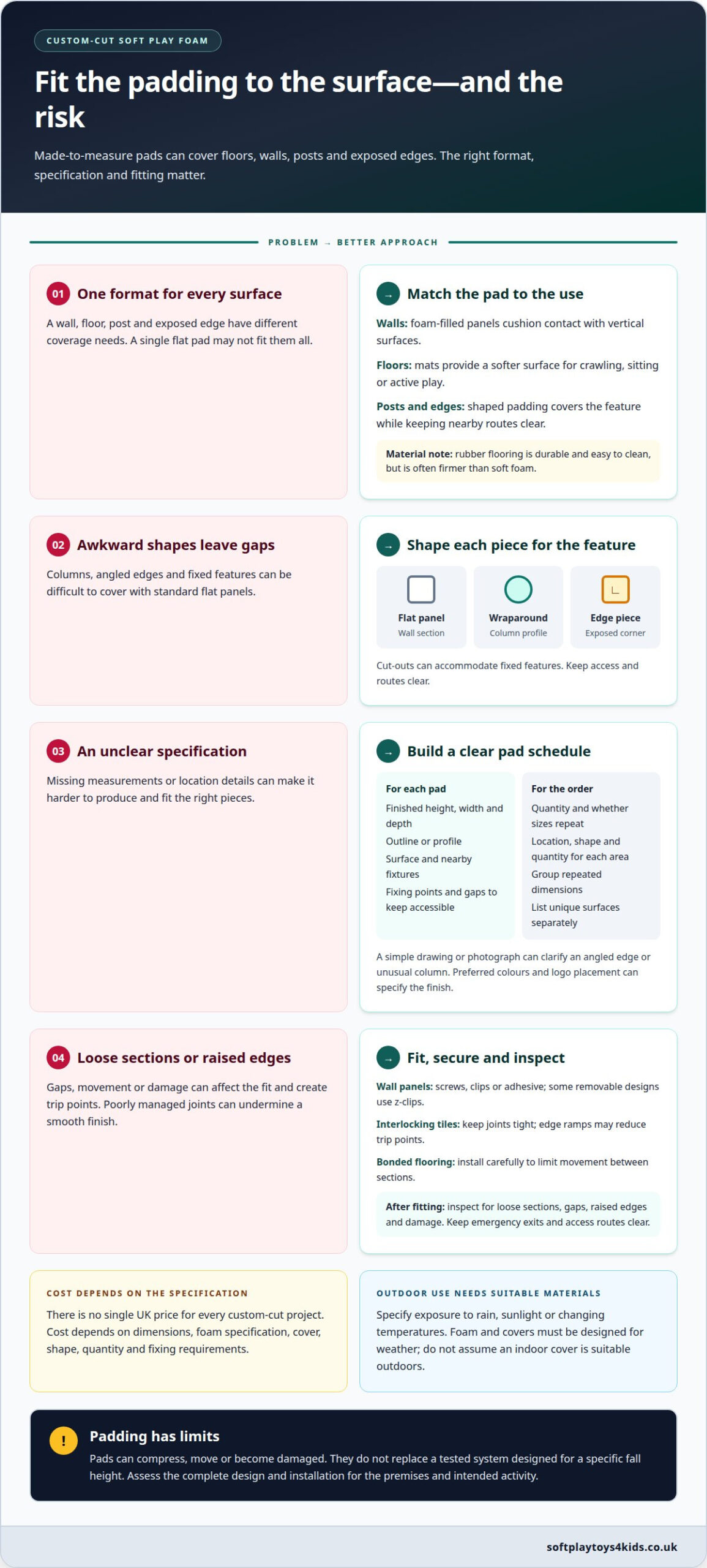
For bespoke foam safety pads, provide the finished height, width and depth, along with the outline or profile. Include the surface to be covered, nearby fixtures, attachment points and any gaps that need to remain accessible. A simple drawing or photograph can clarify an angled edge or unusual column. State the quantity and whether every pad needs the same dimensions.
Shape matters as much as size. A flat panel may suit a wall, while padding for a column needs to wrap around its profile. Edge pieces can cover exposed corners, and cut-outs can accommodate fixed features. You can also note preferred colours and logo placement so the design suits the room. These details specify the finish, but do not replace an impact assessment.
UK suppliers include manufacturers and specialist suppliers that produce protective padding to a customer’s measurements. For a bulk order, provide a schedule showing each location, shape and quantity. Repeated dimensions can be grouped, while unique surfaces should be listed separately to reduce mix-ups during manufacture and installation.
Outdoor use depends on foam and covers being designed for exposure to weather. Do not assume an indoor cover is suitable outdoors. Specify whether pads will face rain, sunlight or changing temperatures, and choose materials intended for those conditions. The cover must also stay secure and suit the surface beneath it.
Foam pads have limits: they can compress, move or become damaged, while gaps or raised edges may create trip hazards. They do not replace a tested system designed for a specific fall height. In a school or play area, the complete design and installation must suit the premises and intended activity.
For padding shaped around a play space, explore bespoke safety pads as one option for protecting surfaces and features.
Custom-cut soft play foam for floors, walls, posts and edges
Custom cutting helps padding fit the actual surface, from a playroom floor to a column beside an activity zone. Material and fixing choices affect how each section performs.
Wall Pads and Floor Mats
Foam-filled wall pads cushion contact with a wall, while floor mats provide a softer surface for crawling, sitting or active play. A made-to-measure panel can cover a section of wall; a shaped mat can fit around fixed equipment. Bonded foam or padded flooring can create a smoother finish and reduce movement between sections when installed carefully. Rubber flooring is durable and easy to clean, but is often firmer than soft foam.
Choose the format according to use: wall padding addresses contact with vertical surfaces, while mats cover floor areas. For posts and exposed edges, shaped padding can cover the specific feature without blocking nearby routes.
Installation and Securing
Professional installation starts by matching each cut pad to its intended surface and fixing method. Wall panels can use screws, clips or adhesive; some designs use z-clips when removal is needed. For interlocking tiles, installers keep joints tight and may use edge ramps to reduce trip points. Bonded flooring needs careful installation to limit movement between sections.
After fitting, inspect for loose sections, gaps, raised edges and damage. Keep emergency exits and access routes clear. Clean pads according to the manufacturer’s instructions and allow the materials to dry fully before use.
Custom Pad Costs
There is no single UK price for every custom-cut project. Cost depends on the pad’s dimensions, foam specification, cover, shape, quantity and fixing requirements. A flat floor mat and a shaped pad around a post involve different cuts and construction. Larger orders may include repeated pieces, but each unique size still affects the overall specification.
A clear schedule helps the manufacturer price the work accurately: list each surface, its measurements, required quantity and any cut-outs. For custom padding options, explore made-to-measure safety pads.
Uses of foam wall padding in gyms, schools and play areas
Foam wall padding can soften contact with hard surfaces in different activity spaces. In a school hall, it may cover walls near movement activities; in a play area, it can protect columns beside children’s play zones. High-energy family venues such as Cool Springz similarly rely on protective padding around jumping and activity areas. The right layout depends on who will use the space, the equipment and where falls or collisions are more likely.
In gyms, padding can cover walls near sports activities, posts and exposed edges. Panel dimensions should suit the surface, rather than leaving uncovered sections beside likely contact points. Examples of standard panel sizes include 60 cm × 180 cm, 60 cm × 240 cm and 120 cm × 240 cm. These are reference dimensions, not a substitute for measuring the actual wall.
For schools and indoor play areas, plan padding alongside the room layout. Keep hard edges away from likely fall areas, separate activities for different age groups and leave clear routes for adults. Emergency exits, heaters, sockets and ventilation routes must remain unobstructed. Secure play equipment as intended, with age limits visible to staff and carers.
Floor padding and wall panels serve different purposes. Softer materials can suit areas where children sit, crawl or may fall, while walkways need to stay clear and the room should not feel overcrowded. In spaces with a specific fall height, the complete system should be tested for that purpose. Padding alone does not establish fall-height protection.
Before each session, inspect the area for movement, damage, compression, or wet or contaminated surfaces. Take damaged sections out of use until repaired or replaced. Follow the manufacturer’s cleaning instructions and let materials dry fully. These checks help staff spot issues such as a shifted panel or torn cover before the space opens.
Planning a gym, school or play area? Explore foam safety padding for surfaces and features that need protection.
SoftplayToys4kids: Safety pads
SoftplayToys4kids offers safety pads for spaces where children play and move. If a school, nursery or playgroup needs padding for a particular surface or feature, this is the natural next step after assessing the area, activity and intended protection. Share the dimensions, shape and location that need attention so the requirements are clear.
Soft Play Mats can complement floor areas, while Sensory Toys support a different kind of play experience. Keep the choice focused on the space and its users, rather than assuming one product suits every need. For safety pads suited to your project, contact SoftplayToys4kids.
Plan a play space ready for its next chapter
A well-planned space supports the way children move, explore and play. Treat padding as part of the room’s overall design, so protective areas complement activities rather than interrupting them. A clear project brief connects the space’s purpose with suitable products.
Custom foam safety pads for play areas can sit within a wider play environment. SoftplayToys4kids also offers Soft Play Ball Pits, Soft Play Mats and Sensory Toys, helping create spaces with varied opportunities for play. Consider how each element will fit the room and the experience you want children to enjoy.
As you shape your plans, focus on the needs of the space and the people who use it. Contact SoftplayToys4kids about your project and take the next step towards a play area that feels thoughtfully put together.
Frequently Asked Questions
What types of custom foam safety pads are available for play areas?
Options for custom foam safety pads for play areas include floor mats, wall pads, column protectors and shaped soft-play pieces. A nursery might combine mats for floor activities with protection around a structural column; a school gym may prioritise padding on walls beside sports areas. SoftplayToys4kids offers safety pads, column padding and Soft Play Mats. The best combination depends on which surfaces and features need protection.
What foam density and thickness are suitable for playground safety pads?
There is no single density or thickness that suits every playground. For custom foam safety pads for play areas, specify the users’ ages and numbers, the equipment’s height and type, and the intended activity. These details help distinguish padding for quiet floor play from protection near active equipment. Also consider cover cleaning, slip resistance and stability, as these affect how the chosen assembly works in its setting.
What safety standards apply to foam play-area padding in the UK?
For public play spaces, the complete design, materials and installation should meet the requirements that apply to the premises. Fire performance is separate from impact cushioning: Class A is described as a common wall-pad rating for public places such as schools and sports centres. In a project specification, record both the intended impact protection and relevant premises requirements.
How are critical fall height and impact attenuation tested for playground pads?
Critical fall height relates to the fall height a tested surfacing system is designed to address. Impact attenuation describes how that system cushions impact. Assess the complete installed system, not a foam sample alone. Match test information to the equipment height and installed surface, because changing the assembly can change its performance.
Which UK suppliers make custom foam safety pads for play areas?
UK manufacturers and specialist suppliers make custom foam safety pads. Safety Pads has made bespoke column and post protectors for play areas and other venues.
Are custom foam safety pads suitable for outdoor use and what weatherproof covers are available?
They can be used outdoors if the foam and cover are designed for exposure to weather. Specify exposure to rain, sunlight and changing temperatures, and choose materials intended for those conditions; no particular weatherproof cover is identified.