
The Science of Play: 10 Benefits of Soft Play for Child Development in 2026
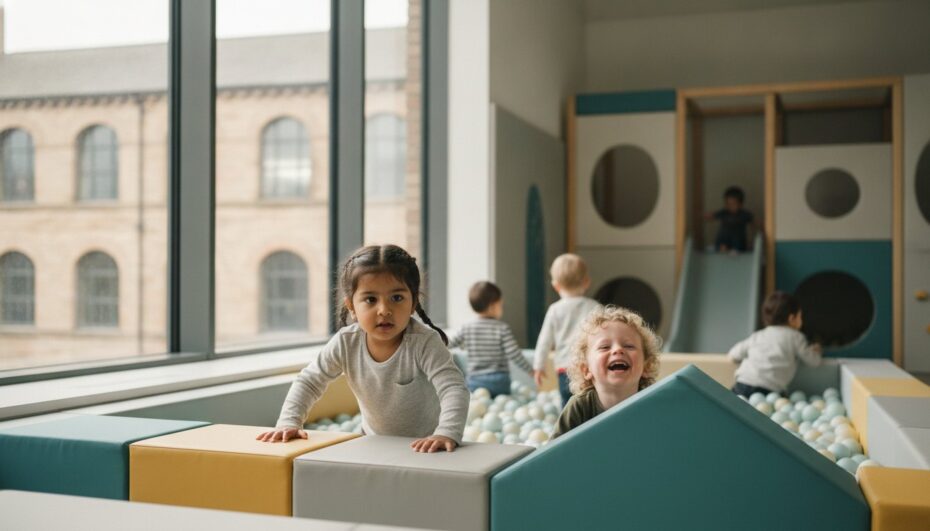
What if that vibrant ball pit isn’t just a way to burn off energy, but actually a high-performance laboratory for your child’s developing brain? It’s natural to wonder if soft play is merely a fun distraction or if it’s providing the educational foundation your little one needs. You want to ensure every minute of play counts, especially when you’re balancing safety concerns with the reality of limited space at home. We understand that deep-seated drive to protect and nurture your child, which is why we’re so proud of the rigorous safety standards we build into every piece of equipment.
In this guide, you’ll discover exactly how the benefits of soft play for child development transform simple movements into critical milestones for physical, cognitive, and social growth. We’re going to break down the science of how high-density foam and durable, UK-made materials create a secure environment for healthy risk-taking. By the end of this article, you’ll have a clear roadmap for building a developmental play space that offers total peace of mind and endless joy. Let’s explore how our handmade West Yorkshire craftsmanship is helping shape the next generation through the power of purposeful play.
Key Takeaways
- Discover how navigating uneven foam surfaces and soft play mats builds the core strength and coordination essential for early physical milestones.
- Understand the cognitive benefits of soft play for child development as little ones use logic and planning to conquer complex obstacle courses.
- Learn how shared environments like ball pits transform simple fun into a training ground for vital social skills like negotiation and empathy.
- Find out why choosing professional-grade, UK-manufactured equipment provides the safety net children need to explore their limits with total confidence.
- Master the “zoning” technique to create a balanced play space that supports both high-energy gross motor activity and focused sensory growth.
Understanding the Developmental Power of Soft Play
Soft play isn’t just about colourful foam shapes and ball pits; it’s a structured, sensory-rich environment designed to facilitate unrestricted movement. By using high-density foam and medical-grade soft vinyl, we create a space where children can push their physical limits without the typical risks of a hard playground. This unique setting is a cornerstone for benefits of soft play for child development, providing a “sensory laboratory” where kids safely test the laws of physics and their own biological capabilities. When you remove the fear of injury, you unlock a child’s potential to explore, which is essential for healthy child development across all age groups.
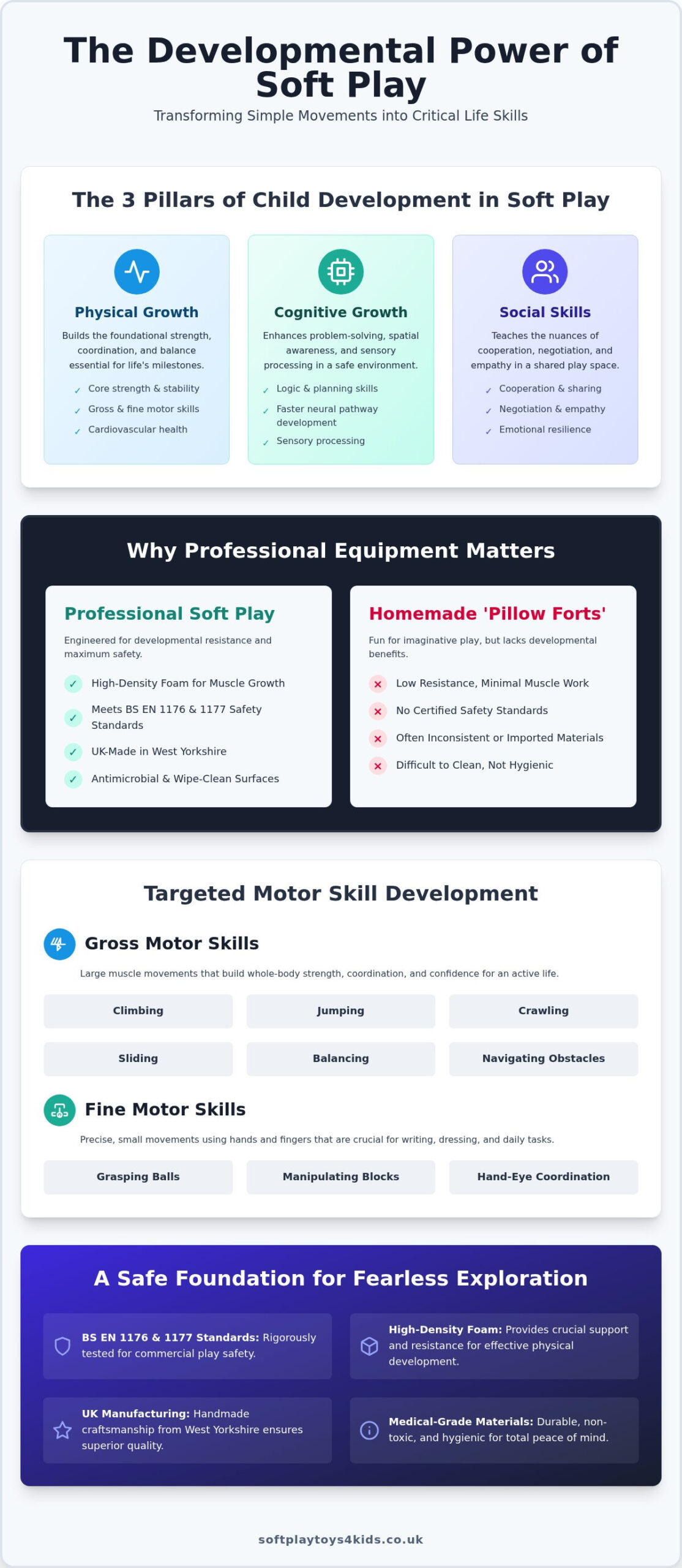
Why does the “soft” factor matter so much? It’s about brain chemistry. When a child isn’t afraid of falling, their brain focuses on mastering new skills rather than managing fear. This leads to faster neural pathway development as they repeat movements like climbing and crawling. In 2026, as screen-time fatigue becomes a growing concern for parents, this tactile, three-dimensional play is more critical than ever. It provides the heavy-work input that digital devices simply cannot offer. This developmental power is built on three primary pillars:
- Physical: Building the strength and coordination needed for life.
- Cognitive: Enhancing problem-solving and spatial awareness.
- Social: Learning the nuances of shared space and cooperation.
The Role of Soft Play in the EYFS Framework
In the UK, the Early Years Foundation Stage (EYFS) framework places a heavy emphasis on “Physical Development” and “Personal, Social, and Emotional Development.” Nurseries across the country prioritise our equipment because it allows for early intervention in motor skill delays. By navigating a foam landscape, children meet their goals for moving and handling in a controlled, safe way. Soft play supports the seven areas of learning in the EYFS by providing a versatile, safe environment where children can build communication, physical strength, and emotional resilience through active, self-chosen exploration.
Why Professional Equipment Trumps ‘Pillow Forts’
While a home-made pillow fort is fun, it doesn’t provide the resistance needed for genuine muscle growth. Our professional-grade, high-density foam is engineered to support a child’s weight, forcing their muscles to work harder during play. This resistance is what builds core strength and stability. Safety is our obsession; we manufacture every piece in our West Yorkshire facility to meet rigorous BS EN 1176 and 1177 standards. Unlike domestic cushions, our professional soft play mats and equipment are designed with wipe-clean, antimicrobial surfaces. This ensures a hygienic learning environment that stands up to the heavy use of a busy playroom or commercial centre. Don’t settle for cheap imports when you can invest in UK-made quality that actually serves your child’s growth.
Physical Milestones: Building Gross and Fine Motor Skills
Think of a soft play area as your child’s first gym. It’s a place where every tumble is a lesson and every climb is a victory for their growing body. One of the most significant benefits of soft play for child development is the way it encourages children to push their physical boundaries without the risk of hard surfaces. Whether they’re navigating a complex obstacle course or simply crawling across high-quality soft play mats, they are building the foundation for a lifetime of health and fitness. This isn’t just “running around”; it’s a targeted workout for gross motor skills like jumping, sliding, and climbing that simply can’t be replicated in a sedentary environment.
While gross motor skills take the spotlight, the “hidden workout” of soft play is equally impressive. An hour of active play provides a cardiovascular boost that strengthens the heart and lungs, helping to establish healthy habits from a young age. At the same time, children are refining their fine motor skills. Grasping individual balls in a pit or manipulating soft blocks requires precision and hand-eye coordination. As noted by The American Academy of Pediatrics on the importance of play, these physical activities are essential for a child’s overall well-being and long-term health trajectory.
The Science of Proprioception and Vestibular Input
Have you ever wondered how children learn where their bodies are in space? This is called proprioception. The resistance provided by our high-density foam forces muscles to work harder, sending clear signals to the brain about body position. Similarly, the vestibular system, which governs balance and the inner ear, is stimulated as children slide, spin, or tilt on soft equipment. These systems are the absolute foundation of all future athletic ability. By mastering balance on uneven foam surfaces now, your child is preparing for everything from riding a bike to playing competitive sports later in life.
Equipment Spotlight: Ball Pits and Muscle Resistance
A ball pit is more than just a sea of colour; it’s a resistance training zone. “Swimming” through thousands of balls builds bi-lateral coordination, requiring the left and right sides of the body to work in harmony. It’s a full-body engagement that strengthens the legs and arms with every movement. For the youngest explorers, ball pool depth contributes significantly to core stability in toddlers, as they must constantly adjust their posture to stay upright amidst the shifting balls.
Don’t settle for flimsy alternatives that don’t offer the necessary support for these milestones. If you’re looking to invest in your child’s physical future, why not browse our range of UK-manufactured soft play equipment? We take pride in our West Yorkshire heritage, ensuring every piece we make is built to last through years of energetic development.
Cognitive Growth and Sensory Processing Through Play
Beyond the physical “gym” we’ve explored, soft play environments serve as a sophisticated laboratory for the mind. Every time a child enters an obstacle course, they aren’t just moving; they’re strategising. Navigating these spaces requires intense planning and logic. “How do I climb this foam wedge?” “What’s the best way to reach the slide?” These are the early foundations of problem-solving. One of the key benefits of soft play for child development is this constant cognitive engagement that happens naturally through fun. It’s a mental workout that builds the neural pathways needed for complex thinking later in life.
Have you ever watched a toddler intently stacking blocks? They’re learning the fundamental laws of cause and effect. When they jump into a ball pit, they experience the immediate physical displacement of the balls. These moments teach children to make predictions and understand the consequences of their actions. It also boosts visual-spatial awareness. Judging the height of a step or the distance to a soft mat helps them map the world around them with total confidence. This spatial reasoning is a skill they’ll use for the rest of their lives, from navigating a busy street to mastering geometry in school.
The social nature of these play zones also sparks rapid language development. You’ll hear “play-talk” everywhere; children negotiating roles, describing their actions, and learning new vocabulary associated with textures and movements. It’s an organic classroom where communication is the key to a better game. They learn to label their environment, express their needs, and interact with peers in a way that static toys simply can’t encourage.
Sensory Integration: Why Textures and Colours Matter
Sensory processing is how we make sense of the world. Our high-quality sensory toys and equipment are designed to stimulate the primary senses in a balanced way. Vibrant colours aren’t just for show; they aid in visual tracking and can help regulate a child’s mood. For children struggling with tactile defensiveness, the soft, varied textures of our UK-manufactured vinyl provide a non-threatening way to get used to different sensations. It’s about building a comfort zone that expands with every play session, helping the brain organise and respond to sensory input more efficiently.
Executive Function and Imaginative Play
Don’t be fooled when you see a child “doing nothing” with a pile of soft blocks. This free play is actually high-level brain work. They are building executive function, which is the ability to focus, remember instructions, and juggle multiple tasks. Transforming a foam wedge into a pirate ship or a mountain is the peak of imaginative play. Research shows that executive function in early childhood predicts future school success even better than IQ scores. By providing the tools for imagination, we’re giving them a head start in the classroom. Why settle for static toys when you can provide a dynamic environment that grows with their mind?
Social Skills and Emotional Resilience: Beyond the Foam
Social skills are notoriously difficult to teach from a textbook; they require real-world practice. One of the most overlooked benefits of soft play for child development is how it functions as a social training ground. Within these vibrant, padded boundaries, children are forced to navigate the complex world of human interaction. They learn the art of negotiation and turn-taking in real-time. Whether it’s waiting for a turn on the slide or sharing a corner of the ball pit, they’re developing impulse control and patience. These interactions are the building blocks of empathy. Children begin to notice the needs of their peers, often helping a friend through a foam tunnel or cooperating to build a massive tower of blocks.
Emotional regulation is another critical piece of the puzzle. Let’s be honest: sometimes kids just need to crash. Soft play provides a safe outlet for high energy or frustration, allowing children to “vent” through physical exertion without the risk of injury. It’s a healthy way to process big emotions in a controlled environment. When a child finally conquers a challenging climbing frame they were previously afraid of, that “I did it!” moment builds a level of self-assurance that carries over into every other aspect of their life. This confidence isn’t just about climbing; it’s about knowing they can handle a challenge.
Calculated Risk-Taking in a Safe Environment
Why do children need to fall? It sounds counterintuitive to a protective parent, but “safe failure” is essential for building resilience. When a child slips on a foam wedge, they aren’t hurt; they’re taught to get back up and try again. The protective nature of professional soft play equipment encourages them to push their personal boundaries further than they would on concrete or wood. This link between physical risk and emotional independence is profound. By overcoming the fear of a steep foam slope, they learn that they are capable and resilient, fostering a sense of independence that is vital for their growth.
Soft Play for Neurodiversity and Inclusion
For children with autism or ADHD, soft play is often a safe haven rather than just a playroom. The deep pressure provided by “swimming” through a ball pool offers vital proprioceptive input that can have a profound calming effect on a dysregulated nervous system. It’s a sensory-safe zone where the world feels a bit more manageable. Our inclusive designs ensure that children of all abilities can play side-by-side, fostering a culture of acceptance and cooperation from the earliest age. Ready to create a supportive environment for your child’s social journey? Browse our handmade soft play collections today and see the difference that West Yorkshire craftsmanship makes for your peace of mind.
Maximising Development: Creating a Purposeful Soft Play Space
To truly unlock the benefits of soft play for child development, you need more than just a collection of foam shapes. You need a strategy. Creating a purposeful play space means finding the perfect equilibrium between “active” and “sensory” items. While high-energy equipment like ball pits and climbing wedges build gross motor strength, sensory toys and textured blocks provide the quiet focus needed for cognitive growth. Think of your play area as a developmental gym where every piece of equipment has a specific job to do. By carefully selecting a mix of products, you ensure your child isn’t just playing, but actively hitting those critical 2026 EYFS physical activity milestones.
We recommend using the “Zoning” technique to organise your space. Divide your area into two distinct sections: a high-energy zone for jumping and crawling, and a calm sensory corner for tactile exploration. This structure helps children learn to regulate their energy levels and transition between different types of play. As your child grows from a baby to a toddler and eventually into primary age, your space must adapt. Our modular designs allow you to add more complex obstacles or deeper ball pools as their coordination improves, making your initial purchase a long-term investment in their future.
Maintenance is the key to longevity. Because we use professional-grade, wipe-clean vinyl, keeping your equipment in top developmental shape is simple. Regular cleaning doesn’t just ensure hygiene; it protects the integrity of the materials, ensuring your UK-manufactured gear remains safe and supportive for years of energetic use. Don’t settle for flimsy alternatives that lose their shape after a few months. Professional-grade foam provides the consistent resistance needed for genuine muscle growth.
Home vs. Commercial: Tailoring the Benefits
Are you a parent creating a soft play area at home? You don’t need a massive warehouse to make an impact. Even a small corner with high-quality mats and a compact ball pit can provide the sensory input your child craves. For schools and nurseries, investing in professional indoor playground equipment is a smart move for early intervention. Because we are the manufacturer, we offer customisation that allows you to tailor your equipment to specific developmental needs or space constraints. Buying direct means you get premium West Yorkshire craftsmanship without the middleman markup.
The SoftplayToys4kids Difference
We take immense pride in our Bradford-made, handmade approach. Unlike cheap imports that use low-density foam, our equipment is built with high-density materials that actually support a child’s weight and encourage muscle development. We don’t cut corners on safety or quality. Every stitch is a testament to our commitment to your child’s happiness and security. Why choose anything less than the best for your little one? Explore our range of UK-made soft play equipment and start building your child’s future today.
Invest in Your Child’s Future Through Purposeful Play
Ready to turn your playroom into a developmental powerhouse? We’ve explored how navigating foam landscapes builds essential motor skills and how sensory integration fuels cognitive growth. You now have the roadmap to create a space that fosters both social confidence and emotional resilience. Understanding the full spectrum of the benefits of soft play for child development is the first step toward creating a truly transformative environment for your little one.
Don’t settle for mass-produced alternatives that lack the support your child needs. Our equipment is proudly handmade in West Yorkshire using high-density foam designed for maximum durability and safety. It’s the same professional quality trusted by schools and nurseries across the UK. Whether you’re building a home sanctuary or a commercial play zone, you deserve craftsmanship that works as hard as your kids do. Your child’s potential is limitless; give them the tools to explore it with total confidence.
Shop our range of handmade, UK-manufactured soft play equipment and start building your child’s future today. We can’t wait to see the incredible milestones your child will conquer next!
Frequently Asked Questions
What age is best for starting soft play?
Children can start enjoying soft play as soon as they reach the sitting and crawling stages, typically around six months old. This early exposure helps them develop basic spatial awareness and muscle strength in a secure, padded environment. Our handmade play mats provide the perfect cushioned surface for these first wobbly movements, ensuring every tumble is safe and encouraging for your little explorer.
How does soft play help a child with sensory processing disorder?
Soft play is a game-changer for children with sensory processing disorders because it provides intense proprioceptive and vestibular input in a controlled way. The deep pressure from a ball pit or the resistance of high-density foam helps organize the nervous system. It’s one of the most effective benefits of soft play for child development, offering a “sensory safe” zone where children can regulate their emotions and energy levels effectively.
Can soft play equipment be used for physical therapy at home?
Yes, many parents and therapists use our professional-grade equipment for physical therapy at home to target specific motor goals. The unique resistance of our UK-manufactured foam is ideal for building core stability and improving gait. Because our equipment is built to commercial standards, it provides the consistent support needed for therapeutic exercises that require much more durability than standard domestic cushions can offer.
Is soft play better for development than outdoor playgrounds?
Soft play isn’t necessarily “better” than outdoor play, but it offers unique developmental advantages that hard playgrounds simply can’t match. It allows for “safe failure,” where children can test their physical limits without the risk of injury on concrete or wood. It’s a year-round “sensory gym” that focuses heavily on coordination and social negotiation in a high-density, tactile environment that remains accessible regardless of the British weather.
How often should a child engage in soft play to see developmental benefits?
For the best results, aim for at least two to three dedicated soft play sessions per week to keep the momentum of growth. Regular engagement ensures that motor skills and cognitive mapping are consistently reinforced through repetitive movement. Short, frequent sessions are often more effective than one long visit, as they keep the brain and body active without causing overstimulation or physical exhaustion.
What are the specific benefits of ball pits for infants?
For infants, ball pits are incredible for visual tracking as they follow the movement of vibrant colours in their field of vision. They also encourage tactile exploration and help build core strength as the baby learns to sit and balance amidst the shifting balls. It’s a full-body sensory experience that builds confidence and curiosity from the very first interaction in a safe, contained space.
How do I know if soft play equipment is safe and non-toxic?
You can verify safety by checking for BS EN 1176 and 1177 compliance, which are the UK gold standards for play equipment. At SoftplayToys4kids, we manufacture everything in our West Yorkshire facility using non-toxic, medical-grade vinyl and fire-retardant foam. Unlike cheap imports, our materials are rigorously tested to ensure they are safe for skin contact and stand up to heavy, daily use without degrading.
Does soft play help with speech and language delays?
Soft play significantly aids speech and language development by encouraging social interaction and “play-talk” with peers. As children navigate equipment together, they must communicate their intentions and negotiate roles in their imaginative games. This organic dialogue, combined with the cognitive mapping required to solve physical puzzles, helps bridge the gap for children experiencing language delays by providing a low-pressure environment for communication.
Leave a Reply