
Soft Play for Babies UK: A Parent’s Safety and Selection Checklist
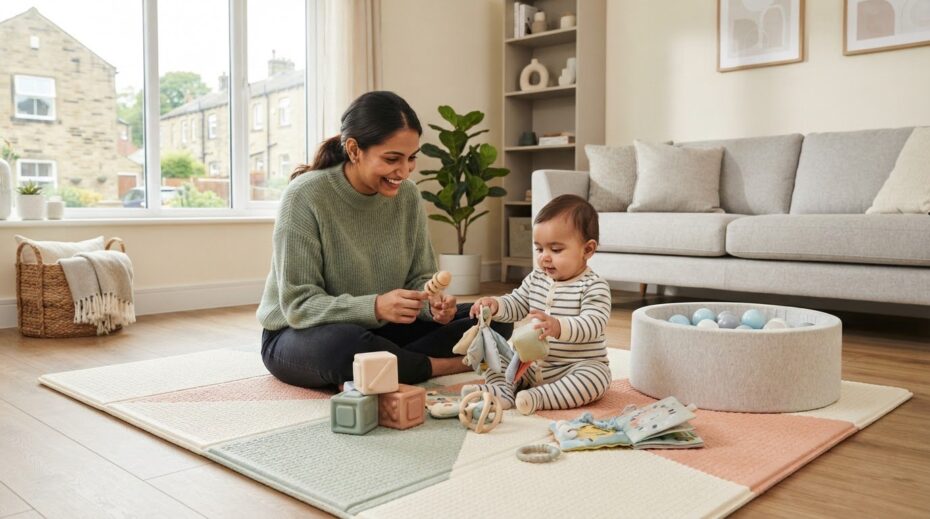
What if the best soft play for babies UK families choose isn’t a full set, but a few simple pieces suited to their baby’s stage? It’s natural to want a cosy, colourful space where your little one can explore, while also wondering what’s age-appropriate, what needs close supervision and which materials are practical at home.
This guide explains what baby soft play can include, how to match play mats, ball pits and sensory toys to your baby’s readiness, and what to check before buying or setting anything up. There’s no one-size-fits-all kit. Your baby’s abilities, available space and the product’s own age guidance all matter.
We’ll also cover supervision, potential hazards, cleaning information and ways to create a comfortable play area at home. SoftplayToys4kids is a UK-based manufacturer in West Yorkshire, with product categories including soft play mats, ball pits and sensory toys. Check each item’s specifications and suitability carefully, then build a space for supported play.
Key Takeaways
- Soft play for babies UK families consider can include play mats, soft shapes and suitable sensory items.
- Choose play around your baby’s current readiness and interests. Treat exploration as an opportunity, not a promised milestone.
- Use a simple pre-play routine: check the item and space, stay close, and pause play if something doesn’t feel right.
- Compare options by intended age, activity, floor space, storage needs and care instructions.
- Start with one suitable surface or item, then observe your baby and adapt the setup to your home.
What does soft play for babies in the UK include?
Baby soft play is soft, age-appropriate play equipment used with attentive caregiver supervision. It might include a play mat for floor play, soft shapes or sensory items, but no category is automatically right for every baby. Check the specific product’s age guidance and features, then consider whether they suit your baby’s abilities and play style.
At home, you choose the items and remain responsible for supervising your baby. A commercial soft play venue is different: it may have designated baby areas, entry rules and guidance for caregivers. Don’t assume venue staff provide individual supervision. Check the venue’s current rules before visiting, and keep your attention on your baby while they play.
Which soft play items might suit a baby?
A play mat provides a defined surface for supervised floor play, such as reaching, rolling or looking around. It isn’t a substitute for a safe sleep space. If your baby falls asleep, follow current safe-sleep advice rather than treating play equipment as a place to sleep.
Soft shapes and sensory toys can offer different textures, colours or forms to explore. Use them only when the product’s age guidance and relevant features are clear. For a ball pit, check the specific product’s intended age and safe-use instructions. Don’t assume every pit or its contents are designed for babies. SoftplayToys4kids is a UK-based manufacturer in West Yorkshire with product categories including mats, ball pits and sensory toys, but suitability needs to be checked item by item.
How is baby soft play different from toddler play?
Early play is often floor-based. A baby might look, reach, touch or roll while an adult stays close. As a child becomes more mobile, play may involve more movement, climbing or navigating shapes. There’s no single age that marks the change. Babies develop at different rates, so use observed abilities and product guidance rather than age alone.
Play can give babies opportunities to explore their surroundings and interact with people and objects. For a broad introduction to the benefits of play for development, see this overview. It isn’t a guarantee that any particular item will produce a specific outcome. Choose a setup around what your baby can comfortably engage with now, and adjust it as their movements and interests change. That’s the practical starting point for soft play for babies uk: suitable equipment, individual readiness and close caregiver supervision.
How can soft play support a baby’s exploration as they grow?
Think of soft play as an invitation to explore, not a way to guarantee a particular developmental result. Your baby might watch a toy, turn towards a sound, reach for a shape or simply rest on the mat and take in what’s around them. Their responses can vary from one session to the next. Follow their interest, stay close and end the activity if they seem tired, unsettled or ready for a break.
Short, responsive sessions are a useful starting point. Offer one or two suitable items rather than filling the space, then notice what your baby chooses to look at or touch. The Early Years Foundation Stage (EYFS) framework sets out learning and development guidance for early years providers in England. It offers broader context, but doesn’t replace your baby’s individual needs or product instructions.
What might younger babies explore during floor play?
During supervised floor play, a younger baby may look around, listen or reach towards an item. These are examples, not targets or requirements. Set up a clear, uncluttered area on a suitable mat, with you close enough to respond. Offer an item only if its age guidance and features are appropriate, and let your baby engage at their own pace.
How might play change as babies become more mobile?
As your baby starts rolling, sitting or crawling, they may move towards objects or explore a wider area. Recheck the setup as their abilities change. Make sure equipment is stable as instructed, check the surrounding floor and move small objects that could be reached or put in the mouth. Use each item as its maker directs. Don’t assume something suitable for one stage will remain suitable as your baby becomes more mobile.
There’s no need to match play to a strict age timetable. Notice what your baby can do comfortably and how they respond, then adjust the space or simplify the activity. If you have concerns about your baby’s development, speak with an appropriate health professional, such as your health visitor or GP, rather than relying on play equipment for answers.
For families exploring soft play for babies uk, a simple, adaptable setup is a practical place to begin. You can browse soft play mats and sensory toys as categories to consider, then check each item’s age guidance and instructions before use.
Is baby soft play safe? Checks parents should make first
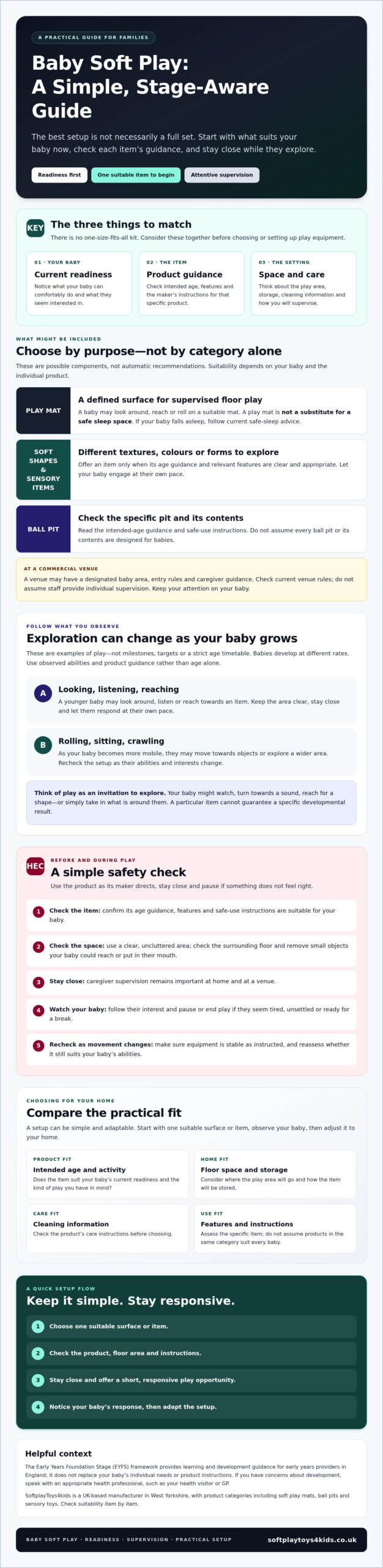
Soft play can offer a comfortable place for a baby to explore, but no mat, toy or ball pit replaces close, attentive adult supervision. A soft surface doesn’t make every use suitable or risk-free. Before each session, follow a simple routine: check the product, prepare the space, stay close and stop if your baby seems uncomfortable or anything changes.
What should parents inspect before each play session?
Check the item and the area around it. Look for visible damage, loose parts, exposed filling or anything that wasn’t there before. If you spot a problem, stop using the item until you’ve checked the maker’s guidance and know it’s suitable to use again.
Clear the play space of cords, small objects, pets and unstable furniture. Place the equipment as directed, on an appropriate surface, and keep your baby within reach and view. Stay engaged rather than relying on a monitor or assuming a soft product will prevent every bump or fall.
Follow the manufacturer’s instructions for assembly, use, cleaning and age suitability. Don’t improvise a setup or combine pieces in a way the instructions don’t describe. Soft play products aren’t safe-sleep surfaces. If your baby falls asleep, move them to an appropriate sleep space and follow current safe-sleep advice.
What do product labels and UK guidance tell you?
Read the label and instructions for the specific item, including its intended age, warnings and limits on use. A product category alone doesn’t confirm suitability. Two mats, sensory toys or ball pits may have different designs and guidance. If age information or instructions are missing or unclear, ask the seller or manufacturer before using the item with your baby.
You may see UKCA or CE marks, or references to standards, on product information. Don’t assume a mark or standards reference proves that an item suits your baby or every planned use. Requirements and their relevance can depend on the product and current UK rules, so verify claims against current official guidance and the manufacturer’s documentation rather than relying on a general statement or an old listing.
Keep the routine practical: inspect the item, clear the space, check the instructions, then stay close throughout play. Stop if the equipment shifts, becomes damaged or your baby’s behaviour suggests they need a break. For parents considering soft play for babies uk, these checks support an informed choice without treating any item as universally suitable.
How do you choose baby soft play for your home?
Start with your baby and your room, not a picture-perfect setup. For soft play for babies uk, make a shortlist by checking the product’s intended age, what your baby can do comfortably, how much floor space it needs, where it can be stored and how it should be cleaned. No one category suits every baby, and product guidance matters more than colour or appearance.
Which product features matter for a baby play area?
Measure the usable floor area before choosing a mat or larger piece, leaving enough clear space for your baby and your own access. A mat is primarily a play surface; soft shapes and sensory items add objects to explore, while a ball pit is a different setup with its own age and safe-use instructions. Confirm each item’s dimensions, materials, age guidance and care instructions with its maker. Choose sensory features only if they interest your baby and the product instructions permit their use.
What should you compare before choosing?
Compare practical function as well as appearance. Ask whether the item suits your baby’s current play, whether it can be put away easily and whether its cleaning routine works for your household. For more detail, look for a baby play mat guide and a beginner’s guide to soft play, while checking that any advice matches the specific product you’re considering.
| Category | Use to consider | Space and storage check | Verify before choosing |
|---|---|---|---|
| Play mat | A defined surface for supervised floor play | Check the mat’s dimensions and where it can be stored | Age guidance, materials and cleaning instructions |
| Soft shapes | Objects for reaching or exploring, if suitable | Allow room around each piece; consider where pieces go afterwards | Intended age, features and maker’s use instructions |
| Sensory toy | A specific item to engage with, subject to its guidance | Check how many items you’ll use and store | Age guidance, materials and care instructions |
| Ball pit | A distinct play option, only if the specific product is appropriate | Measure its footprint and plan where it will be kept | Intended age and safe-use guidance |
Use this comparison to narrow your options, then check the current product details rather than assuming every item in a category is suitable for babies. SoftplayToys4kids is a UK-based manufacturer in West Yorkshire, with product categories including soft play mats, ball pits and sensory toys. Explore soft play mats and sensory toys, and review each item’s specifications before deciding whether it fits your baby and home.
How can UK parents create a simple baby soft play setup?
A baby play area doesn’t need to be elaborate. Start with one suitable surface or item, make room for your baby to explore while you stay close, and adjust the setup as their interests and abilities change. For soft play for babies uk, focus on a clear space, product guidance you’ve checked and attentive supervision throughout.
What is a practical first soft play checklist?
Before your baby starts playing, work through these simple checks:
- Choose a clear floor area. Remove nearby cords, small objects, pets and unstable furniture. Make sure there’s enough room for you to sit or kneel close by.
- Begin simply. Set out one suitable mat or play item rather than filling the area with equipment. A play surface and an interactive toy serve different purposes, so choose based on what you want to offer.
- Read the instructions. Confirm the item’s intended age, features and directions for setup, use and care before the first session. Don’t assume a product is suitable just because it’s soft or sold as play equipment.
- Stay close and observe. Notice how your baby responds. Move or remove the item, simplify the setup or stop play if your baby seems uncomfortable or the equipment shifts or changes.
- Review the space as your baby grows. Rolling, sitting and crawling can change what your baby can reach and how they move, so check the area and equipment again as their abilities develop.
Keep play supervised and responsive. The aim isn’t to create a perfect miniature play area, but to offer a simple opportunity to explore that fits your home and your baby today.
Where can parents explore UK-made soft play options?
SoftplayToys4kids is a UK-based manufacturer with a factory in West Yorkshire. Its relevant product categories include soft play mats, ball pits and sensory toys. These categories help show the types of items available, but they don’t mean every product is designed or suitable for babies. Check the age guidance, dimensions, materials and care instructions for the specific item before choosing it.
Once you’ve decided what might suit your space, you can explore soft play for babies and families and review the product information at your own pace.
Build a Play Space That Grows With Your Baby
The right soft play setup doesn’t need to be complicated. Choose items around your baby’s current abilities, check each product’s age guidance and care instructions, and stay close during play. Starting with one suitable surface or item makes it easier to notice what your baby enjoys and adapt the space as they grow.
Those are the essentials of choosing soft play for babies uk: prioritise your baby’s readiness, your available space and attentive supervision over a one-size-fits-all set. A mat, ball pit or sensory toy may be worth exploring, but always confirm that the specific product is appropriate for your baby before use.
SoftplayToys4kids is a UK-based manufacturer with a factory in West Yorkshire. Its product categories include soft play mats, ball pits and sensory toys. Keep your checklist handy as you browse and compare items for your home.
Keep it simple, stay close and explore the options at SoftplayToys4kids, checking each product’s details to decide what may suit your family.
Frequently Asked Questions
Is soft play suitable for babies?
Soft play can be suitable for a baby when the specific item is intended for their age and abilities, and an adult supervises closely throughout. Options might include a play mat for floor play or a suitable sensory item, but “soft” doesn’t automatically mean appropriate or risk-free. Read the product instructions, prepare a clear space and stay close enough to respond. Stop or adjust the activity if your baby seems uncomfortable.
What age can babies use soft play?
There isn’t one age that applies to every soft play item or every baby. Check the age guidance and warnings for the specific product, then consider what your baby can do comfortably, such as lying on the floor, rolling or sitting. Follow the maker’s instructions as your baby’s abilities change. If you’re unsure whether an activity is suitable, ask an appropriate health professional.
Can babies play in a ball pit?
A baby may use a ball pit only if the specific product’s age guidance and safe-use instructions say it’s suitable. Don’t assume all ball pits or their contents are designed for babies. Check the setup and surrounding area, keep your baby under close, attentive supervision and follow the maker’s directions. If the product’s intended age or instructions are missing or unclear, ask the seller or manufacturer before use.
What soft play equipment do babies need at home?
Babies don’t need a large collection of equipment. A suitable play mat can provide a surface for supervised floor play; a sensory toy or soft shape may be an additional option if its age guidance and instructions fit your baby. Start with one item, check its dimensions and care directions, and see how your baby responds. Choose based on your available space and your baby’s current abilities, not appearance alone.
Is a soft play mat safe for a baby to sleep on?
No. A soft play mat is for supervised play, not a substitute for a safe sleep space. If your baby falls asleep during floor play, move them to an appropriate sleep space and follow current NHS safe-sleep advice. Before using a mat for play, check its age guidance and instructions, place it as directed and stay close to your baby. Don’t leave a baby unattended on play equipment.
How do I clean baby soft play equipment?
Follow the cleaning instructions for the specific item, since care methods can vary by materials and construction. Check the label or manufacturer’s guidance before using cleaning products, moisture or heat, and let the item dry as directed before the next play session. Don’t assume a product can be machine-washed or treated with a particular cleaner. If care instructions aren’t available, contact the seller or manufacturer for advice.
What should I check before buying soft play for a baby in the UK?
Before buying soft play for babies UK parents should check the item’s intended age, warnings, dimensions, materials, care instructions and the maker’s guidance for use. Consider whether it suits your baby’s current abilities, fits your home and can be stored easily. Check any UKCA, CE or standards claims against current official guidance where relevant, rather than assuming a mark guarantees suitability. Ask the seller or manufacturer if product details are unclear.
Leave a Reply