
Baby Foam Mat Review: What Actually Matters
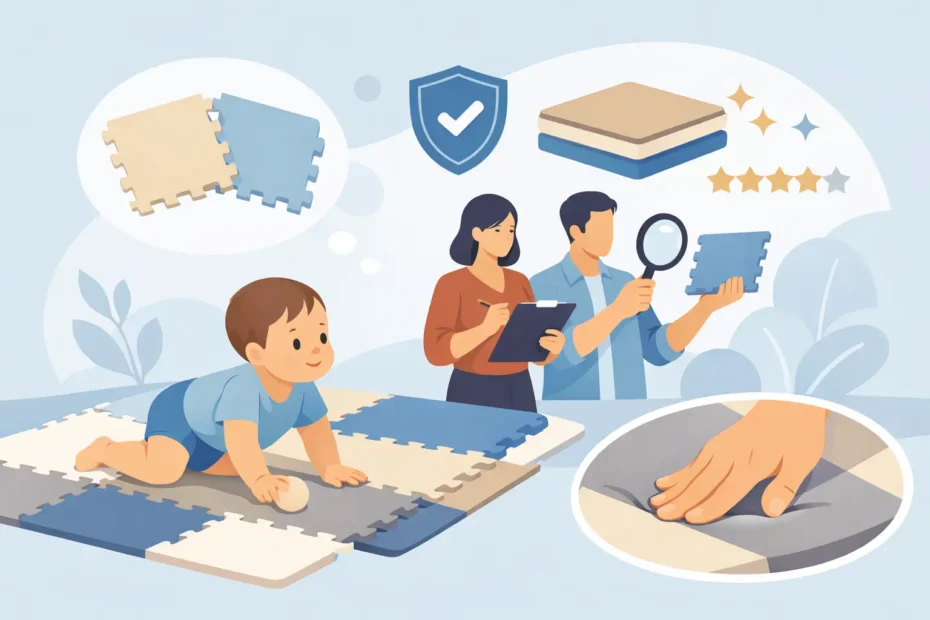
A baby mat has a harder job than simply making the floor look softer. It needs to give babies a clean, comfortable place for tummy time, rolling, sitting and first crawls, while standing up to milk spills, dribble, muddy socks and daily use. This baby foam mat review focuses on the details that separate a genuinely useful play mat from a cheap short-term purchase.
For parents, the right mat can turn a cold lounge floor or spare room into a practical play space in minutes. For nurseries, playgroups and soft play settings, it needs to cope with far more children, more cleaning and more movement. The best choice depends on where it will be used, how much space you have and whether the mat is only for a baby or part of a growing soft play setup.
Baby Foam Mat Review: Start With Safety and Support
A foam mat should create a cushioned surface, not feel like a thin layer between a child and a hard floor. This matters most during tummy time, when babies are learning to push up, and later when they are toppling over while sitting, crawling or taking those wobbly first steps.
Thickness is not a number to ignore. A very slim mat may be fine for a brief play session on carpet, but it offers less comfort and impact protection on laminate, tile or concrete floors. A thicker foam option is usually the more sensible investment for active home play and is particularly valuable in nurseries or commercial spaces where children are on the floor throughout the day.
The surface should also be secure under little hands and knees. A mat that slides about creates a frustration for parents and a potential hazard for children. Check that it lies flat, has neatly finished edges and stays put on your intended floor type. If the mat sits beside soft play shapes, ball pits or climbing equipment, make sure there are no raised joins or awkward gaps where small feet can catch.
Wipe-Clean Covers Make Everyday Life Easier
Nobody needs a play mat that looks great on day one but becomes difficult to maintain after a few snacks. For busy homes and professional settings, a wipe-clean finish is one of the strongest reasons to choose a quality foam mat.
Vinyl-covered foam mats are popular because they can be cleaned quickly between activities. A wipe with suitable cleaning products is far more practical than removing fabric covers, waiting for a wash cycle and hoping the mat dries before the next play session. This is especially useful in nurseries, where hygiene routines need to be realistic as well as thorough.
Look closely at seams and corners. Well-made covers should be close fitting and securely finished, without loose material that can collect dirt or become a tempting point for little fingers to pull. A smooth, durable cover makes cleaning simpler and helps the mat retain its smart appearance over time.
There is a trade-off. Ultra-soft fabric mats can feel cosy, but they are often less convenient when spills happen. A wipe-clean foam mat may feel more like purpose-built equipment than a nursery rug, but that is precisely why it suits messy, energetic everyday play.
Size Matters More Than Most Buyers Expect
Before buying, measure the actual clear floor space rather than estimating from memory. A mat can appear modest in a product photo, then take over a small living room once it arrives. Equally, a tiny square of foam can quickly become restrictive once a baby starts crawling beyond the toys placed in front of them.
For a baby’s dedicated tummy-time area, a compact mat may be enough. If you want room for a parent to sit alongside, books, sensory toys and a few soft shapes, a larger format is far more comfortable. In a nursery room or playroom, it often makes sense to cover the main activity zone rather than buying several undersized mats that move apart during use.
Commercial buyers should plan around routes through the room as well as play space. Keep entrances, fire exits and staff access clear, and allow enough room around climbing equipment for children to dismount safely. Bespoke sizing can be a major advantage where a standard mat leaves an unusable strip of exposed floor or does not fit around a feature of the room.
Think Beyond the Baby Stage
A good foam mat should earn its place for longer than a few months. Babies become crawlers, crawlers become toddlers, and toddlers quickly turn a quiet mat into a base for blocks, balance activities, role play and soft play adventures.
Choose a size and colour that will still work when the room changes. Neutral shades can blend into a lounge, while brighter colours help create a clearly defined children’s area. For nurseries and playgroups, colour choices can also be used to separate quiet activities from active movement zones.
Durability Is Where Cheap Mats Often Fall Short
Price matters, but the lowest initial cost is not always the best value. Foam that compresses too easily, weak stitching and thin covers can show their weaknesses quickly, particularly under tables, toddler feet and repeated cleaning.
A quality mat should feel substantial when pressed, return to shape after use and keep its cover looking tidy. The cover needs to handle routine wiping without peeling or splitting, while the foam inside should provide consistent cushioning across the whole surface. If a mat is used every day, these details become far more important than a novelty print or a small saving at checkout.
For commercial settings, durability is not optional. A nursery or soft play centre needs equipment that can cope with higher footfall and regular cleaning without looking tired within a term. Buying from a manufacturer that understands soft play construction can give buyers more confidence than choosing an unknown, mass-produced mat with little product support.
Softplay Toys4Kids manufactures soft play equipment in the UK and can help customers who need a practical mat size, a particular colour scheme or a wider setup built around their available space. That is valuable when one standard product does not quite meet the brief.
The Right Foam Mat for Home, Nursery or Soft Play
The best baby foam mat is not identical for every buyer. A parent in a flat may want a lightweight mat that creates a clean play zone and stores easily when visitors arrive. A family with a dedicated playroom may prefer a larger, thicker mat that supports everyday play for more than one child.
Nurseries and preschools should prioritise wipe-clean durability, dependable cushioning and dimensions that suit their room layout. It is worth considering how the mat works with existing equipment, including low tables, sensory toys, book corners and soft play shapes. A practical, well-planned floor area can make supervision easier and encourage children to move, explore and play with confidence.
Soft play venues need another level of consideration. Mats may be used beneath activity equipment, around ball pits or in toddler zones where falls are frequent and cleaning is constant. In these spaces, custom sizing and commercial-grade construction can be a better decision than adapting domestic mats beyond their intended use.
Questions to Ask Before You Buy
Ask where the mat will sit, what floor is underneath and who will use it six months from now. Consider whether you need a single baby play surface or a foundation for a wider soft play area. Then think honestly about cleaning: if it will be used for snacks, crafts and nappy-free time, a wipe-clean cover is likely to save time and stress.
It is also sensible to compare the full value, not just the headline price. Check the thickness, construction, finish, size and level of support available if you need help choosing. A properly made foam mat can support years of play, while a poor-quality alternative may soon need replacing.
A baby foam mat should make play feel easier: softer floors, faster clean-ups and a space where children can move freely. Choose one built for real family life or busy childcare use, and it becomes far more than something placed on the floor.
Leave a Reply