
Softplay Installations That Children Love
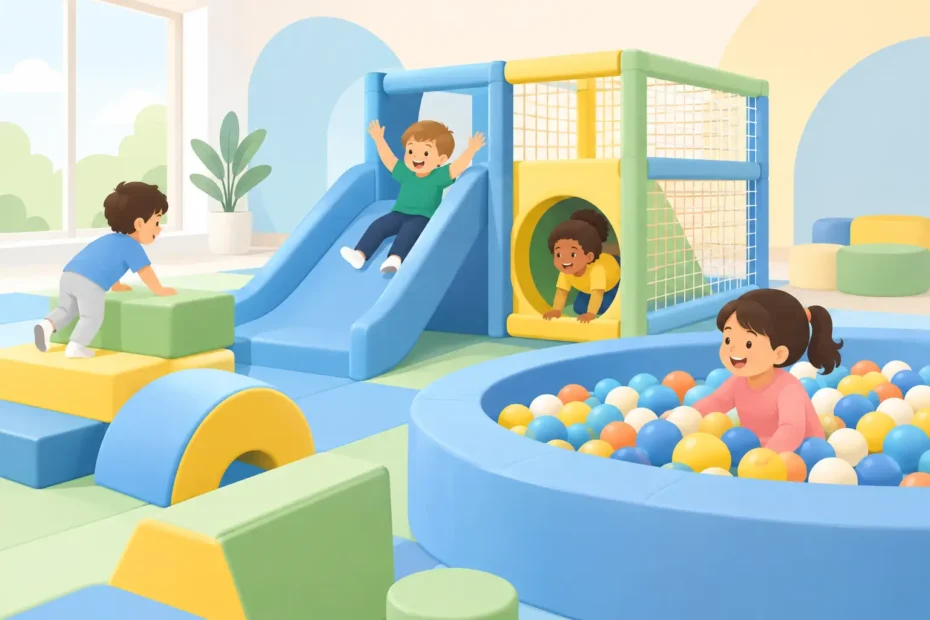
A spare corner of a nursery room, an underused community hall or an empty section of a family venue can become the area children head for first. The right softplay installations give babies and young children a safe place to climb, crawl, balance, roll and build confidence, without turning the space into a costly headache to maintain.
For parents, the priority may be fitting meaningful active play into a living room, playroom or garden room. For nurseries, schools and commercial venues, the challenge is bigger: creating an engaging play area that handles daily use, supports supervision and makes sensible use of every square metre. In both cases, buying the biggest set is rarely the answer. A well-planned installation is safer, more inviting and better value.
Start with the space, not the product
Measure the usable floor area before choosing shapes, mats or ball pits. Include radiators, doors, storage cupboards, low windows, columns and any routes adults need to use. It sounds obvious, but many soft play areas lose their value because a large unit blocks movement or leaves awkward, unprotected gaps around the edges.
Think about how children will move through the area. Younger babies benefit from a clear, padded floor space with low shapes, mirrors and gentle slopes. Toddlers want a simple route with steps, ramps, tunnels, balance beams and soft blocks. Older preschool children are more likely to enjoy a challenge, but they still need landing space and enough room to pass one another without collisions.
For domestic use, a compact set that can be rearranged is often the smartest choice. A step-and-slide, small ball pit, folding mat and a selection of foam shapes can provide plenty of variety without permanently taking over the room. Commercial buyers may benefit more from fixed zones: active climbing in one area, quiet sensory or baby play in another, and a clear boundary between play equipment and seating.
What good softplay installations should include
A successful setup is built from more than colourful foam. It should offer different types of movement while making supervision straightforward. The best combinations usually include a padded base, climbing elements, crawl-through pieces, balance challenges and somewhere children can pause or play imaginatively.
Safety mats are the foundation. They soften falls, define the play area and protect floors beneath the equipment. Choose mats with durable, wipe-clean covers and secure joins where appropriate, particularly in busy nurseries and centres. If the installation sits against walls, padded wall panels or post protectors can reduce the risk from hard surfaces and structural features.
Climbers, steps and ramps create active play without requiring a huge footprint. A low step-and-slide is ideal for younger children learning to climb independently, while modular shapes can be rearranged into new courses as children’s confidence grows. This flexibility matters in home settings and in early-years environments where the same equipment must keep a range of ages interested.
Ball pits remain a firm favourite, but they need planning. The pit should suit the age of the users, have soft sides and a sensible entry point, and be positioned so staff or parents can see into it easily. In commercial settings, allow for regular ball cleaning and make sure there is enough surrounding circulation space for children entering and leaving.
Colour is not simply decoration. Bright combinations can make a play area feel exciting, while calmer colour schemes can suit a home, premium venue or sensory-friendly room. Bespoke colour choices are useful when you want the installation to reflect your branding or work with an existing interior. The key is to avoid a visually busy layout where children cannot clearly see steps, edges and changes in level.
Match the equipment to the age group
Age mixing is one of the biggest practical considerations. A baby who is just learning to sit needs a very different environment from a confident four-year-old running towards a slide. If one room serves several ages, create a quieter baby zone with low, soft equipment and keep more energetic climbing pieces separate.
Commercial operators should also consider capacity. A compact play corner might work perfectly for six children but become frustrating and less safe when fifteen arrive at once. Do not rely on equipment size alone. Think about the number of children expected at peak times, their ages and the level of adult supervision available.
Safety, hygiene and durability are where value is won
Cheap equipment can look tempting until covers split, foam loses its shape or cleaning becomes difficult. Quality soft play should be made for energetic use, with firm yet forgiving foam and hard-wearing, easy-clean covers. Seams, joins and fastening points deserve close attention because they receive the most handling.
For nurseries, schools, playgroups and soft play venues, create a clear inspection routine. Check for tears, loose covers, damaged foam, exposed fastenings and worn mat edges before sessions begin. Remove any damaged item from use until it has been repaired or replaced. Keep records where your setting requires them, and follow your own risk assessment, insurance and local safety responsibilities.
Cleaning should be realistic, not aspirational. Wipe high-touch surfaces frequently, clean mats and shapes according to the cover manufacturer’s guidance, and set a routine for ball pit balls. A crowded installation with too many pieces may look impressive on day one, but it creates more cleaning work and more places for lost toys and debris to collect.
Durability also affects the long-term cost. A well-made modular installation can be refreshed by adding a new balance beam, tunnel or set of shapes later. That is often more affordable than replacing an entire setup when the room changes or children outgrow the original layout.
Bespoke design makes difficult spaces work harder
Standard sets are excellent when the room is straightforward and the budget is tight. Bespoke softplay installations come into their own when you have an unusual alcove, a narrow room, wall columns, fixed furniture or a particular theme and colour requirement. They can also help commercial buyers create a more polished experience without wasting valuable floor space.
Before ordering a custom layout, provide accurate measurements, photographs and details of the users. Explain whether the area is for babies, toddlers, mixed ages or party bookings. Mention access restrictions too: tight doorways, staircases and lift sizes can affect what can be delivered and installed in one piece.
Softplay Toys4Kids manufactures in West Yorkshire and can produce custom sizing and colour combinations for customers who need something beyond an off-the-shelf set. Bespoke does not have to mean extravagant. Often, one correctly sized safety mat, wall pad or shaped unit prevents expensive compromises later.
Do not forget access and supervision
The most attractive play area still fails if adults cannot supervise it properly. Avoid creating high-sided blind spots, and position busier equipment where staff, parents or carers have a clear view. Keep entrances obvious, avoid placing popular features directly beside doorways and leave room for pushchairs, mobility access and emergency routes where needed.
At home, supervision remains essential even with low-level equipment. Soft play reduces the impact of bumps and falls, but it does not replace sensible age guidance or adult attention. Put equipment on a level surface, keep it away from stairs and hard furniture, and use it in the way it was designed to be used.
Buy for the next stage, not just this month
Children develop quickly. The tiny crawl mat that suits a nine-month-old may be ignored a year later, while an over-large climbing frame can be too intimidating at the start. Modular equipment gives families and settings room to adapt: begin with low pieces, then add routes, balancing elements and larger play features as confidence increases.
Budget matters, especially when fitting out a nursery room or commercial site. Prioritise the foundation first: protective flooring, age-appropriate core equipment and cleaning-friendly materials. Add themed extras and larger features once the layout is working. Compare like for like on foam quality, cover finish, dimensions, delivery and after-sales support rather than choosing purely on the lowest headline price.
The best play spaces invite children to return without needing constant instruction. Give them a safe route to explore, enough choice to make the area their own, and room for an adult to stay close by. Start with the space you have, choose equipment that earns its place every day, and build a setup that can grow alongside the children using it.
Leave a Reply