
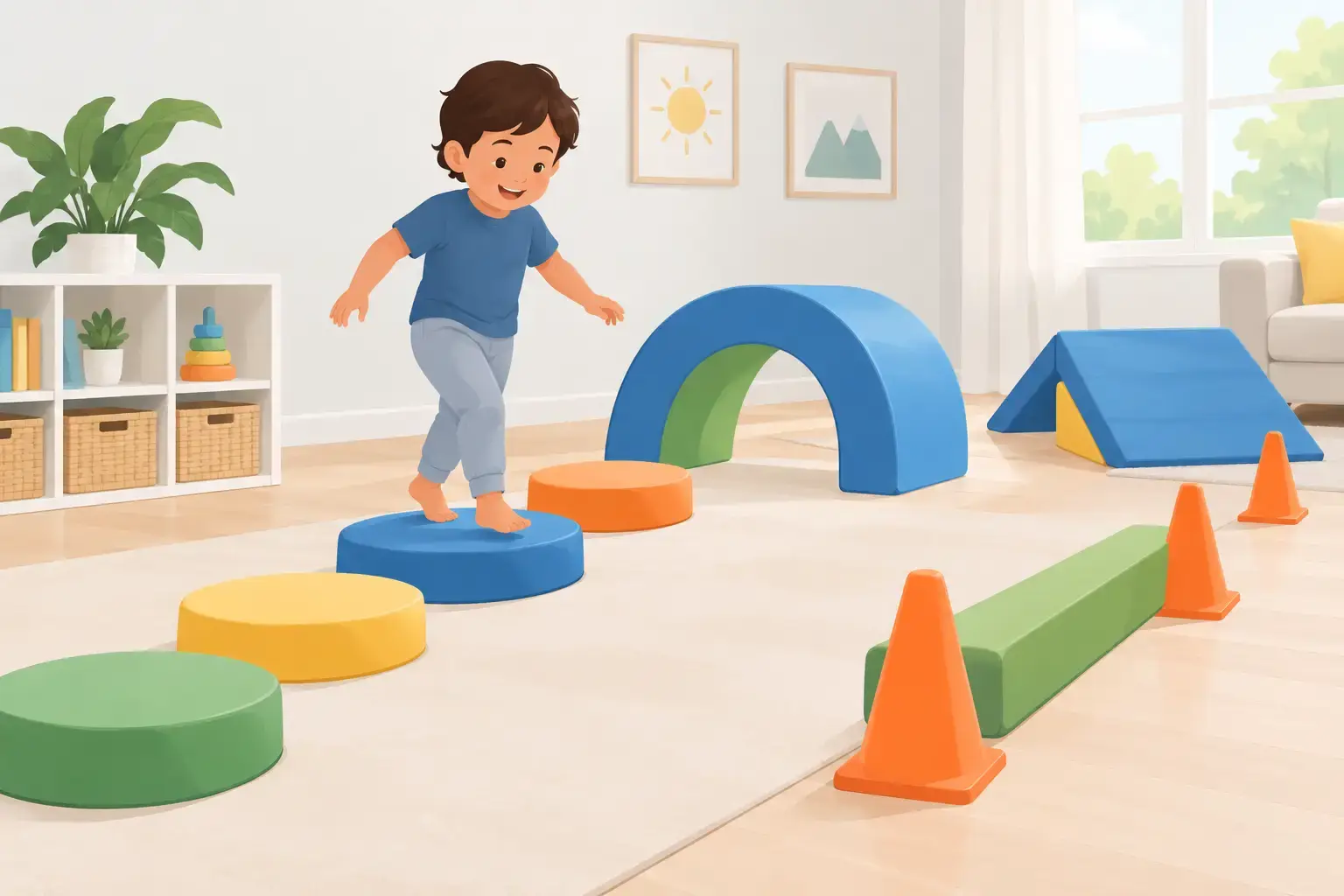
Toddler Obstacle Course Setup Made Safer
A good toddler obstacle course setup does not need a huge playroom, expensive fixed equipment or a complicated plan. It needs enough space for a child to move confidently, soft equipment that suits their stage of development, and a layout that makes every climb, crawl and step feel achievable. For parents, that can mean turning a corner of the lounge into active play. For nurseries and playgroups, it can mean creating a dependable daily movement zone that keeps little ones engaged.
The best courses look simple from an adult’s point of view. Toddlers see a bridge to cross, a hill to climb, a tunnel to crawl through and a safe place to land. That sense of adventure supports balance, coordination, spatial awareness and confidence, all while giving energetic children a constructive outlet for their energy.
Start With the Space, Not the Equipment
Before choosing shapes, measure the floor area you can genuinely keep clear during play. A compact home setup may work brilliantly in a 2 m x 2 m area, while a nursery can create separate movement routes for smaller and more confident children. The goal is not to fill every inch. Toddlers need a clear run-up, room to turn around and space to get off a shape without stepping straight into another child.
Choose a flat, dry surface away from hard furniture, fireplaces, radiators, doors and blind cords. If the floor is hard, use quality safety mats underneath and around the course. Carpet can add some cushioning, but it does not remove the need to think carefully about landing areas, especially near steps, wedges or balance equipment.
Keep the route open and easy to understand. A toddler should be able to see where they begin and where they are going next. Tight corners, blind spots and pieces placed too close together can cause bumps, queues and frustration. In a busy setting, leave enough room for an adult to reach every part of the course quickly.
Build a Toddler Obstacle Course Setup in a Safe Order
A reliable course normally moves from easy movement to a slightly bigger challenge, then finishes with a calm, stable activity. This gives toddlers time to build confidence instead of being faced with the tallest climb first.
Start with a low crawl or stepping activity. Soft floor shapes, low blocks or a tunnel are ideal because they help children understand the route without creating a big height challenge. Follow this with a gentle wedge, small steps or a broad balance beam. Finish with a soft landing zone, a ball pit or a large mat where children can pause, roll or reset before starting again.
Avoid making every section difficult. One challenge at a time is enough for this age group. A child may be ready to climb a soft step but not yet able to balance on a narrow beam, or happily crawl through a tunnel but dislike a slide. Offer a route with choices rather than forcing one fixed sequence. That is how active play stays fun rather than becoming a test.
Choose height carefully
Low-level equipment is usually the strongest choice for toddlers. They are still learning where their feet are, how to shift their weight and when to ask for help. Broad, stable shapes allow them to practise those skills with far less risk than tall, narrow or hard-sided equipment.
As a practical rule, the younger or less steady the child, the lower and wider the equipment should be. Use ramps and wedges with a gentle incline, position steps securely against another piece, and make sure slides have a clear, cushioned run-out. Never place loose items on top of soft play shapes to create extra height.
Keep the route stable
Every piece should sit flat and stay in position during use. Check that mats meet cleanly, velcro joins are secure where fitted, and there are no gaps that small feet or fingers can catch in. Equipment that shifts under a child can quickly turn a confident climb into a fall.
Commercial settings should inspect the area at the start of each session and after particularly busy periods. At home, a quick check before play is just as worthwhile. Look for split covers, exposed foam, loose stitching, wet surfaces and any signs that a shape is losing its firmness. Well-made soft play is designed for active use, but it still needs sensible care.
The Essential Shapes for Varied Play
You do not need dozens of pieces to make a course exciting. A small set of versatile soft play equipment can create fresh routes week after week. The key is choosing shapes that can be rearranged as a child’s confidence grows.
A useful starter collection includes:
- Soft play steps and blocks for climbing, stepping and building low platforms.
- Wedges and ramps for crawling uphill, rolling and gentle sliding.
- A tunnel or arch for crawling through and learning body awareness.
- A balance beam for controlled stepping and early balance practice.
- Safety mats or soft landing pads for the floor around active sections.
- A ball pit or large soft shape as a rewarding finish to the route.
For a home, three or four carefully chosen items may be more practical than a large set that has to be packed away after every session. For a nursery or playgroup, a larger modular collection makes sense because staff can build different routes for different age groups and rotate activities across the week.
Softplay Toys4Kids offers handmade UK soft play in a wide choice of shapes, colours and sizes, making it easier to create a setup that fits the available room rather than settling for a one-size layout. Bespoke options can be particularly useful where a setting has an awkward corner, a narrow room or a specific colour scheme to work with.
Make It Challenging Without Making It Risky
The clever part of a toddler obstacle course is progression. Once a child can confidently crawl over a wedge, you can turn it around for a different incline. When they can walk a wide beam holding an adult’s hand, try placing a soft marker at the end for them to reach. Small changes keep the activity interesting without suddenly increasing the risk.
Use simple prompts rather than instructions that demand perfection. Ask children to walk slowly like a bear, crawl quietly through the tunnel, touch the top of the hill or find a ball at the end. These playful cues develop listening skills and imagination while keeping attention on the route.
It depends on the group whether children should take turns or move freely. A single toddler at home may enjoy repeating the route at their own pace. In a nursery, a one-way system often works better, particularly around slides and balance beams. If several children are using the same equipment, limit the number on the course at one time and supervise closely.
Daily Safety Checks That Matter
Adult supervision is essential, even with low, padded equipment. Soft play reduces the impact of many everyday tumbles, but it cannot replace attentive oversight. Stay close enough to support early climbers, stop rough play and guide children who are trying something beyond their current ability.
Keep socks, loose clothing and accessories in mind. Non-slip socks can be helpful on smooth covers, but bare feet may offer better grip in some indoor environments, provided the floor and equipment are clean. Remove shoes where appropriate, avoid trailing dressing-up clothes, and take off necklaces, scarves or anything that could catch.
Cleaning is part of safe play, especially in shared environments. Wipe down covers regularly using a suitable cleaning method for the material, deal with spills promptly and allow surfaces to dry fully before use. A clean course is more inviting for children and easier for staff and parents to trust.
Refresh the Course Without Buying More
Toddlers love repetition, but they also notice when the same route appears every day. Rearranging existing pieces can create a completely different challenge. Turn steps into a short pathway, place the tunnel after the ramp instead of before it, or use two mats to make a wider landing area for jumping and rolling.
You can also theme the route around familiar ideas. A wedge becomes a hill, a tunnel becomes a cave and a balance beam becomes a bridge over water. Keep the language simple and let children add their own ideas. The equipment provides the structure; their imagination does the rest.
A thoughtfully planned course gives toddlers the freedom to move, try, tumble safely and try again. Start low, leave room to grow and choose durable soft play that earns its place every day.


